Guide:Richter / Heston
.png)
| |
| Richter / Heston | |
|---|---|
| Class Overview | |
| Category | cruiser / battle cruiser |
| Operational | 2228-2268 |
| Constructed | |
| Dimensions | |
| Length |
|
| Beam | 122.0 m |
| Height |
|
| Mass |
|
| Performance | |
| Cruise Speed |
|
| Max Speed |
|
| Endurance | 4 years |
| Complement | |
| Officers |
|
| Enlisted |
|
| Tactical Systems | |
| Beam Weapons | Original
Refit 2259
|
| Missile Weapons | Original
Refit 2259
|
| Shields |
|
| Transporters | Original
Refit 2263
|
| Auxiliary Craft | Richter
Heston
|
| Historical | |
| Ships of Note |
|
| Canonicity | |
| Design | STXI (ST:Axanar/Tobias Richter) |
| Name | FASA |
| History | FASA, ST:Axanar
|
By the mid-2220s, Star Fleet finally had projects ongoing on all the types of warship it needed for
halting the Klingon invasion. There would be large cruisers that enjoyed a technological edge over
their Klingon counterparts, and battle cruisers that bartered some of that edge for numerical parity;
large destroyers that could, if properly covered, tear apart all Klingon medium starships with
torpedoes, and smaller destroyers to fill up the ranks; and independently operating light cruisers to
guard the rear and secure the areas outside main battle zones.
It would still take years of fighting to establish the correct balance between production numbers. The war against the Klingon Empire could be lost by betting on the wrong ratios between cruisers and destroyers. But Star Fleet also had another concern, one that kept nagging on the thoughts of the decision makers every time the analysts presented their most recent version of truth as pertained to the Klingon front. Space was vast and full of potential new enemies. What degree of resources should be dedicated to minding the other fronts?
Old enemies like Romulans were blessedly quiet for the time being. Yet outside the Klingon front, Star Fleet’s only presence consisted of the oldest and slowest of its arsenal: the pathfinding, now hopelessly outdated light cruisers from the turn of the century, and the slowly growing numbers of sluggish Burke frigates. Their patrol network could never hope to cover the distant wastes in decisive strength. Sooner or later, a rapid reaction force of fast, independent starships would have to be created. Yet until Project Starship could bear fruit, the comma had to be replaced by a slash.
Geering had engineered the Burke to be affordably expandable in multiple ways, and could in 2226 present Star Fleet with both a fast and an independent variant of the basic design. Meeting the former criterion called for the installation of a third set of warp coils, right between the existing sets; the latter involved adding a proper secondary hull in the corresponding location. For the time being, the need for independently operating guardians of the far borders was the more pressing one, and the option to install a Pleshun PB-28 or PB-29 propulsion block was waived. Instead, a secondary hull much like those bolted onto Rangers was specified, and Geering set to work.
The Richter class patrol cruiser sacrificed almost a quarter of the primary hull to accommodate the secondary one within mass limits and without warp performance loss. The SAA impulse drive was installed in duplicate in the stern cutout to retain sublight performance as well. Directly beneath it was the dorsal attachment for the cigar-like secondary hull, featuring a Vaata B navigational deflector and sensor dish at bow and a bay and multilevel hangar for a fleet of support craft astern. The main powerplant was relocated to amidships secondary hull, with much more ergonomic maintenance facilities and greater fuel reserves than in the original layout.
The torpedo launcher module projected for the Burkes finally saw action aboard the new patrol ship, with four Selenia Mk 1 tubes. A broader range of armaments was installed in the primary hull weapons berths as well: the three laser banks were given cruiser-standard 130/1 emitters (although the heavy duty plasma loops and other internal arrangements detracted from any “plug and play” ambitions), and six dorsal and four ventral plasma cannon pairs were fitted. Fire control systems were upgraded as Geering best could, but there were no breakthrough technologies available yet, and estimates on combat performance bordered on the downright gloomy. Still, the mere presence of the new vessels on the deep frontier would hopefully have the same pacifying effect as the appearance of the Burkes closer to the primary fronts of conflict.

Capitalizing on the added internal volume, Star Fleet lavishly equipped the new designs with exploration gear and laboratory spaces. Ten light Class F shuttles were typically carried, even if early plans had been made based on clumsier Class A hardware and a lower number of auxiliaries. The hulls accommodated some 300 personnel in relative comfort, and provided enough space for four years’ worth of consumables and supplies. Propulsive endurance was tailored to match, and the relatively high loadout of torpedo casings also supported years-long patrol missions even if they didn’t prove quite incident-free. The inaugural vessel was in 2228 launched as the deep space patrol cruiser Richter, with a registry in the appropriate 1400 ‘century’. Twenty vessels in all were to be procured, in yet another case of treading water until Project Starship would deliver the UFP from danger.
Within less than a decade, the need for speed became acute. The rate at which the Federation was signing treaties and making friends meant that both the UFP territory to be patrolled and the buffer space around it to be studied and secured were becoming too vast for Star Fleet to handle. Fortunately, a remedy was finally at hand: the new Chiokis light cruisers were proving the PB-45 solid state engine, and the success was leading to further orders and bringing down the unit price. Geering enthusiastically began applying the engine to its Burkes and Syracuses, within easy reach of recall orders. The Richters just had to wait a little longer until Star Fleet could afford to rotate them through overhaul and refit.
Yet the time was running out at the turn of the decade already. As the news from Axanar reached core space, only a handful of up-engined cruisers was available, and there was no hope of hastening work on the rest as the bottleneck was PB-45 production rate. Thus, unexpectedly, the time was ripe for the second upgrade option to be taken, and old blueprints and warp field simulations were dusted off. The twentieth Richter was in 2242 completed with an old PB-29 nacelle instead of a secondary hull; the powerplant was housed in a quick and dirty extension block within the primary hull aft cut, and also mounted SAG impulse engines at extreme stern. Some of the auxiliary craft capacity was retained by expanding on the innermost cargo bays opening into the aft cut. Some internal volume in the primary hull had to be sacrificed for the purpose, yet there was plenty to throw overboard: there was no multipurpose element to the new vessels, which were readily dubbed the Heston class battle cruisers for their combination of high speed (comfortable supercruise of warp five plus dash at warp seven), firepower (the same 130 nm cruiser lasers as with the Richters, but ramped up to 2 GW) and modest shielding (no improvement over the Richter figures).

With a production run of eight vessels, and with eight Richters pulled in for conversion to like specifications, Star Fleet felt confident – about addressing any frontier unrest not involving the Klingons. Whether the ships would do any good against the main adversary remained to be seen, although the combat record of the already PB-45 –equipped vessels did not bode well.
In the end, the contribution of the Hestons to the Four Years War was as significant as it was indirect. Arguably the weakest of the battle cruisers, the type nevertheless excelled in the deep space action prompted by the main conflict, and kept it from escalating into a multi-front war. There were inevitable losses, both in and out of the main battlefields. Through forensic analysis, it is suspected that Tholians were responsible for the loss of USS Farragut (NCC-1646) in 2240, but the fate of the Hood (NCC-1644) remains completely unknown, as she disappeared without trace while in supposedly routine transit through Andesian-controlled territory in 2239. Of the Richters, USS Kirbuk (NCC-1439) went down fighting at Inverness, USS Brailovski (NCC-1445) at Obeka.
Not being tied down to specific combat theaters, and generally dashing this way and that from their assigned patrol areas on the oddest of errands, both the Richters and the Hestons generally covered more lightyears of deep space than other ship types of this era. They could be tasked with quick surveys and fact-finding missions a lumbering Ranger could not and a heavily armed Proxima would not perform. Several of these vessels were in fact engaged in cutting edge exploration in the late 2230s, prior to being pressed to use their abilities in missions of military reconnaissance. They were also favored couriers for first contact teams and diplomatic envoys, and sometimes delivered priority military shipments such as the C-bombs used against the Tobaki dimensional portal in 2239, or the bioagents utilized in the infamous attack on the Klingon agricultural worlds in 2241-43.
The ‘frontier hero’ role of the vessels was taken over by a wide range of fast and capable cruisers and heavy frigates in the mid-2240s already, leaving the baseline Richters mostly serving as shortleashed if fast-running guard dogs of core systems for their last two decades of operations.
Notes
- The Richter class has 2 nacelles, with a secondary hull slung under the primary hull. The later Heston sub-class lost the secondary hull and added a third nacelle in its place.
- The final date of completion for the Richter class was pushed back from 2232 to 2242. The reason for this is because the Heston was to be the last of the original 20 Richters, yet it wouldn't make sense that construction had been completed on #19 ten years earlier. Therefore, construction of the 20 hulls is to be stretched out from 2228 to 2242.
Gallery
-
 Richter (bow)
 -
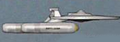 Heston (starboard)
 -
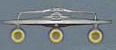 Heston (bow)
 -
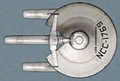 Heston (dorsal)
 -
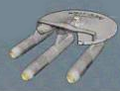 Heston (starboard stern)
 -
 Richter refit (starboard)
 -
 Richter refit (bow)
 -
 Richter refit (dorsal)
.png)
.png)
.png)
.png)
.png)
.png)
.png)
.png)