Guide:Daedalus: Difference between revisions
| Line 306: | Line 306: | ||
==Gallery== | ==Gallery== | ||
<gallery> | <gallery> | ||
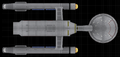
Image:Daedalus.JPG| | Image:Daedalus.JPG|Original survey configuration | ||
File:Daedalus advanced cruiser (bow).png | File:Daedalus advanced cruiser (bow).png | ||
File:Daedalus advanced cruiser (dorsal).png | File:Daedalus advanced cruiser (dorsal).png | ||
File:Daedalus advanced cruiser (stern).png | File:Daedalus advanced cruiser (stern).png | ||
File:Daedalus advanced cruiser (ventral).png | File:Daedalus advanced cruiser (ventral).png | ||
File:Daedalus (forward dorsal view).jpg|Forward dorsal view | File:Daedalus (forward dorsal view).jpg|Forward dorsal view | ||
File:Daedalus ( | |||
File:Daedalus ( | File:Daedalus (corvette) (stbd).png|Romulan War corvette configuration | ||
File:Daedalus (refit) ( | File:Daedalus (bow).png | ||
File:Daedalus (refit) ( | File:Daedalus (corvette) (dorsal).png | ||
File:Daedalus (refit) (stern).png | File:Daedalus (corvette) (stern).png | ||
File:Daedalus (refit) (ventral).png | File:Daedalus (corvette) (ventral).png | ||
File:Daedalus (refit) (starboard).png|Final survey configuration | |||
File:Daedalus (refit) (bow).png | |||
File:Daedalus (refit) (dorsal).png | |||
File:Daedalus (refit) (forward dorsal).png | |||
File:Daedalus (refit) (stern).png | |||
File:Daedalus (refit) (ventral).png | |||
File:USS Horizon on patrol.jpg|''USS Horizon'' on patrol | File:USS Horizon on patrol.jpg|''USS Horizon'' on patrol | ||
File:USS Lovell departing orbit.jpg|''USS Lovell'' departing orbit | File:USS Lovell departing orbit.jpg|''USS Lovell'' departing orbit | ||
Revision as of 20:49, 28 June 2018
.png)
| |
| Daedalus | |
|---|---|
| Class Overview | |
| Category | Survey Cruiser/Corvette |
| Operational | |
| Constructed | 72 total
|
| Dimensions | |
| Length | 103.0 m |
| Beam | 45.1 m |
| Height | 34.0 m |
| Mass |
|
| Performance | |
| Cruise Speed | w 3 |
| Max Speed |
|
| Endurance | 4 years |
| Complement | |
| Officers | 12 |
| Enlisted | 62
|
| Passengers | up to 25 research staff
|
| Tactical Systems | |
| Beam Weapons | CID testbed
Original survey & support configuration
Romulan War configuration
Final survey configuration
|
| Missile Weapons | Romulan War configuration
|
| Shields |
|
| Laboratories |
|
| Transporters |
|
| Auxiliary Craft |
|
| Historical | |
| Ships of Note |
|
| Canonicity | |
| Design | DS9 (Omnipedia, Legacy computer game, SFC/FASA Horizon specs) |
| Name | TNG (Omnipedia, SFC/FASA Horizon, Dave Stern ‘Daedalus’) |
| History | TNG (Dave Stern ‘Daedalus’, A Mangels and M Martin ‘Last Full Measure’ et al., D Ward and K Dilmore ‘Foundations’, SFC/FASA Horizon, MJ Friedman ‘Starfleet: Year One’, own)
|
By the beginning of the 22nd century, it had become painfully clear that there never could be a
'Dominion of Earth' in the immediate vicinity of Sol. The seeming power vacuum in the region was
but an illusion, as long as the powerful Vulcans refused to let anybody fill it. Yet humans had ventured to the stars when the fierce interstellar competition of Vulcans and Andorians was
reaching its peak. Moreover, the Klingons were recovering from their bitter defeats, and once again
heading for conquest, this time driven by a new, dangerously fanatic warrior mythos.
This was not just a threat but an opportunity for Earth. In place of old nationalism, humanity now experienced its first bout of specie-ism, as it strove to explore and exploit space as independently as humanly possible. To increase the reach of human survey ships beyond the space already explored by Vulcans, the team led by the venerable Zephram Cochrane initiated in 2115 the development of a new series of warp engines. These would be necessary for warp four or five cruising, a feat far beyond the capabilities of clumsy Earth spacecraft so far. Even though this speed range was already available to the more refined Vulcan ships, the Vulcan spacecraft of which Earth designers had data available met none of the basic requirements of the UESF – foremost of these the requirement of being reproducible using Earth technology.

Basic research on warp dynamics was funded by the UEDP 'government', soon to be followed by joint research efforts with leading Vulcan scientists. Slow progress gave ammunition to the specie-ist factions, however, as it was argued that the Vulcans were not volunteering sufficient data and expertise. Cochrane himself denied the charges, as did most of his closest associates. Yet subdivisions emerged within the project, and by 2136, there were four parallel lines of warp engine development underway. Two of them were to lead to actual spacecraft applications, and have later generally been associated with the names of the resulting classes. Project Enterprise was headed by Henry Archer in close cooperation with Vulcans. Project Daedalus, under the lead of Victor Brodesser, took a different approach altogether, and shared no data whatsoever with interstellar allies.
Common to both projects was a new warp concept of two-lobed distorted fields, created by rapidly modulating the plasma streams feeding the engine coils. The field would no longer be symmetrical in the plane of the nacelles; the bow and stern portions of the field would be off-centerline by roughly equal amounts. This field configuration did not immediately promise any quantum leaps in speed or endurance, but warp theorists were convinced that the asymmetry would some day be harnessed to produce significantly more effective drives.
Even the marginal advantages gained by the new system were worth exploiting, so when the UESF in 2134 decided it was time for a new survey ship type, the surveyor was ordered built with pronounced asymmetry. As could be guessed, the UESF had its sights set farther than just survey missions. Propulsive technology downselection quickly ruled out traditional approaches, leaving Archer’s antimatter-spiced superengine and Brodesser’s cascading ion drive system. Although the former had a greater number of test rig flights under its belt, the latter fit better with the political aims of the project.
Operational experience was to be gathered as quickly as possible, so that the technology could be applied on sorely needed modern combat vessels. Thus, the Daedalus design was cut down in size thrice within four years, ending up as a modest proof-of-concept demonstrator. Characteristic of the downscaled but updated design was the application of classic Earth hull forms in an innovative configuration. A cylindrar hull outwardly similar to the old Earth designs but arranged into longitudal decks was to be attached to a command sphere by a strong tubular keel. Due to the new field configuration, the keel was off-center of both the cylinder and the sphere, providing a structural challenge to UESF engineers.
The ultra-compact, 70 m, barely 22,000 ton nacelles were also mounted out of the mass distribution centerplane. The nacelles, the first of the highly successful series by Cochrane Warp Dynamics to be put to operational use, and designated PB-2 in the new military propulsion block coding scheme, held the promise of providing warp three cruising. With Brodesser’s revolutionary CID powerplant, warp five could be reached for a few hours, and the wildest projections suggested a dash speed well beyond warp seven. This first dividend of the warp development project was eagerly awaited both in UESF defense and exploratory arms. The effort would finally be moving beyond test rig stage and into operational testing; production of true cruisers and destroyers would immediately follow, were the Daedalus to succeed.

Another test article shouldered on the humble survey ship was a radically compacted and improved reaction drive. Gravitics-augmented reaction engines were installed on the aft ends of the nacelles, taking the form of rings or plates perforated by tiny engine nozzles. Principal sublight engines were housed semi-externally in cowlings flanking the stern of the secondary hull. Accelerations up to 400 gravities were promised; more importantly, fuel consumption in normal operations would be halved from the semi-Newtonian requirements of classic Singh-type rockets.
Despite the downscaling, the secondary hull was to house three major mission elements. The forward compartment consisted of the main ion cascade powerplant, producing energy densities far in excess of fusion designs. Its radiators covered much of the dorsal outer surface of the hull. The second major compartment in the auxiliary hull was the shuttle hangar with stern sliding doors 20 m wide and 3 m high. Inside, pressurized corridors and locks enabled direct boarding of the two shuttlepods with the hangar unpressurized. Above the doors was an approach control room. Below, holds for storage of equipment, consumables and samples, as well as laboratories and workshops, could be directly accessed from the shuttlebay. Together with an array of probe deployment tubes, these facilities provided the actual survey muscle of the vessel, and formed the third major partition of the hull.
In the command sphere lay cramped accommodation for most of the proposed 74 crew, plus command, control and communications equipment. Also to be mounted here were self-defense plasma cannon or lasers as well as advanced sensors capable of scanning ahead 1.5 ly in realtime in ideal conditions – rather respectable combat systems for a ship officially intended for peaceful survey duty. The 300 MW lasers were the preferred fit, as they would at least serve a secondary scientific purpose as precision spectroscopy tools. In an extreme emergency, the sphere could be severed from the rest of the ship, maneuvering to safety with RCS engines and possibly even making planetfall with the help of gigantic parachutes stowed around the bridge at the top level of the sphere. Actual introduction of weaponry or planetfall gear was to wait for the completion of the test program, however.
Neither jettison systems nor defensive weapons could have saved the Daedalus from disaster when on October 5th, 2140, the entire drive chain blew up at the warp four threshold. Lost with the vessel were professor Brodesser and chief test pilot Duvall. Lost, too, was UESF confidence in the ion cascade system, and all funding was diverted to the ‘Archer drive’.

The basic design of the surveyors was still quite sound, and a more conventional powerplant choice and a slight revamping of the impulse propulsion system to conform to the new power arrangements allowed continuation of the program. The ambitious little vessel was first fielded operationally in 2145. The first regular unit completed, USS Horizon, was equipped with a fairly conventional spiked-fusion powerplant and eighteen impulse engines in a ring surrounding the stern, and entered a long period of trials at a Centauri, away from the prying eyes of the Vulcans, to verify operational safety. In 2146, the PB-2 engines were given an official clearance for warp 3 cruising to afford the Horizon and her somewhat prematurely procured sisters Archon, Kon-Tiki, Essex and Yeager active status in the UESF. Further production was also allocated for the following decade. Between 2145 and 2155, the five surveyors still comprised some 15% of Earth’s high warp fleet, and were frequently called to arms, typically hauling troops to exercises or to limited interstellar military action.
The outbreak of open war against the Romulans revealed that Earth did not enjoy a qualitative superiority against the new enemy. Heavy starships sent to individually defend UE frontier interests were easily destroyed in detail, throwing the entire UESF defense strategy to chaos and endangering Earth itself. Compensating for the losses quantitatively was a matter of utmost urgency; the Horizons, simple to build in terms of size and complexity alike, were placed on top of the procurement list. As reports on the exact nature of the early losses started coming in, it was realized that another facet of simplicity might provide a defensive edge as well: the somewhat primitive computing systems of the Horizons would be inherently less vulnerable to Romulan cyberattacks.
The newbuilds were hastily endowed with no less than six Type C phased particle cannon, and a battery of four lasers was added to the artillery. The stern was modified to accommodate a new, more compact and capable impulse propulsion system. A final step in turning the surveyors into combat vessels was the adding of missile magazines and a twin launcher at the bow of the secondary hull, under a navigational deflector dish that also boosted tactical scanning with its subspace fields. Pennants were repainted to match the new combat corvette status, with NCC replacing NSV as the mission class identifier.

The Yeager (now NCC-76) was lost at the Deneva ambush, yet production of sister keels was well underway already. Meanwhile, the Archon (NCC-71) and Essex (NCC-73) served as wargame adversaries, while the Horizon (NCC-70) and Kon-Tiki (NCC-72) sat idle at Sol, making only short patrol runs ‘around the block’ as engineers struggled to make the ships behave as planned. The warp engines were finally accepted in their PB-2A4 form, so radically different from the miserable PB-2 that the designation was called ‘deliberately and dangerously misleading’ by the UE Senate experts who had been fooled to support the funding of the deadline-busting project. In a symbolically opposite move, the UESF wholeheartedly endorsed the decision to refer to the vessels as the Daedalus class once again.
No fewer than sixty-seven Daedalus corvettes were eventually completed, nineteen of them in time for the April 2156 Berengarian counteroffensive that denied Romulans a swift and categorical victory. The stopgap nature of these vessels was painfully evidenced by the fact that seven were lost at Berengaria already, and six more during the following year of fighting. The vessels were relegated to secondary roles soon thereafter.
By 2161, the role of desperation in Earth’s starflight programs was greatly reduced, and specie-ism was receding as well. The survey cruiser project was back on full speed, and expert opinions from war veterans and civilian researchers alike were being collected by the newly formed Committee for Starfleet. Several modifications were made to the equipment suite of the Daedalus class, such as removal of at least four of the phase cannon as too massive and redundant, further removal of the rather ridiculous twin missile system and the lightspeed defense lasers, and installation of two warp-accelerated laser banks in their stead. Rationalizing of the armament was followed by adoption of modern mission gear, including an improved suite of short range sensors and transporters as well as tractor beams. A new generation of shipboard subspace transmitters was introduced to allow unboosted communication across twenty lightyears (although in practice, the ships often operated beyond this distance from UFP outposts). Also, multilayer subspace shielding was introduced. With this protective capacity, hull armor was rendered superfluous, and various sensor and weapon ports and even the top of the main bridge were peeled out from beneath the layers of cumbersome plating.
Specie-ism or not, the postwar recommissioning of the Daedalus vessels as deep space surveyors can be seen as the first baby step in Earth’s policy of taking a leading role within the UFP. Operationally, survey projects would surely have been better served by adoption of existing Vulcan or Andorian research vessels. Politically, it was important for Earth to show that it could build things besides hard-striking warships and intrusive tramps. The move yielded unexpected political dividends as well. The voyages of the Daedalus ships, from the first three-year sortie by the Horizon (now NCC-176) on, first truly revealed the extent of human-like cultures in the sectors bordering on UFP space. The potential for a Dominion of Earth had indeed waited just beyond the rim of explored space.
Time for that was now irrevocably past, yet ambitions of influence remained. The technological standard represented by Earth’s interstellar messengers was not yet formidable enough to cement alliances with any but the least advanced worlds, but the precedent was set for Earth policy to be followed when more capable ships would be promoting it. Indeed, Earth’s contribution to Starfleet did emerge as a political force of note, first as a tool of protection against the Romulan threat, then as a peacekeeper force to settle the differences within the UFP – between the arrogantly self-conscious Tellarites, proud and reclusive Andorians, still largely enigmatic Vulcans, and the wildly multicultural peoples of the ancient Rigel colonies. Later these alliances would lead to the new members participating in exploration aboard vessels operated by the joint Federation Starfleet.

It is perhaps just a stroke of incredible luck that the second interstellar expansion of humans began in a time and place not occupied by any other expansion-driven race or alliance. Major local conflicts like the Erselrope wars raged thousands of lightyears away, but the UFP had little or no knowledge of them at the time. Nor did humans have the slightest idea of the powers they had unleashed when unwittingly challenging the Klingon Empire. The Daedalus ships encountered little resistance in their journeys, letting the war-weary veterans of the Romulan conflict commanding them to establish the network of alliances in the spirit of peace and cooperation. Still, their trusting and easygoing attitude in encounters with near-human cultures led to varying degrees of cultural contamination and in fact proved near disastrous in later contacts with more alien mindsets.
While the first application of the asymmetric field configuration had not resulted in a revolution in warp technology, it had at least proved that warp three cruising was attainable without the miracle powerplants of Archer or Brodesser. Some engineers said this meant that the winning formula had been found, that all that stood between Starfleet and warp ten now was the lack of a power source potent and reliable enough. Others still claimed that there had to be a good reason why none of the neighboring cultures had managed to develop ships capable of speeds exceeding warp seven, and that further breakthroughs in warp coil design and field manipulation would be needed as well. But this was still in the far future when Starfleet in 2196 retired the last of the Daedalus ships from exploration use.
Most of the surveyors were scrapped, but a few were modified to serve as support vessels for UESPA and FAS activities, and some were sold as light cargo ships for civilian applications. USS Archon (NCC-189), USS Horizon (NCC-176) and USS Essex (NCC-173) had been lost in exploration action, while USS Lindbergh (NCC-177) had in 2188 succumbed to a Klingon raid in military picket duty, for which she was ill-equipped.
The final chapter of the Daedalus class was not written in the late 22nd century. In 2264, three of the previously decommissioned and mothballed vessels (Lovell, Masao and Zandar) were retrieved from the Qualor II surplus depot, by special request of Captain Robert Andreassi, the Corps of Engineers commander, and recommissioned. They were then refitted with many of the latest advances in command, propulsion and tactical systems and served as support vessels for special SEC response teams. The two surviving vessels (USS Lovell was destroyed by the Shedai in the Taurus Reach region in 2268) would be retired once again in 2280, replaced with relatively newer (but still outdated) classes of starships (such as the Oberth class in the mid 2300s and the Saber class late in that same century).
Notes
- The reactivation of the three Daedalus ships in 2264 is added to match beta canon (per Memory Beta's article on the Daedalus class). The second retirements are speculation, as is the dedication of similarly outdated vessels to replace the Daedalus class in SEC service.
- The USS Fomalhaut as a Daedalus is conjecture, and is based on it being a ship available in 2156 to deliver Admiral Palmieri to Andor, a class that would allow a star name and young and fast enough to warrant that duty.
Gallery
-
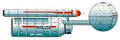 Original survey configuration
 -

-

-
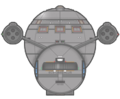
-
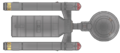
-
 Forward dorsal view
 -
 Romulan War corvette configuration
 -
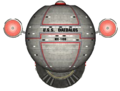
-

-

-

-
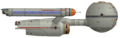 Final survey configuration
 -
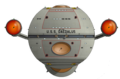
-
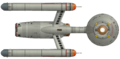
-

-
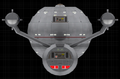
-
-
 USS Horizon on patrol
 -
 USS Lovell departing orbit
 -
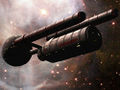 USS Lovell following reactivation with the SEC
 -
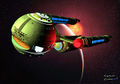 USS Pilgrim before her Romulan War upgrade
 -
 "To Explore Strange New Worlds"

.png)
.png)
.png)
.png)
.jpg)
_(stbd).png)
.png)
_(dorsal).png)
_(stern).png)
_(ventral).png)
_(starboard).png)
_(bow).png)
_(dorsal).png)
_(forward_dorsal).png)
_(stern).png)
_(ventral).png)


