Guide:Zoenamy: Difference between revisions
No edit summary |
|||
| Line 8: | Line 8: | ||
|beam= 61.9 m | |beam= 61.9 m | ||
|height= 15.0 m | |height= 15.0 m | ||
|mass= | |mass= 32,400 tons (original) | ||
|cruisespeed= w 3.0 | |cruisespeed= w 3.0 | ||
|maxspeed= w 3.6 | |maxspeed= w 3.6 | ||
Revision as of 08:56, 12 December 2017
.png)
| |
| Zoenamy | |
|---|---|
| Class Overview | |
| Category | corvette |
| Operational | 2158-2185 |
| Constructed | 8 |
| Dimensions | |
| Length | 73.5 m |
| Beam | 61.9 m |
| Height | 15.0 m |
| Mass | 32,400 tons (original) |
| Performance | |
| Cruise Speed | w 3.0 |
| Max Speed | w 3.6 |
| Endurance | 3 months |
| Complement | |
| Officers | 7 |
| Enlisted | 26
|
| Tactical Systems | |
| Beam Weapons |
|
| Missile Weapons |
|
| Shields |
|
| Auxiliary Craft |
|
| Historical | |
| Ships of Note | USS Brand USS Glyph USS Runemark USS Zoenamy |
| Canonicity | |
| Design | HandOfManos (DeviantArt): Griffon |
| Name | Timo's Guide: Pointer class corvette |
| History | Timo's Guide: Pointer class corvette/myself
|
As the deep space threats escalated and it became much more clear one aggressor was the primary instigator, discussions regarding the protection of the Sol system were constantly taking place. One of the immediate reactions was the precedence accorded the Vulcan-derived Hippolyta class clippers, but while they were being built in great numbers, many were being deployed outside the system. Plus, it could not be denied, there was something to be said for seeing a human-designed ship protecting Earth and her near space. Requirements for using the latest weaponry and hull polarization technologies, in the allowed mass range, were considered in the modeling process, which began in 2155. Initial construction starting in late 2156 and the first Zoenamy class corvette slipped the construction bay in early 2158, passing trials rapidly and within all expectations.

Despite the enormous difference in size, the design team -many veterans of the Triton project of the previous decade- based their work on the larger cruiser model. Nacelles were flipped, the main hull was relatively abridged and overall internal spaces either massively reduced in number and/or in size. The lack of transporters was intentional; the ship was not to intended for rescue or police work, so the targets of her attentions would not need any visitations. A lone bay for a light shuttle was provided as a concession, as it was agreed the vessel may not always have the ability to marry up with another ship or station, much less land on Earth, in order to conduct personnel transfers. Four laser cannon were spread about the ship: two flanked the bridge 'spine' on the dorsal side, covering the above and rear arcs, while a single weapon was placed on the ventral side, with down-powered links to the EPS conduits feeding the nacelles. A final mount was placed directly on the stern. Two plasma cannons, of the lighter variant to save space, were mounted on either side of the bridge. They, too, could cover the above arc, but it was their forward fire, energy streaming over the forward hull, that was thought to appear menacing and would promise to play well over the news streams. Two bow-mounted torpedo tubes would deliver the hard hits, when actually needed.
Unlike the Hippolyta class, which far outstripped the Zoenamy in number, this corvette was intended to stay within 'sight' of Earth, where she could be seen by a nervous population. While the range to keep up with the UESF could have been designed in, a conscious decision was behind the restriction of only three months. While it was not unheard of for a single ship to take an extended patrol out of the Sol system proper, and the USS Runemark would be transferred to the Alpha Centaurus system as a symbol of Earth's intent to protect her colonies, for the most part the ships remained within the confines of the home system, warping back and forth between rapid-fire assignments. These were less responses to perceived threats than a concerted effort of 'showing the flag' domestically.
The ships performed well, when their primary mission of assuring the public was considered. While their maneuverability left something to be desired, their rapid FTL arrival upon the scene played well (especially when there was a pre-positioned ship to monitor their approaches). However, they were time consuming to construct compared to the semi-modular nature of the Hippolytas and berthing space was needed more for rapid or heavy production. Their run was not extended and there was little official call to do so. The seven ships assigned to the Sol system would remain very active, right up until they were replaced by their successors of the Pointer class. Only forward-deployed Runemark was lost in an incident that still has not been declassified. The others were mothballed and towed to the Uranus L3 station and there is some interest in refurbishing one for public display.
Gallery
-
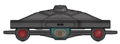 Zoenamy corvette (bow)
 -
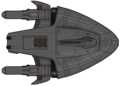 Zoenamy corvette (dorsal)
 -
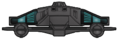 Zoenamy corvette (stern)
 -
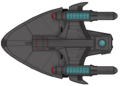 Zoenamy corvette (ventral)
.png)
.png)
.png)
.png)
Note
- The original image of the Zoenamy class was not chosen (by me) for this design, as it seemed less Earth-centric than I had developed the vessel's history to be.
- Timo's Guide does not have an individual article for the Zoenamy class, instead including it within the Pointer article.
