Guide:DY sublight series: Difference between revisions
No edit summary |
No edit summary |
||
| Line 251: | Line 251: | ||
** 1x shuttlepod | ** 1x shuttlepod | ||
** 3x passenger pods | ** 3x passenger pods | ||
|historicalships= | |historicalships= | ||
| Line 258: | Line 257: | ||
|history= TOS, TNG (own, adapting TOS, TNG and SFC) | |history= TOS, TNG (own, adapting TOS, TNG and SFC) | ||
}} | }} | ||
==Background== | ==Background== | ||
[[Image:DY100 in orbit.png|left|300px|thumb|An early model DY-100 blasts out of Earth’s atmosphere on chemical thrust, utilizing a finned booster stage typical of these pathfinding vessels. In the later DY-100 ships, this stage would be replaced by an improved fission propulsion module that featured no aerodynamic surfaces and only served as dead weight during liftoff from Earth. In space, the stage would unfold a series of radiator panels and be energized to propel the ship to previously undreamed-of accelerations and speeds. Later vessels in the family would introduce even more advanced sublight propulsion systems, including fusion power, and would serve as a sturdy basis for warp-capable colonizer vessels as well. Note the smooth instrumented nose cone of this vessel, as well as the partial cluster of payload modules complete with their forward atmospheric fairings – apparently, a circumlunar mission not involving independent orbit-to-surface operations was intended for this DY-100.]] | [[Image:DY100 in orbit.png|left|300px|thumb|An early model DY-100 blasts out of Earth’s atmosphere on chemical thrust, utilizing a finned booster stage typical of these pathfinding vessels. In the later DY-100 ships, this stage would be replaced by an improved fission propulsion module that featured no aerodynamic surfaces and only served as dead weight during liftoff from Earth. In space, the stage would unfold a series of radiator panels and be energized to propel the ship to previously undreamed-of accelerations and speeds. Later vessels in the family would introduce even more advanced sublight propulsion systems, including fusion power, and would serve as a sturdy basis for warp-capable colonizer vessels as well. Note the smooth instrumented nose cone of this vessel, as well as the partial cluster of payload modules complete with their forward atmospheric fairings – apparently, a circumlunar mission not involving independent orbit-to-surface operations was intended for this DY-100.]] | ||
| Line 287: | Line 284: | ||
The permanent settling of Mars was once again put on hold, however. Far more interesting dreams were now taking its place, as the wave of probes built with the new technology began sending back evidence of near-Earth-like worlds in this area of space. | The permanent settling of Mars was once again put on hold, however. Far more interesting dreams were now taking its place, as the wave of probes built with the new technology began sending back evidence of near-Earth-like worlds in this area of space. | ||
===Delta Dynamics: DY-50=== | |||
It is difficult to impart the value the Dinyan-Yoyodyne Conglomerate had upon the Terran entry into modern space travel without referencing the Augments. The in vitro-conceived super-humans—some who founded the multinational spacecraft corporation, as well as a large number of other technological, philosophical, and economic movements and even states, in the late 20th century—were a major defining chapter in the Earth’s progress from a one-planet, socially-fragmented species into what could have been an empire built on the conflicts and conquests of a fascist authoritarian regime. Fortunately, not only for Earth but for the future Federation, the Humans overcame the lure of domination at the right historical moment, taking the opportunity of the technological impetus to begin developing into something far greater: a leading partner in the formation of a diplomatic alliance of numerous space-capable species with galactic influence. | |||
Dinyan-Yoyodyne was one of the most public representations—though not overtly so—of the enhanced intellectual capabilities of the Augments. It burst on the scene with a massively heavy and reusable lift vehicle (the DY-T) and two experimental heavy space craft (the DY-50), as test platforms for a full series of vessels that would quickly overshadow the achievements of the Americans’ 10-year-old orbiter fleet. The craft were fueled by a liquid hydrogen-oxygen propellant, mixed with a proprietary compound that significantly reduced oxidation while also increasing chemical reactivity, providing a thrust exhaust ratio—in a reaction engine that was also proprietary—that far exceeded any system manufactured elsewhere on the planet. | |||
The launch of the two vessels in quick succession from China’s Wenchang Launch Center shocked the other space-capable nations. Such a heavy craft launching to orbit with such a non-aerodynamic frame, more akin to a submarine than a launch vehicle, with such a small propellant section seemed simply impossible, yet it had been done. Yes, the craft could not get any further than low earth orbit (LEO) at launch, but—equally amazingly—the automation of the DY-T rocket that had launched only 24 hours earlier provided all the necessary fuel for the first DY-50, the Shuguang (Chinese for “Divine State”), to achieve high earth orbit (HEO), far in excess of any previous manned vessel not on a cislunar trajectory. As the Shuguang returned to LEO, the Shenzhou (“Divine Ship”) launched, refueled, and proceeded to complete a full cislunar flight path, with 4 orbits of the satellite, before also returning to LEO. | |||
Neither ship could return to the surface of the planet, but they demonstrated a capability that had not existed outside of forty-year plans the more capable space agencies were only preparing. The ability to send a manned vessel to the moon at a delta-vee of 0.005c (~5,400,000 km/h) was quite simply earth-shattering. Over a period of mere weeks, concepts of lunar & Mars outposts, asteroidal mining, and even manned system exploration were advanced by decades. And despite the catapulting of the Chinese from a space-envious status to the premier space nation on the planet, Dinyan-Yoyodyne was not locked into that nation as its sole client. A production schedule was quickly and easily reached with the Indian Space Research Organization (ISRO), the nascent Korea Aerospace Research Institute (KARI), and the United States Air Force. Other nations held back, reticent to sign on to what was still (possibly) a dubious enterprise, then began rapidly investing in infrastructure that other organizations and corporations (most associated in one way or another with what would be identified as the Great Khanate) stepped up to provide. South America, Europe, Oceanic nations, and numerous regions of northern Africa began sprouting factories, laboratories, and training facilities to support the suddenly all-growth space industry. Craft production centers were built in India and the United States, with the Wenchang facility also exporting completed spacecraft for South Korean and other Eurasian use. | |||
The DY-50s themselves remained active experimental platforms even as the first DY-100s launched onto their own missions a year later. The ships never hosted more than 4 Humans, and that only during crew turnovers, as they were very limited on creature comforts and life support. The arriving crews would access the ship from the dorsal capsule airlock on the port side of the forward section, with the capsule soon after departing with the relieved taikonauts. A reserve capsule was docked in the ventral bay for emergency purposes. | |||
Unlike the later transports in the DY series, the ship never had the capacity to haul the familiar Type DY standardized cargo module, as it was only intended to prove the heavy launch vehicle concept. It did have an internal capacity for over 1,400 metric tons of cargo, accessible from a rudimentary area on the midsection, behind dorsal clamshell doors. An early conceptual auxiliary bay was included on the ventral side, but the obstruction by cargo containers on the production series precluded this location from being viable. On the DY-50, while the bay and associated airlock were functional, they were never utilized other than in an early mission structural test. | |||
Another difference between the DY-50 and later ships in the series was the interplanetary drive. Unlike the DY-100 and its succeeding classes, this CALT-Z5 drive section was a permanent installation. Those first launches in 1989 proved the hypothesis that the production ships would need one propulsion system for achieving orbit and another for transiting away from Earth. However, the initial concept served as a hint of what would be revealed as the DY-B2 drive (as detailed in a later article). | |||
The Shuguang and Shenzhou would perform many Earth-Lunar flights, first as mission tests, and later in reconnaissance flights of potential landing zones on Luna. However, by 1991, the DY-Ts were no longer routed to the orbiting vessels for resupply services and at the end of the year, the final crews departed via the emergency escape capsules. The ships were maintained in stable orbits for another three years, before being de-orbited by automated routines on vectors to Earth’s spacecraft cemetery in the South Pacific Ocean Uninhabited Area. | |||
===Delta Dynamics: DY-100=== | |||
In what would appear to have been a bit of brilliant marketing by Dinyan-Yoyodyne to demonstrate its open-market nature—in light of the sudden awareness of Chinese launch technology with the DY-50—the rights to the first DY-100 interplanetary transport were sold to the Indian Space Research Organization (ISRO) in 1989. With a targeted invitation and complete openness by their Sino hosts, the Indian leadership, accompanied by their space technologists, were quick to accept ownership of the next generation vessel well underway in the construction bay, with a surprisingly minimal markup. The first launch would have to, by necessity, be from Wenchang, but a menu of pre-planned missions was provided to the ISRO, with a rapid and targeted training regime for each of their space corps candidates. The agency chose a cislunar mission for their trial run. | |||
The sale of the Sahasrara (Hindi for “Thousand Petals”) to the Indians was the kernel of a revolutionary business concept, where space was an international “sandbox” for commercial purposes, without the decades of intergovernmental competition that had stifled near-Earth development. The question as to why the Chinese did not immediately nationalize Dinyan-Yoyodyne, to prevent the use of the company’s space technology by other nations and provide itself an enormous technological and economic advantage, has never been satisfyingly answered. A strong theory is that the emerging network of the (yet unrealized) Augments recognized the opportunities that came with a much larger client base. How they came to have this leverage over the authoritarian Chinese regime is still debated, but if similar dealings with other governments, corporations, and individuals are of any enlightenment, targeted corruption played a large part in providing the Great Khanate the early upper hand. | |||
Similar sales were made to the United States and South Korea, with their own ships being delivered in 1991 and 1992, respectively, following China’s own acceptance of the second and third vessels to be built. Dinyan-Yoyodyne was open to the construction of production centers in India (at the Satish Dhawan Space Centre) and the United States (at Kennedy Space Center and at a USAF spacecraft construction facility in California), from which those two countries built most of their remaining orders, for a total fleet number of 4 and 6, respectively. Between 1989 and 1996 (when the Great Khanate fell, taking most of Dinyan-Yoyodyne’s proprietary production facilities with them), 7 DY-100s (known as Kaitòuzhe) were built for the Chinese, 2 (Iskra) for the South Korean’s KARI, 4 (Vayu) for India, and 6 (Copernicus) for the American air force. The Great Khanate reserved one for their own use (built in 1994), for a total production of 20 first-run interplanetary transports. | |||
Another opportunity presented to the client states by the Great Khanate, headlined by the brilliant and charming technologist Khan Noonian Singh, was the spaceborne industry which he pitched to them with great grandiosity. Orbiting construction platforms—initially similar in features to the international Space Station Freedom, but with extensive lattices and gantries—would serve to build super-capable ships of exploration and resource gathering; space stations could be built to serve extensive numbers of purposes, such as zero-gravity material fabrication, pharmaceutical development, and platforms for habitation. The stalled Deep Space Gateway, orbiting the moon, could be completed in short order with the DY-100s, and Dinyan-Yoyodyne‘s more specialized follow-on designs. Darkside, deep space-focused telescopes, lunar mining sites, and “moon towns” on the “shores” of Mare Tranquillitatis itself were now a potential reality within the near future. | |||
Of course, while all these goals were achieved, it was without the Great Khanate leading the way, as the historical record is understood. However, the craft with which these were to be delivered was indeed an incredibly capable vessel for its time. While the DY-50s were an experimental testing of the launch capabilities of Dinyan-Yoyodyne and the general space worthiness of the unconventional hullform, the DY-100 proved sustainability and range—equipped with fission reactors for power and propulsion—instead of massive batteries and chemical reactant thrust. Also, unlike the relative light weight of a 2,200-metric ton test spacecraft, the triple-rocket DY-A1 launch booster was lifting both a 2,700-ton transport and the additional 7,552 tons of cargo in the 16 detachable Type DY cargo containers (though these were not fully-laden launch-tested until the delivery of the Chinese Mìngyùn in 1991). | |||
With the initial vessels, the launch booster would be detached upon achieving orbit and allowed to burn up in the atmosphere. The ship would maneuver, on RCS thrusters, to mate with the DY-B series interplanetary drive—delivered to a shared orbit previously by a DY-T heavy launch vehicle—providing the DY-100 with the massive and capable fission power systems installed within the module. At this point, the 12-person crew had a complete vessel on their hands, with any destination within 6-months travel a possibility, and capable of achieving 0.01c, given enough time for acceleration and a minimum mass load. | |||
Most vessels engaged in early exploration and construction missions to Luna or resource scouting in the Main belt. In either case, the ventral bay on the bow of the DY housed an auxiliary craft appropriate for the destination: the lunar lander, reminiscent of the previous Apollo series (but fully capable of lunar surface launches), could carry 2 crew and 2 passengers to the surface. The asteroidal landers had grappling hooks on winches, to assist the minute but precise chemical thrusters in getting the miners secured to their target. Specifically for early lunar base construction tasks, the DY would deliver a lunar tug in place of one of the sixteen cargo containers; the tug was capable of delivering 4 of the containers to the low-gravity lunar surface. The tug would remain behind, shuttling cargo up and down between the base and future visiting transports. | |||
The DY-100 had 68 metric tons of internal cargo space, providing plenty of sustenance and spare parts for a one-year round-trip mission. If the mission was delivery of construction materials or base supplies, the crew would have little need to linger on station; time is money, afterall, and as ground- and orbital-based industry began picking up, the ship would not have to wait long at Earth to begin another run. They could—theoretically—soft-land on large asteroids or the moons Phobos or Deimos, but not on Luna or Earth itself. Additional fissionable materials and reactants for thrusters would be provided by resupply DY-Ts or the stations from which the vessels took their cargo. Between 1990 and 1995, the rate of orbital launches (of the newest transport ships and DY-T resupply missions) increased by 200% annually. | |||
Details on the final dispensation of the DY-100s are sparse, due to the extreme violence and levels of destruction the planet would suffer over the coming decades. “Salting the earth” was a repeated practice by the Augments when they saw their individual domains rapidly slip from their fingers, with the DY ship production facilities destroyed decidedly and with little chance of immediate recovery. This would set the Humans’ interplanetary capabilities back to almost 1988 levels. The scientists of Delhi had just perfected the first practical long-term cryogenic sleep technology to allow “safe” use by living beings; however, this went unannounced in the growing chaos, with the early achievement only realized when the SS Botany Bay was discovered lightyears downrange in the Mutara Sector, 270 years later. The remaining first-run DY-100s would serve various roles—generally military in nature—close to Earth, as the various competing nations seized what Dinyan-Yoyodyne assets they could. | |||
Limited interplanetary drives would quickly emerge from the working models the space agencies would spare for reverse engineering, but it would not be until 2021 when the series re-entered production. Russia, the core member of the Eurasian Confederation, had uncovered D-Y production plans for the spacecraft in Baikonur two years previously, and ramped up the Eurasian Confederation Space Agency’s production and launch capacities precipitously. China was provided the plans in a trade agreement and by 2023, the United States—working with D-Y offshoot Yoyodyne Propulsion Systems—had them as well. No later than 2028, China had 5 additional DY-100s, the United States 12, and the ECSA operated 21. Ground-based production of large spacecraft had transitioned to the various space platforms in orbit of Earth, positioned at the trailing L-5 point, or above Luna and the less gravity-restrictive conditions had seen the introduction of vessels either directly descended from the DY-100 series, or working off entirely independent design concepts. | |||
This series on the DY sublight interplanetary transports includes the following articles: Dinyan-Yoyodyne DY-T Heavy Launch Vehicle (1989); DY-50 Experimental Transport (1989); DY-100 Interplanetary Transport (unladen) (1990); DY-A1 Launch Booster (1990); DY-B1 Interplanetary Drive (1990); DY-A2 Launch Booster (1991); DY-A3 Launch Booster (1994); DY-110 Apex Mission Spacecraft (unladen) (1991); DY-120 Interplanetary Transport (unladen) (2021); DY-120 Brenton Mission Spacecraft; DY-130 Interplanetary Transport (unladen) (2037); DY-140 Helsinki Mission Spacecraft (2039); DY-135 Black Mamba Mission Spacecraft (2042); DY-140 Interplanetary Transport (2044). | |||
===Delta Dynamics: DY-110 ''Apex''=== | |||
==Major Production Runs== | ==Major Production Runs== | ||
Revision as of 12:25, 7 February 2021
.png)
| |
| DY series (sublight) | |
|---|---|
| Class Overview | |
| Category | interplanetary transports |
| Operational | 1989 - 2289
|
| Constructed | 121 total ships (65 boosters, 12 heavy launch)
|
| Dimensions | |
| Length |
|
| Beam |
|
| Height |
|
| Mass |
|
| Performance | |
| Max Speed |
|
| Endurance |
|
| Complement | |
| Crew |
|
| Passengers |
|
| Patients |
|
| Cargo |
|
| Tactical Systems | |
| Beam Weapons | DY-50, -100, -110, -120, -130, -140
DY-135 Black Mamba
|
| Missile Weapons | DY-50, -100, -120, -130
DY-110
DY-135 Black Mamba
|
| Other Weapons | DY-110
DY-140 Helsinki
|
| Shields | DY-50, -100, -110, -120, -130
DY-120 Brenton
DY-140 Helsinki
DY-135 Black Mamba
|
| Laboratories | DY-50, -100, -110, -120, -130
DY-120 Brenton
DY-140 (both), DY-135 Black Mamba
|
| Auxiliary Craft |
|
| Canonicity | |
| Design | TOS, TNG (Aridas Sofia, et al.) |
| Name | TOS, TNG (Aridas Sofia, et al., own) |
| History | TOS, TNG (own, adapting TOS, TNG and SFC)
|
Background


The Dinyan-Yoyodyne Conglomerate DY series space transport vessels represent a continuous chain of shipbuilding tradition, from Earth’s first practical commercially produced manned interplanetary craft in the 1990s to the colonization and cargo ships of the late 23rd century. Considering that for the first hundred years of operations, all the various types of spacecraft in the DY series were vastly inferior to the ships of most extraterrestrial races and alliances of the time, it seems rather curious that they would in fact propel Earth into becoming a major military and exploratory power in the region. The sociopolitical reasons for the success of Earth’s colonial expansion have been exhaustively discussed elsewhere, but these would not have come to play had Dinyan-Yoyodyne not produced these humble colonization vessels in notable quantity.
The experimental DY-50 was an early attempt at a ship capable of interplanetary travel at a then-incredible delta-v of 0.005c. Two ships of this type were constructed in 1989 in the province of Xuhan in the country of China, part of the vast number of technology breakthroughs of that time that were the result of a long international, clandestine eugenics program. The genius of the selectively bred, chemically and genetically augmented scientists could not be hidden for long: in 1992, the results were dramatically made public as these supermen took over most of South and Southeast Asia. Despite an initial civilized establishing of diplomatic relations, the rulers soon began an endless cycle of revolutions and coups in a quest for ultimate power. But many leading nations still turned a blind eye on the supermen’s cruel reign, lest the stream of new technology and scientific breakthroughs from their R&D centers end. As an example of this tolerance, mass production of DY spaceships was continued in China, and also expanded to India and the United States.
In the hectic years of the rule of Khan Noonian Singh, perhaps the most famous of the victors of superhuman wars of supremacy, technologies flourished in a way that put to shame the industrial revolution and the birth of computer technology. There are persistent rumors of longevity drugs and antigravity devices, perhaps even time travel methods, having been developed by Khan’s or his less civilized usurpers’ scientists; given our fragmentary knowledge of that era, no such rumors can be completely discredited. What is certain, however, is that spaceflight technology took a major step forward. Super-efficient reaction drives were built for DY-100 fission-powered interplanetary craft expanded from the early cislunar DY-50 hulls, and used to found a spaceborne industry for Singh’s kingdom. As the movement spread to northern Africa, several spaceports were built there to support this industry. Other countries were sold parts of this technology, usually heavily laden with propaganda and sometimes also with hidden psychochemical weapons.
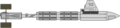
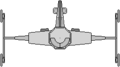
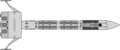
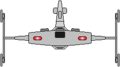
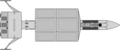
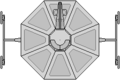
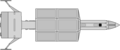
DY-100 was an ingenious design featuring a pencil-like central hull with two support decks and two full-width longitudal zero-gee habitat decks, a ring of wedgelike jettisonable fuel tanks or cargo pods, a one-, two- or three-chamber solid-core fission rocket with adjoining radiator assemblies and possible chemical boosters, aerodynamic surfaces and other mission-specific additions at the stern, and an offset control/docking tower at the bow. For planetary takeoff, the ship used a cluster of four to six huge solid booster rockets attached aft of the fuel wedges. While this complex configuration required an elaborate gantry system to stack, the simplicity of the propulsion system facilitated rapid launch preparations; a DY hull and a set of boosters could be taken from storage, equipped for the mission, stacked and launched in less than two days if necessary.
‘Landings’ were theoretically possible on low-gravity worlds like asteroids and the moons of Mars, both of which were targeted by manned missions in the 1990s and 2000s. It was usual to utilize a dedicated landing craft housed inside a bow shroud or carried in place of a cargo container for true orbit-to-surface operations, for example on Earth’s moon. No DY ships ever returned to Earth surface, but were refueled in orbit by dedicated tankers launched on simple, throttleable-combustion single-stage solid boosters not unlike those used to loft the ships themselves to space. The boosters were also used for a variety of other missions, most importantly for launching orbital laser platforms to bolster the military muscle of the supermen. Between 1990 and 1995, the rate of orbital launches from Earth grew by almost 200% every year, and more than twenty interplanetary launches were performed between 1993 and 1996 alone, mostly to Mars where the Great Khanate unsuccessfully tried to establish a colony of supermen.
Theoretically capable of acceleration to 0.01c lightspeed with full fuel load and minimum cargo, the DY-100 could also carry over 7,500 metric tons of material swiftly across interplanetary distances; had the relatively stable Singh rule continued for another decade, the ships would no doubt have established a systemwide industrial base for the supermen. But the final breakthrough in interplanetary travel came just before the collapse of the Singh kingdom. As the surrounding countries finally prepared to join and end the constant war between the genetic supermen, scientists at Delhi perfected the first practical long term cryogenic sleep technology, earlier used only to preserve biological samples or even dead bodies in bizarre attempts at afterlife. And when the walls of Khanton came crumbling down in 1996, a group of Singh’s followers were able to escape on one of the final-batch DY-100 ships they had prepared for interplanetary ‘seeding’ operations. No one outside the regime suspected that these ships would be capable of interstellar travel, though – Khan Singh’s escape was only revealed 270 years later, when his ship was found adrift in space in the Mutara sector, some fifty lightyears away from Earth.
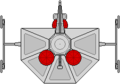
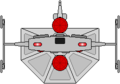
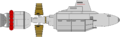
The Singh kingdom left some two dozen DY craft and their associated launch equipment lying around in various states of construction, an enormous technology base for the rest of the world even though the original Dinyan-Yoyodyne Conglomerate factories and labs now lay in ruins. In addition to two active ships operated by USAF and one by RRKS, half a dozen abandoned Chinese-flagged vessels were adrift in Earth orbit. International missions were mounted to salvage these craft; no such effort was made on the doomed Martian conquistadors. It has been speculated that some of these ships, also equipped with crude cryogenics, may have allowed more supermen to escape the way Khan did, but no evidence has been found to support such speculation. ‘Upgrades’ and ‘refinements’ to the original design yielded mixed results. The DY-120 series from the 2020s was a moderate success, yet the further enlarged DY-130 failed to perform according to specifications, reflecting the science community’s poor theoretical understanding of the original inertia manipulation breakthroughs. More than four hundred and fifty DY-120 and -140 series ships were eventually finished by commercial operators; a total of 43 saw UEDP service under the respective class names Brenton and Helsinki. The unsuccessful DY-130 in turn spawned the DY-135 military project, half a dozen high speed patrol vessels armed with four laser cannon and a missile tube and backing up the slower Liberty class in defending Sol in the late 21st century.
The extended interplanetary operations of the second generation of DY vessels were facilitated by an improved Amjet gas-core fission powerplant assembly that required only 50% of the propellant mass of the original design. For lunar runs, a simple landing tug was carried; up to 16 cargo wedges could be externally mounted onto the core stage, and the tug could carry four at a time down to lunar surface.
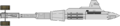
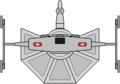
For fast translunar missions, standard practice still called for a mission spacecraft to be added to the booster stage. The Apex, Aphrodite and later Ares “upper stages” utilized a conventional fission-powered ion engine for regular flights to and from Venus and Mars, while the much heavier Aventeurs relied on a cluster of the same nuclear thermal rockets that propelled the booster stages when launching on “Grand Tours” to the outer planets. The Aventeurs were also able to fulfill mankind’s dream of an offworld colony, running a steady stream of supplies to the Moon from asteroid mining rigs, as well as setting up automated bases at Ganymede.
The permanent settling of Mars was once again put on hold, however. Far more interesting dreams were now taking its place, as the wave of probes built with the new technology began sending back evidence of near-Earth-like worlds in this area of space.
Delta Dynamics: DY-50
It is difficult to impart the value the Dinyan-Yoyodyne Conglomerate had upon the Terran entry into modern space travel without referencing the Augments. The in vitro-conceived super-humans—some who founded the multinational spacecraft corporation, as well as a large number of other technological, philosophical, and economic movements and even states, in the late 20th century—were a major defining chapter in the Earth’s progress from a one-planet, socially-fragmented species into what could have been an empire built on the conflicts and conquests of a fascist authoritarian regime. Fortunately, not only for Earth but for the future Federation, the Humans overcame the lure of domination at the right historical moment, taking the opportunity of the technological impetus to begin developing into something far greater: a leading partner in the formation of a diplomatic alliance of numerous space-capable species with galactic influence.
Dinyan-Yoyodyne was one of the most public representations—though not overtly so—of the enhanced intellectual capabilities of the Augments. It burst on the scene with a massively heavy and reusable lift vehicle (the DY-T) and two experimental heavy space craft (the DY-50), as test platforms for a full series of vessels that would quickly overshadow the achievements of the Americans’ 10-year-old orbiter fleet. The craft were fueled by a liquid hydrogen-oxygen propellant, mixed with a proprietary compound that significantly reduced oxidation while also increasing chemical reactivity, providing a thrust exhaust ratio—in a reaction engine that was also proprietary—that far exceeded any system manufactured elsewhere on the planet.
The launch of the two vessels in quick succession from China’s Wenchang Launch Center shocked the other space-capable nations. Such a heavy craft launching to orbit with such a non-aerodynamic frame, more akin to a submarine than a launch vehicle, with such a small propellant section seemed simply impossible, yet it had been done. Yes, the craft could not get any further than low earth orbit (LEO) at launch, but—equally amazingly—the automation of the DY-T rocket that had launched only 24 hours earlier provided all the necessary fuel for the first DY-50, the Shuguang (Chinese for “Divine State”), to achieve high earth orbit (HEO), far in excess of any previous manned vessel not on a cislunar trajectory. As the Shuguang returned to LEO, the Shenzhou (“Divine Ship”) launched, refueled, and proceeded to complete a full cislunar flight path, with 4 orbits of the satellite, before also returning to LEO.
Neither ship could return to the surface of the planet, but they demonstrated a capability that had not existed outside of forty-year plans the more capable space agencies were only preparing. The ability to send a manned vessel to the moon at a delta-vee of 0.005c (~5,400,000 km/h) was quite simply earth-shattering. Over a period of mere weeks, concepts of lunar & Mars outposts, asteroidal mining, and even manned system exploration were advanced by decades. And despite the catapulting of the Chinese from a space-envious status to the premier space nation on the planet, Dinyan-Yoyodyne was not locked into that nation as its sole client. A production schedule was quickly and easily reached with the Indian Space Research Organization (ISRO), the nascent Korea Aerospace Research Institute (KARI), and the United States Air Force. Other nations held back, reticent to sign on to what was still (possibly) a dubious enterprise, then began rapidly investing in infrastructure that other organizations and corporations (most associated in one way or another with what would be identified as the Great Khanate) stepped up to provide. South America, Europe, Oceanic nations, and numerous regions of northern Africa began sprouting factories, laboratories, and training facilities to support the suddenly all-growth space industry. Craft production centers were built in India and the United States, with the Wenchang facility also exporting completed spacecraft for South Korean and other Eurasian use.
The DY-50s themselves remained active experimental platforms even as the first DY-100s launched onto their own missions a year later. The ships never hosted more than 4 Humans, and that only during crew turnovers, as they were very limited on creature comforts and life support. The arriving crews would access the ship from the dorsal capsule airlock on the port side of the forward section, with the capsule soon after departing with the relieved taikonauts. A reserve capsule was docked in the ventral bay for emergency purposes.
Unlike the later transports in the DY series, the ship never had the capacity to haul the familiar Type DY standardized cargo module, as it was only intended to prove the heavy launch vehicle concept. It did have an internal capacity for over 1,400 metric tons of cargo, accessible from a rudimentary area on the midsection, behind dorsal clamshell doors. An early conceptual auxiliary bay was included on the ventral side, but the obstruction by cargo containers on the production series precluded this location from being viable. On the DY-50, while the bay and associated airlock were functional, they were never utilized other than in an early mission structural test.
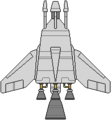
Another difference between the DY-50 and later ships in the series was the interplanetary drive. Unlike the DY-100 and its succeeding classes, this CALT-Z5 drive section was a permanent installation. Those first launches in 1989 proved the hypothesis that the production ships would need one propulsion system for achieving orbit and another for transiting away from Earth. However, the initial concept served as a hint of what would be revealed as the DY-B2 drive (as detailed in a later article).
The Shuguang and Shenzhou would perform many Earth-Lunar flights, first as mission tests, and later in reconnaissance flights of potential landing zones on Luna. However, by 1991, the DY-Ts were no longer routed to the orbiting vessels for resupply services and at the end of the year, the final crews departed via the emergency escape capsules. The ships were maintained in stable orbits for another three years, before being de-orbited by automated routines on vectors to Earth’s spacecraft cemetery in the South Pacific Ocean Uninhabited Area.
Delta Dynamics: DY-100
In what would appear to have been a bit of brilliant marketing by Dinyan-Yoyodyne to demonstrate its open-market nature—in light of the sudden awareness of Chinese launch technology with the DY-50—the rights to the first DY-100 interplanetary transport were sold to the Indian Space Research Organization (ISRO) in 1989. With a targeted invitation and complete openness by their Sino hosts, the Indian leadership, accompanied by their space technologists, were quick to accept ownership of the next generation vessel well underway in the construction bay, with a surprisingly minimal markup. The first launch would have to, by necessity, be from Wenchang, but a menu of pre-planned missions was provided to the ISRO, with a rapid and targeted training regime for each of their space corps candidates. The agency chose a cislunar mission for their trial run.
The sale of the Sahasrara (Hindi for “Thousand Petals”) to the Indians was the kernel of a revolutionary business concept, where space was an international “sandbox” for commercial purposes, without the decades of intergovernmental competition that had stifled near-Earth development. The question as to why the Chinese did not immediately nationalize Dinyan-Yoyodyne, to prevent the use of the company’s space technology by other nations and provide itself an enormous technological and economic advantage, has never been satisfyingly answered. A strong theory is that the emerging network of the (yet unrealized) Augments recognized the opportunities that came with a much larger client base. How they came to have this leverage over the authoritarian Chinese regime is still debated, but if similar dealings with other governments, corporations, and individuals are of any enlightenment, targeted corruption played a large part in providing the Great Khanate the early upper hand.
Similar sales were made to the United States and South Korea, with their own ships being delivered in 1991 and 1992, respectively, following China’s own acceptance of the second and third vessels to be built. Dinyan-Yoyodyne was open to the construction of production centers in India (at the Satish Dhawan Space Centre) and the United States (at Kennedy Space Center and at a USAF spacecraft construction facility in California), from which those two countries built most of their remaining orders, for a total fleet number of 4 and 6, respectively. Between 1989 and 1996 (when the Great Khanate fell, taking most of Dinyan-Yoyodyne’s proprietary production facilities with them), 7 DY-100s (known as Kaitòuzhe) were built for the Chinese, 2 (Iskra) for the South Korean’s KARI, 4 (Vayu) for India, and 6 (Copernicus) for the American air force. The Great Khanate reserved one for their own use (built in 1994), for a total production of 20 first-run interplanetary transports.
Another opportunity presented to the client states by the Great Khanate, headlined by the brilliant and charming technologist Khan Noonian Singh, was the spaceborne industry which he pitched to them with great grandiosity. Orbiting construction platforms—initially similar in features to the international Space Station Freedom, but with extensive lattices and gantries—would serve to build super-capable ships of exploration and resource gathering; space stations could be built to serve extensive numbers of purposes, such as zero-gravity material fabrication, pharmaceutical development, and platforms for habitation. The stalled Deep Space Gateway, orbiting the moon, could be completed in short order with the DY-100s, and Dinyan-Yoyodyne‘s more specialized follow-on designs. Darkside, deep space-focused telescopes, lunar mining sites, and “moon towns” on the “shores” of Mare Tranquillitatis itself were now a potential reality within the near future.
Of course, while all these goals were achieved, it was without the Great Khanate leading the way, as the historical record is understood. However, the craft with which these were to be delivered was indeed an incredibly capable vessel for its time. While the DY-50s were an experimental testing of the launch capabilities of Dinyan-Yoyodyne and the general space worthiness of the unconventional hullform, the DY-100 proved sustainability and range—equipped with fission reactors for power and propulsion—instead of massive batteries and chemical reactant thrust. Also, unlike the relative light weight of a 2,200-metric ton test spacecraft, the triple-rocket DY-A1 launch booster was lifting both a 2,700-ton transport and the additional 7,552 tons of cargo in the 16 detachable Type DY cargo containers (though these were not fully-laden launch-tested until the delivery of the Chinese Mìngyùn in 1991).
With the initial vessels, the launch booster would be detached upon achieving orbit and allowed to burn up in the atmosphere. The ship would maneuver, on RCS thrusters, to mate with the DY-B series interplanetary drive—delivered to a shared orbit previously by a DY-T heavy launch vehicle—providing the DY-100 with the massive and capable fission power systems installed within the module. At this point, the 12-person crew had a complete vessel on their hands, with any destination within 6-months travel a possibility, and capable of achieving 0.01c, given enough time for acceleration and a minimum mass load.
Most vessels engaged in early exploration and construction missions to Luna or resource scouting in the Main belt. In either case, the ventral bay on the bow of the DY housed an auxiliary craft appropriate for the destination: the lunar lander, reminiscent of the previous Apollo series (but fully capable of lunar surface launches), could carry 2 crew and 2 passengers to the surface. The asteroidal landers had grappling hooks on winches, to assist the minute but precise chemical thrusters in getting the miners secured to their target. Specifically for early lunar base construction tasks, the DY would deliver a lunar tug in place of one of the sixteen cargo containers; the tug was capable of delivering 4 of the containers to the low-gravity lunar surface. The tug would remain behind, shuttling cargo up and down between the base and future visiting transports.
The DY-100 had 68 metric tons of internal cargo space, providing plenty of sustenance and spare parts for a one-year round-trip mission. If the mission was delivery of construction materials or base supplies, the crew would have little need to linger on station; time is money, afterall, and as ground- and orbital-based industry began picking up, the ship would not have to wait long at Earth to begin another run. They could—theoretically—soft-land on large asteroids or the moons Phobos or Deimos, but not on Luna or Earth itself. Additional fissionable materials and reactants for thrusters would be provided by resupply DY-Ts or the stations from which the vessels took their cargo. Between 1990 and 1995, the rate of orbital launches (of the newest transport ships and DY-T resupply missions) increased by 200% annually.
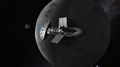
Details on the final dispensation of the DY-100s are sparse, due to the extreme violence and levels of destruction the planet would suffer over the coming decades. “Salting the earth” was a repeated practice by the Augments when they saw their individual domains rapidly slip from their fingers, with the DY ship production facilities destroyed decidedly and with little chance of immediate recovery. This would set the Humans’ interplanetary capabilities back to almost 1988 levels. The scientists of Delhi had just perfected the first practical long-term cryogenic sleep technology to allow “safe” use by living beings; however, this went unannounced in the growing chaos, with the early achievement only realized when the SS Botany Bay was discovered lightyears downrange in the Mutara Sector, 270 years later. The remaining first-run DY-100s would serve various roles—generally military in nature—close to Earth, as the various competing nations seized what Dinyan-Yoyodyne assets they could.
Limited interplanetary drives would quickly emerge from the working models the space agencies would spare for reverse engineering, but it would not be until 2021 when the series re-entered production. Russia, the core member of the Eurasian Confederation, had uncovered D-Y production plans for the spacecraft in Baikonur two years previously, and ramped up the Eurasian Confederation Space Agency’s production and launch capacities precipitously. China was provided the plans in a trade agreement and by 2023, the United States—working with D-Y offshoot Yoyodyne Propulsion Systems—had them as well. No later than 2028, China had 5 additional DY-100s, the United States 12, and the ECSA operated 21. Ground-based production of large spacecraft had transitioned to the various space platforms in orbit of Earth, positioned at the trailing L-5 point, or above Luna and the less gravity-restrictive conditions had seen the introduction of vessels either directly descended from the DY-100 series, or working off entirely independent design concepts.
This series on the DY sublight interplanetary transports includes the following articles: Dinyan-Yoyodyne DY-T Heavy Launch Vehicle (1989); DY-50 Experimental Transport (1989); DY-100 Interplanetary Transport (unladen) (1990); DY-A1 Launch Booster (1990); DY-B1 Interplanetary Drive (1990); DY-A2 Launch Booster (1991); DY-A3 Launch Booster (1994); DY-110 Apex Mission Spacecraft (unladen) (1991); DY-120 Interplanetary Transport (unladen) (2021); DY-120 Brenton Mission Spacecraft; DY-130 Interplanetary Transport (unladen) (2037); DY-140 Helsinki Mission Spacecraft (2039); DY-135 Black Mamba Mission Spacecraft (2042); DY-140 Interplanetary Transport (2044).
Delta Dynamics: DY-110 Apex
Major Production Runs
- DY-T (1989): heavy single-stage-to-orbit cargo launch vehicle; carried fuel or other cargo (such as the DY-B series cislunar drives)
- DY-50 (1989): 2 test models constructed for the CNSA by the Dinyan-Yoyodyne Conglomerate, with built-on launch boosters; refueled by DY-T for cislunar missions
- DY-100 (1990): the first mass-produced series, built or licensed to the ISRO, CNSA, RRKS (later collaborating as the ECSN) and USAF; launch assisted by the DY-A1; would swap for DY-B1 in orbit (for cislunar missions)
- DY-A1 (1990): tri-booster launch system; detached upon reaching orbit and swapped for a DY-B1 for cislunar missions
- DY-B1 (1990): a pair of finned and aerodynamic boosters for the cislunar missions to Luna; delivered aboard DY-T and refueled for follow-on missions; can return to Earth thru remote for maintenance
- DY-110 Apex (1991): supported early Venusian and Martian missions; would launch with DY-A2; receive DY-B2 in orbit
- DY-A2 (1991): a cluster of four huge solid booster rockets attached aft of the fuel assembly of the DY-100s and DY-110s for launches from Earth
- DY-B2 (1991): an improved non-aerodynamic, fission-propulsion module for cislunar missions and interplanetary ones to Venus and Mars
- DY-100B (1994): an improvement upon the original DY in that the DY-B2 is attached on the ground; requires the DY-A3 to launch to orbit
- DY-A3 (1994): a cluster of six huge solid booster rockets attached aft of the fuel assembly of the DYs with pre-equipped DY-B series boosters
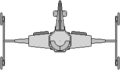
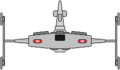
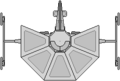
- DY-120 (2021): DY series re-enters production with new commercial design, supporting orbital structures and lunar bases; the first of 31 militarized Brentons transports are introduced in 2023 for the ISA; altogether over 400 DY-120s are produced
- DY-130 (2037): six larger DYs are built as a test of a newer and intended faster design, but the ship is much more maintenance-demanding with thruster control issues that made close-in maneuvering difficult and dangerous
- DY-140 (2039): lessons learned from the failed DY-130 result is a comparably faster and larger design, successfully improving the DY series; over 50 were produced, successfully supporting first the colonization of Mars and then other interplanetary destinations; the first of 12 militarized Helsinki transports are introduced in 2042 for the ISA
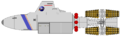
- DY-135 (2042): the improvements from the DY-140 series are used to modify the 6 DY-130 hulls, making them less massive and faster; they would form the Black Mamba class for the ISA and later the UEDP, serving alongside the slower Liberty class ships defending the solar system
Gallery
DY-50 Experimental Transport
.png)
.png)
.png)
.png)
.png)
DY-100 Interplanetary Transport
-
 Unladen
 -
-
-
-

-
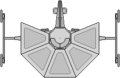
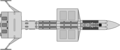
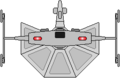
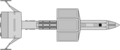
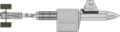 Laden with 5 container pods
 -
-
-
-
-
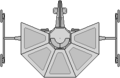
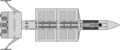
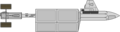 Laden with 10 container pods
 -
-
-
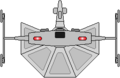
-
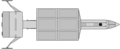
-
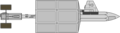 Fully laden with 16 container pods
 -
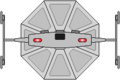
-
-
-
_(stbd).png)
_(bow).png)
_(dorsal).png)
_(stern).png)
_(ventral).png)
_(bow).png)
_(dorsal).png)
_(stern).png)
_(ventral).png)
_(stbd).png)
_(bow).png)
_(dorsal).png)
_(stern).png)
_(ventral).png)
_(stbd).png)
_(stern).png)
_(dorsal).png)
_(bow).png)
_(ventral).png)
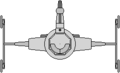
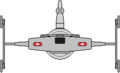
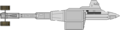
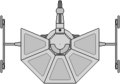
DY-110 Apex Mission Spacecraft
-
 Unladen
 -
-

-
-

-
 Fully laden with 5 container pods
 -
-

-
-

_(stbd).png)
_(bow).png)
_(dorsal).png)
_(stern).png)
_(ventral).png)
_(stbd).png)
_(bow).png)
_(dorsal).png)
_(stern).png)
_(ventral).png)
DY-120 Brenton Mission Spacecraft
-

-
-

-
-

-
 International Space Agency livery
.png)
.png)
.png)
.png)
.png)

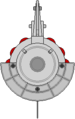
DY-140 Helsinki Mission Spacecraft
-
-

-
-

-

-
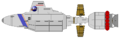 International Space Agency livery
.png)
.png)
.png)
.png)
.png)
.png)
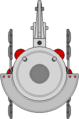
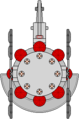
DY-135 Black Mamba Mission Spacecraft
-

-
-

-
-

-
 International Space Agency livery
.png)
.png)
.png)
.png)
.png)

DY (sublight) Commercial types
-
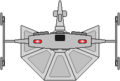
 DY-120 interplanetary transport (unladen)
 -
-

-
-

-
 Laden with 15 container pods
 -
-

-
-

-
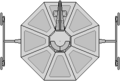
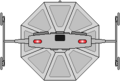
 Fully laden with 24 container pods
 -
-

-
-

-
 Corporate liveries
 -

-

-

-
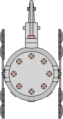
 DY-130 interplanetary transport (unladen)
 -

-

-
-

-
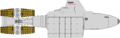 Fully laden with 15 container pods
 -
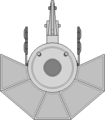
-
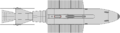
-
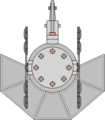
-
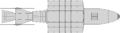
-
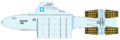 Maersk Space Freight Line corporate livery
 -
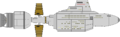 DY-140 interplanetary transport
 -
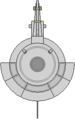
-

-

-

-
 Corporate liveries
 -
-

-
-

-

-

-

-

_(stbd).png)
_(bow).png)
_(dorsal).png)
_(stern).png)
_(ventral).png)
_(stbd).png)
_(bow).png)
_(dorsal).png)
_(stern).png)
_(ventral).png)
_(stbd).png)
_(bow).png)
_(dorsal).png)
_(stern).png)
_(ventral).png)


_(stbd).png)
_(bow).png)
_(dorsal).png)
_(stern).png)
_(ventral).png)
_(stbd).png)
_(bow).png)
_(dorsal).png)
_(stern).png)
_(ventral).png)

.png)
.png)
.png)
.png)
.png)


Heavy Lift Vehicles & Launch Boosters
-
 DY-T (landing configuration)
 -

-

-

-

-
 CALT-Z5 (DY-50 launch booster)
 -

.png)
.png)
.png)
.png)
.png)
.png)
.png)
Interplanetary Drives
Other Images
-
 Botany Bay departs Earth

DY-100 Gallery
-
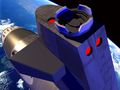 Sail docking ring
 -
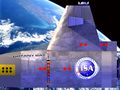 (Mislabeled) forward hull and sail section
 -
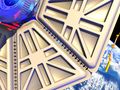 Forward view of cargo pods
 -
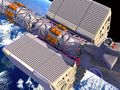 Dorsal view of docking rings for 6 cargo pods
 -
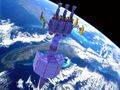 DY-100 maneuvering over Cuba
 -
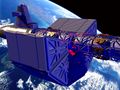 Lateral dorsal view of unloaded cargo section
 -
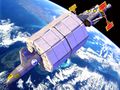 Fully-loaded DY-100, forward lateral view
 -
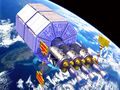 Fully-loaded DY-100, stern dorsal view
 -
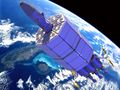 Fully-loaded DY-100, forward ventral view
 -
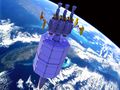 Fully-loaded DY-100, stern ventral view
 -
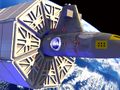 Fully-loaded DY-100, forward hull section view
 -
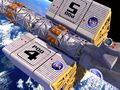 Partially-unloaded cargo section, just aft of sail
 -
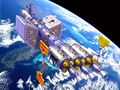 Partially-unloaded DY-100, stern dorsal view
 -
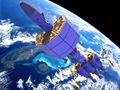 Partially-unloaded DY-100, forward ventral view
 -
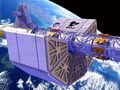 Partially-unloaded DY-100, showing 12 unloaded docking rings
 -
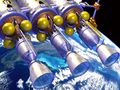 Close-up of main thrust engines
 -
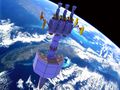 Partially-unloaded DY-100, ventral view
 -
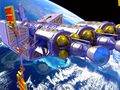 Partially-unloaded DY-100, stern view
 -
 Launch of an unidentified DY-100


Supporting Documents
Class Reports
See also
Notes
- The mission name of the Ares Mission III spacecraft is changed from 'Lucifer' to 'Guan Yu' to better fit the 'deities of war' motif of the missions.
- All references to the ECSN are being changed to ECSA, as I want to reserve the "navy" for the ECONs.
- All references to Timo's "DY-B" series have been removed; it was extremely under-defined and now represents the series of interplanetary propulsion systems.
- Text was changed for cargo capacity from 6,000 to over 7,500 metric tons, based upon volume analysis.
- In order to not have the Columbus series craft as too fast (arriving at destinations pre-First Contact), all max speeds have been drastically reduced, (except for the DY-50).
- In the DY sublight SRM, it is revealed the DY-50s were de-orbited in 1994 into the South Pacific Ocean Uninhabited Area.