Guide:DY sublight series: Difference between revisions
| Line 376: | Line 376: | ||
<gallery> | <gallery> | ||
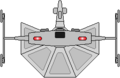
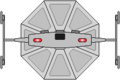
File:DY-140 Helsinki (stbd).png | |||
File:DY-140 Helsinki (dorsal).png | |||
File:DY-140 Helsinki (bow).png | |||
File:DY-140 Helsinki (stern).png | |||
File:DY-140 Helsinki (ventral).png | |||
</gallery> | </gallery> | ||
Revision as of 11:25, 18 October 2020
.png)
| |
| DY series (sublight) | |
|---|---|
| Class Overview | |
| Category | interplanetary transports |
| Operational | 1989 - 2289
|
| Constructed | 121 total ships (65 boosters, 12 heavy launch)
|
| Dimensions | |
| Length |
|
| Beam |
|
| Height |
|
| Mass |
|
| Performance | |
| Max Speed |
|
| Endurance |
|
| Complement | |
| Crew |
|
| Passengers |
|
| Patients |
|
| Cargo |
|
| Tactical Systems | |
| Beam Weapons | DY-50, -100, -110, -120, -130, -140
DY-135 Black Mamba
|
| Missile Weapons | DY-50, -100, -120, -130
DY-110
DY-135 Black Mamba
|
| Other Weapons | DY-110
DY-140 Helsinki
|
| Shields | DY-50, -100, -110, -120, -130
DY-120 Brenton
DY-140 Helsinki
DY-135 Black Mamba
|
| Laboratories | DY-50, -100, -110, -120, -130
DY-120 Brenton
DY-140 (both), DY-135 Black Mamba
|
| Auxiliary Craft |
|
| Canonicity | |
| Design | TOS, TNG (Aridas Sofia, et al.) |
| Name | TOS, TNG (Aridas Sofia, et al., own) |
| History | TOS, TNG (own, adapting TOS, TNG and SFC)
|
Background


The Dinyan-Yoyodyne Conglomerate DY series space transport vessels represent a continuous chain of shipbuilding tradition, from Earth’s first practical commercially produced manned interplanetary craft in the 1990s to the colonization and cargo ships of the late 23rd century. Considering that for the first hundred years of operations, all the various types of spacecraft in the DY series were vastly inferior to the ships of most extraterrestrial races and alliances of the time, it seems rather curious that they would in fact propel Earth into becoming a major military and exploratory power in the region. The sociopolitical reasons for the success of Earth’s colonial expansion have been exhaustively discussed elsewhere, but these would not have come to play had Dinyan-Yoyodyne not produced these humble colonization vessels in notable quantity.
The experimental DY-50 was an early attempt at a ship capable of interplanetary travel at a then-incredible delta-v of 0.005c. Two ships of this type were constructed in 1989 in the province of Xuhan in the country of China, part of the vast number of technology breakthroughs of that time that were the result of a long international, clandestine eugenics program. The genius of the selectively bred, chemically and genetically augmented scientists could not be hidden for long: in 1992, the results were dramatically made public as these supermen took over most of South and Southeast Asia. Despite an initial civilized establishing of diplomatic relations, the rulers soon began an endless cycle of revolutions and coups in a quest for ultimate power. But many leading nations still turned a blind eye on the supermen’s cruel reign, lest the stream of new technology and scientific breakthroughs from their R&D centers end. As an example of this tolerance, mass production of DY spaceships was continued in China, and also expanded to India and the United States.
In the hectic years of the rule of Khan Noonian Singh, perhaps the most famous of the victors of superhuman wars of supremacy, technologies flourished in a way that put to shame the industrial revolution and the birth of computer technology. There are persistent rumors of longevity drugs and antigravity devices, perhaps even time travel methods, having been developed by Khan’s or his less civilized usurpers’ scientists; given our fragmentary knowledge of that era, no such rumors can be completely discredited. What is certain, however, is that spaceflight technology took a major step forward. Super-efficient reaction drives were built for DY-100 fission-powered interplanetary craft expanded from the early cislunar DY-50 hulls, and used to found a spaceborne industry for Singh’s kingdom. As the movement spread to northern Africa, several spaceports were built there to support this industry. Other countries were sold parts of this technology, usually heavily laden with propaganda and sometimes also with hidden psychochemical weapons.
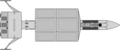
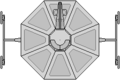
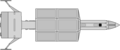
DY-100 was an ingenious design featuring a pencil-like central hull with two support decks and two full-width longitudal zero-gee habitat decks, a ring of wedgelike jettisonable fuel tanks or cargo pods, a one-, two- or three-chamber solid-core fission rocket with adjoining radiator assemblies and possible chemical boosters, aerodynamic surfaces and other mission-specific additions at the stern, and an offset control/docking tower at the bow. For planetary takeoff, the ship used a cluster of four to six huge solid booster rockets attached aft of the fuel wedges. While this complex configuration required an elaborate gantry system to stack, the simplicity of the propulsion system facilitated rapid launch preparations; a DY hull and a set of boosters could be taken from storage, equipped for the mission, stacked and launched in less than two days if necessary.
‘Landings’ were theoretically possible on low-gravity worlds like asteroids and the moons of Mars, both of which were targeted by manned missions in the 1990s and 2000s. It was usual to utilize a dedicated landing craft housed inside a bow shroud or carried in place of a cargo container for true orbit-to-surface operations, for example on Earth’s moon. No DY ships ever returned to Earth surface, but were refueled in orbit by dedicated tankers launched on simple, throttleable-combustion single-stage solid boosters not unlike those used to loft the ships themselves to space. The boosters were also used for a variety of other missions, most importantly for launching orbital laser platforms to bolster the military muscle of the supermen. Between 1990 and 1995, the rate of orbital launches from Earth grew by almost 200% every year, and more than twenty interplanetary launches were performed between 1993 and 1996 alone, mostly to Mars where the Great Khanate unsuccessfully tried to establish a colony of supermen.
Theoretically capable of acceleration to 0.01c lightspeed with full fuel load and minimum cargo, the DY-100 could also carry over 7,500 metric tons of material swiftly across interplanetary distances; had the relatively stable Singh rule continued for another decade, the ships would no doubt have established a systemwide industrial base for the supermen. But the final breakthrough in interplanetary travel came just before the collapse of the Singh kingdom. As the surrounding countries finally prepared to join and end the constant war between the genetic supermen, scientists at Delhi perfected the first practical long term cryogenic sleep technology, earlier used only to preserve biological samples or even dead bodies in bizarre attempts at afterlife. And when the walls of Khanton came crumbling down in 1996, a group of Singh’s followers were able to escape on one of the final-batch DY-100 ships they had prepared for interplanetary ‘seeding’ operations. No one outside the regime suspected that these ships would be capable of interstellar travel, though – Khan Singh’s escape was only revealed 270 years later, when his ship was found adrift in space in the Mutara sector, some fifty lightyears away from Earth.
The Singh kingdom left some two dozen DY craft and their associated launch equipment lying around in various states of construction, an enormous technology base for the rest of the world even though the original Dinyan-Yoyodyne Conglomerate factories and labs now lay in ruins. In addition to two active ships operated by USAF and one by RRKS, half a dozen abandoned Chinese-flagged vessels were adrift in Earth orbit. International missions were mounted to salvage these craft; no such effort was made on the doomed Martian conquistadors. It has been speculated that some of these ships, also equipped with crude cryogenics, may have allowed more supermen to escape the way Khan did, but no evidence has been found to support such speculation. ‘Upgrades’ and ‘refinements’ to the original design yielded mixed results. The DY-120 series from the 2020s was a moderate success, yet the further enlarged DY-130 failed to perform according to specifications, reflecting the science community’s poor theoretical understanding of the original inertia manipulation breakthroughs. More than four hundred and fifty DY-120 and -140 series ships were eventually finished by commercial operators; a total of 43 saw UEDP service under the respective class names Brenton and Helsinki. The unsuccessful DY-130 in turn spawned the DY-135 military project, half a dozen high speed patrol vessels armed with four laser cannon and a missile tube and backing up the slower Liberty class in defending Sol in the late 21st century.
The extended interplanetary operations of the second generation of DY vessels were facilitated by an improved Amjet gas-core fission powerplant assembly that required only 50% of the propellant mass of the original design. For lunar runs, a simple landing tug was carried; up to 16 cargo wedges could be externally mounted onto the core stage, and the tug could carry four at a time down to lunar surface.
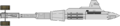
For fast translunar missions, standard practice still called for a mission spacecraft to be added to the booster stage. The Apex, Afrodite and later Ares “upper stages” utilized a conventional fission-powered ion engine for regular flights to and from Venus and Mars, while the much heavier Aventeurs relied on a cluster of the same nuclear thermal rockets that propelled the booster stages when launching on “Grand Tours” to the outer planets. The Aventeurs were also able to fulfill mankind’s dream of an offworld colony, running a steady stream of supplies to the Moon from asteroid mining rigs, as well as setting up automated bases at Ganymede.
The permanent settling of Mars was once again put on hold, however. Far more interesting dreams were now taking its place, as the wave of probes built with the new technology began sending back evidence of near-Earth-like worlds in this area of space.
Major Production Runs
- DY-T (1989): heavy single-stage-to-orbit cargo launch vehicle; carried fuel or other cargo (such as the DY-B series cislunar drives)
- DY-50 (1989): 2 test models constructed for the CNSA by the Dinyan-Yoyodyne Conglomerate, with built-on launch boosters; refueled by DY-T for cislunar missions
- DY-100 (1990): the first mass-produced series, built or licensed to the ISRO, CNSA, RRKS (later collaborating as the ECSN) and USAF; launch assisted by the DY-A1; would swap for DY-B1 in orbit (for cislunar missions)
- DY-A1 (1990): tri-booster launch system; detached upon reaching orbit and swapped for a DY-B1 for cislunar missions
- DY-B1 (1990): a pair of finned and aerodynamic boosters for the cislunar missions to Luna; delivered aboard DY-T and refueled for follow-on missions; can return to Earth thru remote for maintenance
- DY-110 Apex (1991): supported early Venusian and Martian missions; would launch with DY-A2; receive DY-B2 in orbit
- DY-A2 (1991): a cluster of four huge solid booster rockets attached aft of the fuel assembly of the DY-100s and DY-110s for launches from Earth
- DY-B2 (1991): an improved non-aerodynamic, fission-propulsion module for cislunar missions and interplanetary ones to Venus and Mars
- DY-100B (1994): an improvement upon the original DY in that the DY-B2 is attached on the ground; requires the DY-A3 to launch to orbit
- DY-A3 (1994): a cluster of six huge solid booster rockets attached aft of the fuel assembly of the DYs with pre-equipped DY-B series boosters
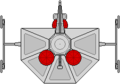
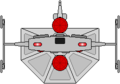
- DY-120 (2021): DY series re-enters production with new commercial design, supporting orbital structures and lunar bases; the first of 31 militarized Brentons transports are introduced in 2023 for the ISA; altogether over 400 DY-120s are produced
- DY-130 (2037): six larger DYs are built as a test of a newer and intended faster design, but the ship is much more maintenance-demanding with thruster control issues that made close-in maneuvering difficult and dangerous
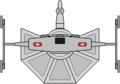
- DY-140 (2039): lessons learned from the failed DY-130 result is a comparably faster and larger design, successfully improving the DY series; over 50 were produced, successfully supporting first the colonization of Mars and then other interplanetary destinations; the first of 12 militarized Helsinki transports are introduced in 2042 for the ISA
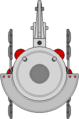
- DY-135 (2042): the improvements from the DY-140 series are used to modify the 6 DY-130 hulls, making them less massive and faster; they would form the Black Mamba class for the ISA and later the UEDP, serving alongside the slower Liberty class ships defending the solar system
Gallery
DY-50 Experimental Transport
.png)
.png)
.png)
.png)
.png)
DY-100 Interplanetary Transport
-
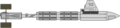 Unladen
 -
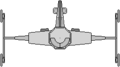
-
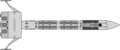
-
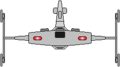
-

-
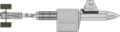 Laden with 5 container pods
 -
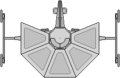
-
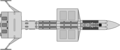
-
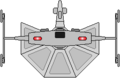
-
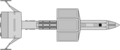
-
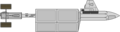 Laden with 10 container pods
 -
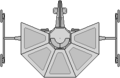
-
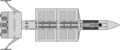
-
-
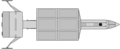
-
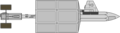 Fully laden with 16 container pods
 -
-
-
-
_(stbd).png)
_(bow).png)
_(dorsal).png)
_(stern).png)
_(ventral).png)
_(bow).png)
_(dorsal).png)
_(stern).png)
_(ventral).png)
_(stbd).png)
_(bow).png)
_(dorsal).png)
_(stern).png)
_(ventral).png)
_(stbd).png)
_(stern).png)
_(dorsal).png)
_(bow).png)
_(ventral).png)
DY-110 Apex Mission Spacecraft
-
 Unladen
 -
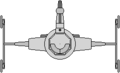
-

-
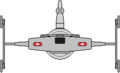
-

-
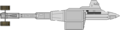 Fully laden with 5 container pods
 -
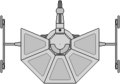
-

-
-

_(stbd).png)
_(bow).png)
_(dorsal).png)
_(stern).png)
_(ventral).png)
_(stbd).png)
_(bow).png)
_(dorsal).png)
_(stern).png)
_(ventral).png)
DY-120 Brenton Mission Spacecraft
-

-
-

-
-

-
 International Space Agency livery
.png)
.png)
.png)
.png)
.png)

DY-140 Helsinki Mission Spacecraft
.png)
.png)
.png)
.png)
.png)
DY-135 Black Mamba Mission Spacecraft
-

-
-

-
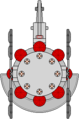
-

-
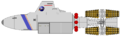 International Space Agency livery
.png)
.png)
.png)
.png)
.png)

DY (sublight) Commercial types
-
 DY-120 interplanetary transport (unladen)
 -
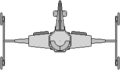
-

-
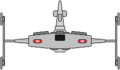
-

-
 Laden with 15 container pods
 -
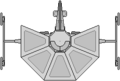
-

-
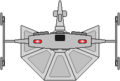
-

-
 Fully laden with 24 container pods
 -
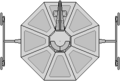
-

-
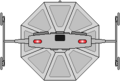
-

-
 Corporate liveries
 -

-

-

-
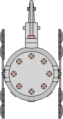
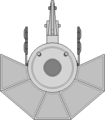
 DY-130 interplanetary transport (unladen)
 -

-

-
-

-
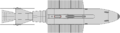
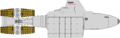 Fully laden with 15 container pods
 -
-
-
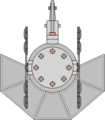
-
-
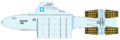 Maersk Space Freight Line corporate livery
_(stbd).png)
_(bow).png)
_(dorsal).png)
_(stern).png)
_(ventral).png)
_(stbd).png)
_(bow).png)
_(dorsal).png)
_(stern).png)
_(ventral).png)
_(stbd).png)
_(bow).png)
_(dorsal).png)
_(stern).png)
_(ventral).png)


_(stbd).png)
_(bow).png)
_(dorsal).png)
_(stern).png)
_(ventral).png)
_(stbd).png)
_(bow).png)
_(dorsal).png)
_(stern).png)
_(ventral).png)

Heavy Lift Vehicles & Launch Boosters
-
 DY-T (landing configuration)
 -

-

-

-

-
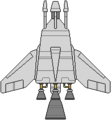 CALT-Z5 (DY-50 launch booster)
 -

.png)
.png)
.png)
.png)
.png)
.png)
.png)
Interplanetary Drives
Other Images
-
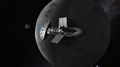 Botany Bay departs Earth

DY-100 Gallery
-
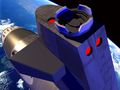 Sail docking ring
 -
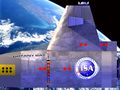 (Mislabeled) forward hull and sail section
 -
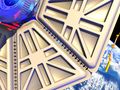 Forward view of cargo pods
 -
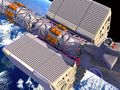 Dorsal view of docking rings for 6 cargo pods
 -
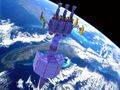 DY-100 maneuvering over Cuba
 -
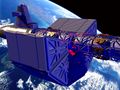 Lateral dorsal view of unloaded cargo section
 -
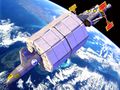 Fully-loaded DY-100, forward lateral view
 -
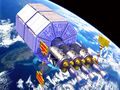 Fully-loaded DY-100, stern dorsal view
 -
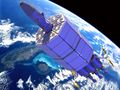 Fully-loaded DY-100, forward ventral view
 -
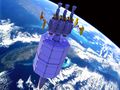 Fully-loaded DY-100, stern ventral view
 -
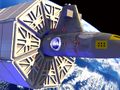 Fully-loaded DY-100, forward hull section view
 -
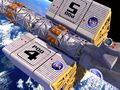 Partially-unloaded cargo section, just aft of sail
 -
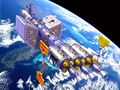 Partially-unloaded DY-100, stern dorsal view
 -
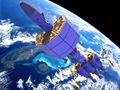 Partially-unloaded DY-100, forward ventral view
 -
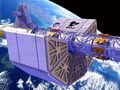 Partially-unloaded DY-100, showing 12 unloaded docking rings
 -
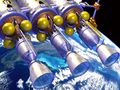 Close-up of main thrust engines
 -
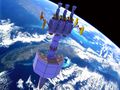 Partially-unloaded DY-100, ventral view
 -
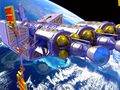 Partially-unloaded DY-100, stern view
 -
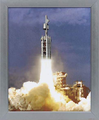 Launch of an unidentified DY-100


Supporting Documents
- [ Blueprints]
- [ Starship Recognition Manual #xxx - Report: DY Sublight Transport]
Class Reports
See also
Notes
- The mission name of the Ares Mission III spacecraft is changed from 'Lucifer' to 'Guan Yu' to better fit the 'deities of war' motif of the missions.
- All references to the ECSN are being changed to ECSA, as I want to reserve the "navy" for the ECONs.
- All references to Timo's "DY-B" series have been removed; it was extremely under-defined and now represents the series of interplanetary propulsion systems.
- Text was changed for cargo capacity from 6,000 to over 7,500 metric tons, based upon volume analysis.
- In order to not have the Columbus series craft as too fast (arriving at destinations pre-First Contact), all max speeds have been drastically reduced, (except for the DY-50).
- In the DY sublight SRM, it is revealed the DY-50s were de-orbited in 1994 into the South Pacific Ocean Uninhabited Area.