Guide:Tai/Sait

| |
| Tai / Sait | |
|---|---|
| Class Overview | |
| Category | light courier |
| Operational | 2265 - 2349 |
| Constructed | 183 sleds / 468 pods total: |
| Dimensions | |
| Length |
|
| Beam |
|
| Height |
|
| Mass |
|
| Performance | |
| Max Speed |
|
| Endurance |
|
| Complement | |
| Crew |
|
| Passengers |
|
| Cargo | Mk II: |
| Tactical Systems | |
| Beam Weapons | all sleds:
all pods:
select Atai & Fikaru, most Manasu:
most Chisu:
|
| Other Weapons | all sleds:
|
| Shields | all sleds:
all pods:
|
| Transporters | some Atai: 1x emergency evacuation (2-pad), Mk III or IV |
| Canonicity | |
| Design | TMP/Andrew Probert, Ashes of Eden (Reeves-Stevenses), Jackill |
| Name | Jackill, Timo |
| History | Ashes of Eden (Reeves-Stevenses), Timo
|
Background: Hobbyist's Guide
One of the most important light courier types of Star Fleet in the late 23rd century was the Tai/Sait class. These couriers were actually two-component craft, and the class names Tai and Sait refer to the two models of the warp propulsion component, an unmanned sled featuring two or three warp nacelles, respectively. Unlike in the contemporary Richtofen class, each of the long, slender nacelles formed a self-contained propulsive module, with sensors at bow, warp coils and ramscoops amidship, and reactors, fuel pods, and impulse engines astern. The nacelles hung below a flat structure that housed docking mechanisms, shield and deflector systems, and various other navigation subsystems. For planetary landings, the warp section was left in orbit, while a small, wedge-like shuttlepod performed the actual planetfall.
There was a large family of shuttlepod designs available for use with the Tai and Sait warp sleds. For courier duty, the most widely used type was the Atai shuttlepod, an 88-ton, 18.7 m vehicle capable of carrying up to 14 passengers in relative comfort, or smaller diplomatic parties in significant luxury. The crew of four enjoyed a completely synthetic view of the outside from a flight deck situated behind a flat-plate atmospheric shield. Below the deck was the main cabin area, with a portside entry door with a small ramp for ground access, and sets of windows to port and starboard. Beyond these lay a sectioned passenger/cargo compartment with a standard configuration for two large and two small cabins. At the extreme stern, an airlock with a standard docking collar and two to six spacesuits provided exterior access and interfacing with other spacecraft or installations. A ventral iris hatch catered for the rare situations where access to and from the warp sled was needed, while a corresponding dorsal hatch was for emergency use only.
Most engineering facilities, small in size due to the nonindependent nature of the craft, were conveniently mounted above the habitat area. Thanks to standardized interface arrangements, the main power systems could be directly coupled to those of the warp sled whenever the craft was attached to one. Latching was handled by two large gravitic plates at the bottom; four smaller gravitic emitters facilitated soft landing. Propulsion was limited to RCS thrusters at the corners of the spaceframe, but the craft had integrated shielding systems and even sported two phaser IV emitters atop the hull. Some Atai models also featured additional emitters at ventral bow, offering a field of fire forward and down even in attached flight mode.
Four principal variants of the shuttlepod were in Star Fleet service. In addition to Atai, a stretched heavy cargo version dubbed the Fikaru class could be operated from the Tai and Sait platforms. The Fikaru had broad side doors and ramps and a dorsal rolling door for cargo loading and offloading, and sported a relatively austere one-deck crew area, but carried essentially the same systems as the Atai. Two compact liaison vessels, the Manasu and Chisu classes, were seldom operated from aboard the warp sleds, although they, too, sported the required interfaces. Instead, the smaller craft were used as starbase and starship auxiliaries, mainly by the Vulcans but to some degree by Star Fleet as well—they were for example adopted for the Akula class PA ships which had no hangar facilities for other types of craft.
Each shuttlepod came with accessories that could turn it into an independently operable shuttlecraft. There were lateral impulse engine packs available for all four types, and combined impulse and warp packs for Atai, Fikaru and Manasu. Propulsive performance was comparable to standard shuttlecraft of the time, save for limited endurance. Accessorizing also included lateral and dorsal weapon packs and extension modules for the pressurized volume, yet Star Fleet had little use for these. Indeed, the necessity of stockpiling add-on modules made the shuttlepod family generally unattractive for starship auxiliary applications. A typical starship would need both Manasu personnel and Fikaru cargo craft, and separate impulse and/or warp-plus-impulse packs for each, there being extremely few situations where the pods would be useful in unboosted configuration.
Yet even as wholly integrated shuttlecraft of other types were purchased for starships, Star Fleet’s inventory in the late 2260s grew to include 111 Tai and 72 Sait sleds and nearly five hundred compatible pods of various kinds. The three-nacelled Sait variants initially enjoyed a top speed advantage and later served as executive long range shuttles for UFP officials and Star Fleet Admiralty, while the standard two-engined Tai craft performed more general courier duties. Vulcan, the original manufacturer of the type, remained a principal operator, with more than seven hundred sleds and thousands of pods. The design also saw extensive service among Andorians (as the Vasej class) and Vegans (where the name Lzzak, or Javelin, was adopted).

Star Fleet retired most of the two-engined vessels in 2331, as new Peregrine light craft offered greater flexibility and their heavier Condor sisters carried more cargo, both at greater warp speeds than the Tai/Atais or Tai/Fikarus. But many of these craft continued in UFP diplomatic service, offering high passenger comfort as well as starship-like speeds. Some Sait/Atai or Sait/Fikaru craft also continued in Star Fleet service until the late 2340s. Vulcan still operates the type in civilian roles, and provides Federation customers with a wide range of evolved models as well. However, Vulcan input in Star Fleet small craft design and production is diminishing, despite continuing cooperation on theoretical propulsion studies. Apparently, the logic of constantly striving to increase the speed and range of small craft evades the Vulcans, who are perfectly satisfied with the current selection of liaison vessels.
Gallery
Other Images
-
 Tai/Atai combo
 -
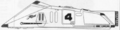 Atai heavy shuttle
 -
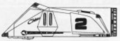 Chisu light shuttle
 -
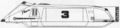 Fikaru cargo shuttle
 -
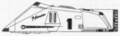 Manasu standard shuttle


Notes
Alt Sources
- Starship Handbook (Combined) (as Atai class)
References