(32 intermediate revisions by the same user not shown)
Line 4:
Line 4:
==Normal Space Phenomena==
==Normal Space Phenomena==
===Anomalous Region (NMAR)===
[[File:Anomalous Region.png|left|250px]]
The term "anomalous region" is a catchall designation for broad amorphous areas of a lightyear or greater that encompass spatial features not defined by the preceding designations. These regions are often referred to as (general) "rifts" or by a significant visual feature.<br clear="all" />
=== Black Hole (Class Z)===
=== Black Hole (Class Z)===
[[File:Blackhole.png|left|250px]]
[[File:Type Z2 (IM black hole).png|left|250px]]
: As they age, stars that mass more than 20 times [[Sol]] can collapse past the neutron star stage and become a black hole (also known as a 'singularity' or 'black star'). Black holes generate gravity one hundred billion times that of [[Earth]] - so strong that even light cannot escape them. The radiation, dust and gas attracted by a black hole forms an accretion disk around the hole, and as they fall into the hole, powerful gravity waves and X-rays radiate out from the hole. These emissions can endanger nearby objects, including starships and even entire worlds.
: As they age, stars that mass more than 20 times [[Sol]] can collapse past the neutron star stage and become a black hole (also known as a 'singularity' or 'black star'). Black holes generate gravity one hundred billion times that of [[Earth]] - so strong that even light cannot escape them. The radiation, dust and gas attracted by a black hole forms an accretion disk around the hole, and as they fall into the hole, powerful gravity waves and X-rays radiate out from the hole. These emissions can endanger nearby objects, including starships and even entire worlds.
: Moving into a black hole's gravity field causes immense gravimetric shear damage (see ''NG'', p. 231) and presents a risk of time dilation, or time compression. Flying at the wrong tangent into the black hole's gravity field can result in relativistic one-way trip up to a billion years into the future - or if the black hole is spinning, into the past. Star Fleet archaeologists occasionally detect frighteningly ancient relics spinning in orbits around black holes, preserved by this time-dilation effect. Some mathematical theories predict that the precise center of a black hole is a 'white hole' into another universe; this other universe may be the home dimension of the life-form encountered by ''[[USS Enterprise (1701-D)]]'' in [[2369]] that uses quantum singularities as nests for its young. The Romulans power some of their ships, including the feared ''D'deridex''-class warbird, with minute black holes known as artificial quantum singularities; thanks to the elaborate and multiple redundant safety interlocks built into these drives, very few have accidentally created true black holes, even when the ships were destroyed by energy sources like phasers.
: Moving into a black hole's gravity field causes immense gravimetric shear damage (see ''NG'', p. 231) and presents a risk of time dilation, or time compression. Flying at the wrong tangent into the black hole's gravity field can result in relativistic one-way trip up to a billion years into the future - or if the black hole is spinning, into the past. Star Fleet archaeologists occasionally detect frighteningly ancient relics spinning in orbits around black holes, preserved by this time-dilation effect. Some mathematical theories predict that the precise center of a black hole is a 'white hole' into another universe; this other universe may be the home dimension of the life-form encountered by ''[[USS Enterprise (1701-D)]]'' in [[2369]] that uses quantum singularities as nests for its young. The Romulans power some of their ships, including the feared ''D'deridex''-class warbird, with minute black holes known as artificial quantum singularities; thanks to the elaborate and multiple redundant safety interlocks built into these drives, very few have accidentally created true black holes, even when the ships were destroyed by energy sources like phasers.
Line 90:
Line 94:
===Nova (NMK)===
===Nova (NMK)===
[[File:Nova.jpg|left|250px]]
[[File:Nova.jpg|left|250px]]
: A nova is a cataclysmic nuclear explosion on a white dwarf, which causes a sudden brightening of the star. (Novae are not to be confused with other brightening phenomena such as supernovae or luminous red novae.) A nova is caused by the accretion of hydrogen onto the surface of the star, which ignites and starts nuclear fusion in a runaway manner. Novae are thought to occur on the surface of a white dwarf in a binary system. If the two stars are close enough, material can be pulled from the companion star's surface onto the white dwarf. ''Any damage endured and survived will be the result of the efforts necessary to survive the blast by escaping ahead of it (rolled as an Extreme [[Random_Events#Event_Test|Event]]).''
: A nova is a cataclysmic nuclear explosion on a white dwarf, which causes a sudden brightening of the star. (Novae are not to be confused with other brightening phenomena such as [[Interstellar_Phenomena#Supernova_(NMW)|supernovae]] or luminous red novae.) A nova is caused by the accretion of hydrogen onto the surface of the star, which ignites and starts nuclear fusion in a runaway manner. Novae are thought to occur on the surface of a white dwarf in a binary system. If the two stars are close enough, material can be pulled from the companion star's surface onto the white dwarf. Novae are known to create [[Interstellar_Phenomena#Subspace_Shockwave_(SPS)|subspace shockwaves]] capable of collapsing a warp field. ''Any damage endured and survived will be the result of the efforts necessary to survive the blast by escaping ahead of it (rolled as an Extreme [[Random_Events#Event_Test|Event]]).''
<br clear="all" />
<br clear="all" />
Line 126:
Line 130:
<br clear="all" />
<br clear="all" />
===Star cluster===
===Spatial Flexure (NMO)===
[[File:Spatial flexure.png|left|250px]]
A spatial flexure is a unique type of spatial rift that functions similarly to a wormhole, acting as a tunnel through space. Although both phenomena arise from similar physical laws, spatial flexures differ in appearance and behavior; they resemble tears in the fabric of space rather than swirling holes. Additionally, flexures may facilitate transitions into alternate dimensions or realities.
Typically, a stable spatial flexure connects distinct points in space-time through two apertures that move independently and unpredictably, making them unreliable for consistent travel. These flexures can be disrupted by a starship's warp core due to the high levels of emitted neutrinos and chronitons associated with the anomaly. This disruption may cause the flexure to transport a vessel not only to a different location in space but also to a different moment in time. In contrast, unstable spatial flexures do not require a misaligned warp drive to trigger severe disruptions; they can spontaneously send a vessel to various points in time and space, as well as shifting the ship between different dimensions or universes. ''A ship that prepares for entry into a stable flexure must pass a [[Random_Events#Event_Test|Challenging Event]] in order to pass through the anomaly with no time displacement. Passage through an unstable flexure will result in either time displacement or shifting into an alternate dimension, reality, or universe. To determine which event occurs, roll 1d100 on the below table. For the results of a time displacement, consult the table associated with [[Interstellar_Phenomena#Energy_Vortex_(NMV)|energy vortices]].
: Our universe coexists with a multitude of others occupying the same physical space but separated by the phase difference between them. Occasionally a universe overlaps with another, creating a region of interphase. Such interphase pockets are highly dangerous; vessels entering them are likely to find themselves marooned in another universe with little chance of returning. Being in close proximity to an interphase pocket has drastic effects on the brain function of humanoid life forms, while being trapped inside one is generally fatal.
: Interphase pockets are highly sensitive to disturbances in space and any use of energy in their vicinity can cause them to shift position and alter the timing of the periods of interphase significantly. An interphase pocket can be produced by detonating a tri-cobalt warhead in a sufficiently large gravitational field, such as that found near to a dead star. Under the right conditions, the pocket can act as a gateway which can allow objects to move both between parallel universes and through time.
: ''An interphase pocket is simply a limbo region between the two universes that are out of phase to one another. Some examples of these universes have proven to be (roughly) parallel (meaning, they are very similar in most respects, but with notable differences) and, of these, they may also allow for 'relative' time travel (that is, crossing over into a parallel universe does not mean also at the equivalent time). Other universes that are entered may be of a far different nature, though examples encountered to-date have not seen any differences in the laws of physics. An early encounter with an interphase pocket may be considered a Difficult [[Random Events#Mission_Task|Event]], with failure possibly resulting in a ship trapped either in the pocket (resulting in death) or the other universe (requiring adaption to new circumstances). After there is some understanding of the nature of interphase pockets, an experienced (or trained) crew will probably encounter the Event as Challenging.''
<br clear="all" />
===Star Cluster (NMS)===
[[File:Star cluster.jpeg|left|250px]]
[[File:Star cluster.jpeg|left|250px]]
: Star clusters are relatively compact regions in space where multiple stars coexist. The dense gravitational conditions prevalent in these areas often give rise to a variety of interstellar phenomena.
: Star clusters are relatively compact regions in space where multiple stars coexist. The dense gravitational conditions prevalent in these areas often give rise to a variety of interstellar phenomena. Open star clusters originate within the galaxy and tend to be much smaller & less dense than globular star clusters, which are remnants of older stars that had not been absorbed completely within the galaxy (and exist within its halo).
<br clear="all" />
===Supernova (NMW)===
[[File:Supernova (NMW).png|left|250px]]
: A supernova marks the explosive death of a massive star. When a significantly large star exhausts its nuclear fuel, its core collapses under immense gravitational pressure, triggering a catastrophic explosion that can briefly outshine entire galaxies. During this cataclysmic event, the star releases an enormous amount of energy—equivalent to the output of billions of suns—and ejects its outer layers into space at velocities approaching 10% of the speed of light. Supernovae are known to create [[Interstellar_Phenomena#Subspace_Shockwave_(SPS)|subspace shockwaves]] capable of collapsing a warp field. This spectacular stellar explosion not only destroys the original star but also creates and disperses heavy elements like gold, platinum, and uranium throughout the cosmos, effectively seeding future star systems and planetary formations. The remnants of a supernova can form either an incredibly dense [[Interstellar_Phenomena#Neutron_Star_(NMI)|neutron star]] or, in the most massive cases, a [[Interstellar_Phenomena#Black_Hole_(Class_Z)|black hole]].
<br clear="all" />
<br clear="all" />
Line 168:
Line 204:
<br clear="all" />
<br clear="all" />
===Wormhole / Spatial Flexure (NMX)===
===Wormhole (NMX)===
[[File:Wormhole.jpg|left|250px]]
[[File:Wormhole.jpg|left|250px]]
: A wormhole is a "tunnel" connecting two separate points in space-time via apertures connected by a conduit outside normal space, through subspace. Since this conduit is shorter than the distance between the two points in normal space, it may allow rapid travel (even if only communications) between the two points. Most wormholes are either naturally occurring or the result of dangerous warp drive malfunctions. Such wormholes tend to oscillate wildly across time and space, thus making them useless for normal interstellar commerce.
: A wormhole is a "tunnel" connecting two separate points in space-time via apertures connected by a conduit outside normal space, through subspace. Since this conduit is shorter than the distance between the two points in normal space, it may allow rapid travel (even if only communications) between the two points. Most wormholes are either naturally occurring or the result of dangerous warp drive malfunctions. Such wormholes tend to oscillate wildly across time and space, thus making them useless for normal interstellar commerce.
<br clear="all" />
[[File:Spatial flexure.png|left|250px]]
A spatial flexure is a unique type of spatial rift that functions similarly to a wormhole, acting as a tunnel through space. Although both phenomena arise from similar physical laws, spatial flexures differ in appearance and behavior; they resemble tears in the fabric of space rather than swirling holes. Additionally, flexures may facilitate transitions into alternate dimensions or realities.
Typically, a stable spatial flexure connects distinct points in space-time through two apertures that move independently and unpredictably, making them unreliable for consistent travel. These flexures can be disrupted by a starship's warp core due to the high levels of emitted neutrinos and chronitons associated with the anomaly. This disruption may cause the flexure to transport a vessel not only to a different location in space but also to a different moment in time. In contrast, unstable spatial flexures do not require a misaligned warp drive to trigger severe disruptions; they can spontaneously send a vessel to various points in time and space, as well as shifting the ship between different dimensions or universes. ''A ship that prepares for entry into a stable flexure must pass a [[Random_Events#Event_Test|Challenging Event]] in order to pass through the anomaly with no time displacement. Passage through an unstable flexure will result in either time displacement or shifting into an alternate dimension, reality, or universe. To determine which event occurs, roll 1d100 on the below table. For the results of a time displacement, consult the table associated with [[Interstellar_Phenomena#Energy_Vortex_(NMV)|energy vortices]].
Subspace is a spatial continuum completely tangent to normal space, but with widely divergent physical laws. Warp engines and subspace radio, crucial elements of interstellar travel, depend on subspace, but can also distort it under the wrong conditions. There are a wide array of recorded anomalies, including the following:
Subspace is a spatial continuum completely tangent to normal space, but with widely divergent physical laws. Warp engines and subspace radio, crucial elements of interstellar travel, depend on subspace, but can also distort it under the wrong conditions. There are a wide array of recorded anomalies, including the following:
===Graviton Ellipse (NMZ)===
===Graviton Ellipse (SPG)===
[[File:Graviton Ellipse.png|left|250px]]
[[File:Graviton Ellipse.png|left|250px]]
A graviton ellipse is a stable pocket of normal space enveloped by an elliptical gravimetric distortion, characterized by a perimeter that harnesses millions of terajoules of subspace energy. The anomalies travel through subspace, emerging into normal space and extra-dimensional realms only when they are in proximity of objects that emit electromagnetic energy, such as spacecraft. They remain outside of subspace for mere hours. In addition to the electromagnetic field, these anomalies emit level 9 gravimetric distortions through subspace to the space around them, creating severe turbulence. As an ellipse emerges from subspace, the initial target it was drawn to is already in range of the distortions and will no longer be capable of forming warp fields to escape. In addition, the target ship will experience a ship-wide power drain. The stress caused by the gravimetric interference is higher closer to the perimeter and can tear some starships apart.<br>
A graviton ellipse is a stable pocket of normal space enveloped by an elliptical gravimetric distortion, characterized by a perimeter that harnesses millions of terajoules of subspace energy. The anomalies travel through subspace, emerging into normal space and extra-dimensional realms only when they are in proximity of objects that emit electromagnetic energy, such as spacecraft. They remain outside of subspace for mere hours. In addition to the electromagnetic field, these anomalies emit level 9 gravimetric distortions through subspace to the space around them, creating severe turbulence. As an ellipse emerges from subspace, the initial target it was drawn to is already in range of the distortions and will no longer be capable of forming warp fields to escape. In addition, the target ship will experience a ship-wide power drain. The stress caused by the gravimetric interference is higher closer to the perimeter and can tear some starships apart.<br>
Line 202:
Line 219:
<br clear="all" />
<br clear="all" />
===Subspace Compression Anomaly (NMR)===
===Subspace Compression Anomaly (SPC)===
[[File:Subspace compression.jpg|left|250px]]
[[File:Subspace compression.jpg|left|250px]]
: A phenomenon (natural or artificial) caused when an object is partially encased in a subspace field, thus altering the gravitational constant of the encased portion and giving the different parts different inertial densities. Subspace compression causes stress to be placed on the object, and in extreme cases can cause it to be destroyed on an atomic level. In addition to this danger there is considerable risk of damage to the platform projecting the subspace field, although a modern starship is capable of withstanding a considerable degree of subspace compression. The ''[[Enterprise (1701-D)|Enterprise-D]]'' once attempted to correct the orbit of a moon orbiting [[Bre'el IV]] by wrapping a subspace field around part of it, thus resulting in subspace compression. The attempt failed, but as a result of non technical factors rather than any problems with the method employed.
: A phenomenon (natural or artificial) caused when an object is partially encased in a subspace field, thus altering the gravitational constant of the encased portion and giving the different parts different inertial densities. Subspace compression causes stress to be placed on the object, and in extreme cases can cause it to be destroyed on an atomic level. In addition to this danger there is considerable risk of damage to the platform projecting the subspace field, although a modern starship is capable of withstanding a considerable degree of subspace compression. The ''[[Enterprise (1701-D)|Enterprise-D]]'' once attempted to correct the orbit of a moon orbiting [[Bre'el IV]] by wrapping a subspace field around part of it, thus resulting in subspace compression. The attempt failed, but as a result of non technical factors rather than any problems with the method employed.
Line 209:
Line 226:
<br clear="all" />
<br clear="all" />
===Subspace Corridor (NMO)===
===Subspace Corridor (SPO)===
[[File:Subspace corridor.jpg|left|250px]]
[[File:Subspace corridor.jpg|left|250px]]
: A subspace corridor is a shortcut through space, which can allow a starship to traverse great distances otherwise unachievable with traditional warp drive. This 'groove in subspace' can draw in warp-driven ships and move them at speeds of up to 40 light-years a minute (equivalent to 21,024,000 light-years in a year or warp 276 on the OCU scale). A ship can emit a deflector resonance pulse to change its shield harmonics and thrust itself out of the corridor.
: A subspace corridor is a shortcut through space, which can allow a starship to traverse great distances otherwise unachievable with traditional warp drive. This "groove in subspace" can draw in warp-driven ships and move them at speeds of up to 40 light-years a minute (equivalent to 21,024,000 light-years in a year or warp 276 on the OCU scale). A ship can emit a deflector resonance pulse to change its shield harmonics and thrust itself out of the corridor.
: Though these corridors are rare, examples exist where they connect with other corridors, creating a vast network that can span well over 6,000 light-years (or more). In the Delta quadrant, the Vaadwaur mapped a network of subspace corridors (which were called underspace) over a period of centuries. They also discovered frequent use resulted in degradation of the corridors, requiring maintenance and careful use. Though navigation of normal space while within the corridors is not possible, ships can maneuver and - based on accurate charts - exit the corridors, based on times of transit within and landmarks of corridor branches. Debris can build up and remain within corridors that are not maintained.
: Though these corridors are rare, examples exist where they connect with other corridors, creating a vast network that can span well over 6,000 light-years (or more). In the Delta quadrant, the Vaadwaur mapped a network of subspace corridors (which were called underspace) over a period of centuries. They also discovered frequent use resulted in degradation of the corridors, requiring maintenance and careful use. Though navigation of normal space while within the corridors is not possible, ships can maneuver and—based on accurate charts—exit the corridors, based on times of transit within and landmarks of corridor branches. Debris can build up and remain within corridors that are not maintained.
: ''While a subspace corridor might result in a long-range sensor scan as an anomaly, actually discovering the breach into the corridor and opening it is not easy. Any attempt to study the anomaly will only result in success if rolled at less than 20% of the Ship skill. If an entrance to a subspace corridor is discovered, the ship may find itself pulled in and - barring any action to disrupt the transit or damage taken from other forces in the corridor - may find themselves disgorged 1d300 light-years from their original position, in a randomized direction. On a roll of 1 on 1d6, 1d10 branches will exist within the corridor, each with another 1 on 1d6 chance of 1d10 additional branches. The discovery of such a network would be immensely valuable.''
: ''While a subspace corridor might result in a long-range sensor scan as an anomaly, actually discovering the breach into the corridor and opening it is not easy. Any attempt to study the anomaly will only result in success if rolled at less than 20% of the Ship skill. If an entrance to a subspace corridor is discovered, the ship may find itself pulled in and—barring any action to disrupt the transit or damage taken from other forces in the corridor—may find themselves disgorged 1d300 light-years from their original position, in a randomized direction. On a roll of 1 on 1d6, 1d10 branches will exist within the corridor, each with another 1 on 1d6 chance of 1d10 additional branches. The discovery of such a network would be immensely valuable.''
<br clear="all" />
<br clear="all" />
===Subspace Eddy (NMS)===
===Subspace Eddy (SPE)===
[[File:Subspace eddy.jpg|left|250px]]
[[File:Subspace eddy.jpg|left|250px]]
: Subspace eddies form at the confluence of space and subspace, such as near a black hole or a powerful emitter of subspace radiation. They are highly charged with plasma, which causes them to leave an easily detectable particle wake behind them. The plasma makes a good source of energy for starships which are otherwise short on such resources. Subspace eddies throw off graviton waves, which cause considerable turbulence in their vicinity. Within the eddy, massive discharges of plasmatic energy are found and temperature gradients can exceed nine million kelvins. However the center of an eddy has a perfectly calm region akin to the eye of a hurricane.
: Subspace eddies form at the confluence of space and subspace, such as near a black hole or a powerful emitter of subspace radiation. They are highly charged with plasma, which causes them to leave an easily detectable particle wake behind them. The plasma makes a good source of energy for starships which are otherwise short on such resources. Subspace eddies throw off graviton waves, which cause considerable turbulence in their vicinity. Within the eddy, massive discharges of plasmatic energy are found and temperature gradients can exceed nine million kelvins. However the center of an eddy has a perfectly calm region akin to the eye of a hurricane.
: A subspace interphase pocket (or subspace pocket) is a self-contained region of subspace. ''See [[Interstellar_Phenomena#Subspace_Sinkhole_(SPH)|Subspace sinkhole]].
: Our universe coexists with a multitude of others occupying the same physical space but separated by the phase difference between them. Occasionally a universe overlaps with another, creating a region of interphase. Such interphase pockets are highly dangerous; vessels entering them are likely to find themselves marooned in another universe with little chance of returning. Being in close proximity to an interphase pocket has drastic effects on the brain function of humanoid life forms, while being trapped inside one is generally fatal.
: Interphase pockets are highly sensitive to disturbances in space and any use of energy in their vicinity can cause them to shift position and alter the timing of the periods of interphase significantly. An interphase pocket can be produced by detonating a tri-cobalt warhead in a sufficiently large gravitational field, such as that found near to a dead star. Under the right conditions, the pocket can act as a gateway which can allow objects to move both between parallel universes and through time.
: ''An interphase pocket is simply a limbo region between the two universes that are out of phase to one another. Some examples of these universes have proven to be (roughly) parallel (meaning, they are very similar in most respects, but with notable differences) and, of these, they may also allow for 'relative' time travel (that is, crossing over into a parallel universe does not mean also at the equivalent time). Other universes that are entered may be of a far different nature, though examples encountered to-date have not seen any differences in the laws of physics. An early encounter with an interphase pocket may be considered a Difficult [[Random Events#Mission_Task|Event]], with failure possibly resulting in a ship trapped either in the pocket (resulting in death) or the other universe (requiring adaption to new circumstances). After there is some understanding of the nature of interphase pockets, an experienced (or trained) crew will probably encounter the Event as Challenging.''
<br clear="all" />
<br clear="all" />
===Subspace Rift/Rupture (NMU)===
===Subspace Fissure/Rift/Rupture (SPR)===
[[File:Subspace rupture.jpg|left|250px]]
[[File:Subspace rupture.jpg|left|250px]]
: An opening in the fabric of normal space through which subspace protrudes. High level exposure of space containing subspace instabilities to warp fields can result in a subspace rift, a weakness that starts to exhibit symptoms of the impending rupture, which will cause vessels to become trapped in subspace. The rifts are extremely sensitive to any use of subspace technology, most especially to warp drive - any use of a warp drive system within a rift causes it to expand greatly into a rupture.
: An opening in the fabric of normal space through which subspace protrudes. High level exposure of space containing subspace instabilities to warp fields can result in a subspace rift, a weakness that starts to exhibit symptoms of the impending rupture, which will cause vessels to become trapped in subspace. The rifts are extremely sensitive to any use of subspace technology, most especially to warp drive - any use of a warp drive system within a rift causes it to expand greatly into a rupture.
Line 236:
Line 250:
<br clear="all" />
<br clear="all" />
===Subspace Shockwave (NMQ)===
===Subspace Shockwave (SPS)===
[[File:Subspace shockwave.jpg|left|250px]]
[[File:Subspace shockwave.jpg|left|250px]]
: A shockwave produced by certain types of explosion, most notably those involving dilithium ore. Subspace shock waves tend to propagate across an almost flat plane rather than in the three dimensional manner of a normal explosion. The shock wave propagates through normal space and can interact with objects within our universe, but its subspace nature allows it to travel at high multiples of the speed of light. The near destruction of the Klingon moon [[Praxis]] in [[2293]] produced a large subspace shock wave with a double wave front which extended out of Klingon territory altogether and hit the [[USS Excelsior]], which was patrolling in the area at the time.
: A shockwave produced by certain types of explosion, most notably those involving dilithium ore. Subspace shock waves tend to propagate across an almost flat plane rather than in the three dimensional manner of a normal explosion. The shock wave propagates through normal space and can interact with objects within our universe, but its subspace nature allows it to travel at high multiples of the speed of light. The near destruction of the Klingon moon [[Praxis]] in [[2293]] produced a large subspace shock wave with a double wave front which extended out of Klingon territory altogether and hit the [[USS Excelsior]], which was patrolling in the area at the time.
Line 259:
Line 273:
<br clear="all" />
<br clear="all" />
===Subspace Sinkhole (NMS)===
===Subspace Sinkhole (SPH)===
[[File:Subspace sinkhole.png|left|250px]]
[[File:Subspace sinkhole.png|left|250px]]
A subspace sinkhole is a naturally-occurring subspace phenomenon capable of producing an extremely strong gravity well. They are monodirectional. Extreme gravimetric shear from a sinkhole can prevent the formation of a stable warp field, which further decreases the chances of escape prior to passing its gravimetric horizon. These sinkholes pull anything that has become caught within their gravitation wells into a subspace pocket.
A subspace sinkhole is a naturally-occurring subspace phenomenon capable of producing an extremely strong gravity well. They are monodirectional. Extreme gravimetric shear from a sinkhole can prevent the formation of a stable warp field, which further decreases the chances of escape prior to passing its gravimetric horizon. These sinkholes pull anything that has become caught within their gravitation wells into a ''subspace pocket'', a self-contained region of subspace.
Subspace sinkholes can be sealed by an antigraviton beam which causes the pocket to collapse, crushing everything inside. As the subspace pocket—a self-contained region of subspace—is non-adjacent to other subspace domains, it is impossible to use the warp drive to escape from it. However, there is a theoretical possibility to utilize a multi-spatial probe to act as a transporter relay for victims trapped inside such a pocket. ''Any damage endured and survived will be the result of evasive actions (rolled as an [[Extreme Event]]) taken just prior to crossing over the sinkhole's gravimetric horizon. The establishment of a confirmable targeting lock through the gravimetric horizon and into the subspace pocket via a multi-spatial probe is a [[Difficult Test]].''
Subspace sinkholes can be sealed by an antigraviton beam which causes the pocket to collapse, crushing everything inside. As the subspace pocket—a self-contained region of subspace—is non-adjacent to other subspace domains, it is impossible to use the warp drive to escape from it. However, there is a theoretical possibility to utilize a multi-spatial probe to act as a transporter relay for victims trapped inside such a pocket. ''Any damage endured and survived will be the result of evasive actions (rolled as an [[Extreme Event]]) taken just prior to crossing over the sinkhole's gravimetric horizon. The establishment of a confirmable targeting lock through the gravimetric horizon and into the subspace pocket via a multi-spatial probe is a [[Difficult Test]].''
<br clear="all" />
<br clear="all" />
===Subspace Turbulence (NMT)===
===Subspace Turbulence (SPT)===
[[File:Subspace turbulence.png|right|250px]]
: Subspace turbulence is a subspace anomaly which causes severe disruption in subspace. This phenomenon, common around black holes and other similar disruptive anomalies, can hamper or even prevent a starship from forming a cohesive warp field (and thus from attaining warp speed). The after-effects of Omega particles will also result in subspace turbulence, prior to entering an area completely devoid of subspace.
: Subspace turbulence is a subspace anomaly which causes severe disruption in subspace. This phenomenon, common around black holes and other similar disruptive anomalies, can hamper or even prevent a starship from forming a cohesive warp field (and thus from attaining warp speed). The after-effects of Omega particles will also result in subspace turbulence, prior to entering an area completely devoid of subspace.
: ''While warp speed itself is impossible in a subspace void (area completely removed of any subspace presence), the 'shoal' areas around it may be somewhat possible to a ship skilled enough to initiate and maintain a warp bubble about their ship. Distances around the void differ, but the complexity of the act of warp creation decreases as distance from the subspace event increases. The complexity starts of at [[Skills#Skill_Test|Extreme]] immediately outside the void, and lessens through the Difficult, Challenging, and Routine levels. For independent areas of subspace turbulence, generate as a plasma field (for size).''
: ''While warp speed itself is impossible in a subspace void (area completely removed of any subspace presence), the 'shoal' areas around it may be somewhat possible to a ship skilled enough to initiate and maintain a warp bubble about their ship. Distances around the void differ, but the complexity of the act of warp creation decreases as distance from the subspace event increases. The complexity starts of at [[Skills#Skill_Test|Extreme]] immediately outside the void, and lessens through the Difficult, Challenging, and Routine levels. For independent areas of subspace turbulence, generate as a plasma field (for size).''
<br clear="all" />
<br clear="all" />
===Subspace Vacuole (NMV)===
===Subspace Vacuole (SPV)===
[[File:Vacuole.jpg|left|250px]]
[[File:Vacuole.jpg|left|250px]]
: A subspace vacuole is a type of dimensional distortion which can act as a means of transit between dimensions, much as a wormhole does in normal space. Subspace vacuoles can also pose a hazard to navigation, due to the fact that contact with a vacuole while traveling at warp speeds could lead to the destruction of one's ship. Subspace vacuoles may be temporary or permanent phenomenon.
: A subspace vacuole is a type of dimensional distortion which can act as a means of transit between dimensions, much as a wormhole does in normal space. Subspace vacuoles can also pose a hazard to navigation, due to the fact that contact with a vacuole while traveling at warp speeds could lead to the destruction of one's ship. Subspace vacuoles may be temporary or permanent phenomenon.
In addition to galactic-scale phenomena such as the spiral arms & the core, many dangers and scientific opportunities appear in the vast empty spaces among the stars. In general, such phenomena occur most commonly in regions of denser star populations, but exploratory vessels have found enough exceptions to this rule to fill a library computer complex. The universe remains a wondrous place, and the "laws of astrophysics" 20th-century humanity postulated without ever leaving their planet proved mutable indeed.
This section describes these phenomena, as far as Star Fleet understands them, and gives some indications about their distribution and frequency. Their effects on passing (or investigating) ships are included here. If not, see chapter 13 ("Hazards") of the Decipher book, Star Trek Roleplaying Game, v2: Narrator's Guide (NG).
The term "anomalous region" is a catchall designation for broad amorphous areas of a lightyear or greater that encompass spatial features not defined by the preceding designations. These regions are often referred to as (general) "rifts" or by a significant visual feature.
Black Hole (Class Z)
As they age, stars that mass more than 20 times Sol can collapse past the neutron star stage and become a black hole (also known as a 'singularity' or 'black star'). Black holes generate gravity one hundred billion times that of Earth - so strong that even light cannot escape them. The radiation, dust and gas attracted by a black hole forms an accretion disk around the hole, and as they fall into the hole, powerful gravity waves and X-rays radiate out from the hole. These emissions can endanger nearby objects, including starships and even entire worlds.
Moving into a black hole's gravity field causes immense gravimetric shear damage (see NG, p. 231) and presents a risk of time dilation, or time compression. Flying at the wrong tangent into the black hole's gravity field can result in relativistic one-way trip up to a billion years into the future - or if the black hole is spinning, into the past. Star Fleet archaeologists occasionally detect frighteningly ancient relics spinning in orbits around black holes, preserved by this time-dilation effect. Some mathematical theories predict that the precise center of a black hole is a 'white hole' into another universe; this other universe may be the home dimension of the life-form encountered by USS Enterprise (1701-D) in 2369 that uses quantum singularities as nests for its young. The Romulans power some of their ships, including the feared D'deridex-class warbird, with minute black holes known as artificial quantum singularities; thanks to the elaborate and multiple redundant safety interlocks built into these drives, very few have accidentally created true black holes, even when the ships were destroyed by energy sources like phasers.
Black holes, while not common, are well enough understood that their presence and their dangers should be no surprise to any navigator. It is clear: once the event horizon is crossed, the ship is forever irretrievable. Instead, RPG events may come about from a black hole being studied: the ship looses power (or the station looses station keeping and must be rescued/repaired), a ship is lost to the horizon and the opportunity is taken to study it (time slows down immensely for the observed), a ship is thrown through time, a trapped ship from elsewhere in time 'pops' into view suddenly, within the horizon, etc.).
Cosmic String (NMY)
Resembling a black hole that is one proton in diameter in width but several light-years long, cosmic strings (also called superstrings) pose significant dangers to starships. Although they emit energy on characteristic subspace frequencies, cosmic strings can catch space vessels within their gravitational pull before a ship detects them. Once trapped, a ship may find itself unable to break free before actual contact with the string slices it apart.
The exact nature and formation of cosmic strings remains a mystery. Some scientists speculate that ancient civilizations used them as construction tools to build Dyson spheres and re-arrange solar systems, or as weapons (since a string could easily cut through ships, planets, and even stars). Others believe that cosmic strings constitute the majority of the galaxy's dark matter.
When a cosmic string is rolled, it will be detected as a gravimetric oddity, exhibiting extremes of gravitational forces: when first detected from any of 358 degrees of approach, it will provide a mass similar to that of a terrestrial planet, but when detected from a very narrow slice of 2 degrees (each 180 degrees apart), it will be sensed as a massive object, on par with that of a black hole. Therefore, when a ship approaches the invisible object, it will most likely sense a smaller stellar body that is not visually detected, but if it comes in from the wrong angle, the ship will be irreversibly drawn in, too sudden to take any action. Due to the sheer lack of experience with this type of phenomenon and the unlikelihood the object will be properly identified from a safe enough distance, it is considered an Extreme Event. Any damage endured and survived will be the result of evasive actions taken just prior to crossing over either event horizon. Once identified, the cosmic string should be properly charted and marked as an extreme navigation hazard. They can extend for 1d10 lightyears.
Energy Vortex (NMV)
An energy vortex is a phenomenon characterized by a spinning, turbulent anomaly in the local temporal continuum. It functions similarly to a tractor beam, but with vastly greater power. Attempts to escape from the vortex's mouth can result in displacement through time, potentially leading to severe damage or even destruction of a vessel. However, by skillfully maneuvering to follow the vortex down to its base, it is possible to re-enter normal space with minimal to no damage.
Escaping from a vortex via the mouth is Challenging and causes 2d100+150 damage. However, maneuvering towards the base to escape is Simple and causes only 1d50 damage. In either case, escape will displace the ship in time in either direction equally by rolling 1d100 on the following table. Note: the rules for this were generated by me based upon Memory Alpha's description, so damage or displacement may need to be adjusted.
Time Displacement
1d100
Displacement
01 - 35
1d20 hours
36 - 55
1d10 + 20 hours
56 - 70
1d30 + 30 hours
71 - 80
1d30 + 60 hours
81 - 90
1d10 weeks
91 - 97
1d10 + 3 months
98 - 99
1d100 years
00
> 1,000 years
Ion storm (NMM)
Stars, nebulae and other energetic bodies occasionally emit streams of electrically-charged dust and gas particles called ion storms. Ion storms can pose a danger to ships or planets and they continuously accelerate until they disburse. A given storm usually extends only a few thousand kilometers, but can trail by perhaps a million kilometers in length. Even worse, they are difficult to detect, regardless of size. Star Fleet rates ion storms in levels 1 to 10 (occasionally higher), depending upon their intensity. Ion storms can wreck havoc with the navigation and control systems of starships, or even kill unprotected crew in extended scientific pods or shuttlecraft. Very intense storms (level 6 and stronger), such as that around the planet Halka in 2267, can interfere with transporters or even alter the local field density between parallel universes.
Ion storms are fairly typical challenges for with which a starship to deal. While this rule insert cannot dictate the 'why' a starship has to contend with any particular ion storm, consider a level 6 storm to be a Routine Event, while levels 7-9 would constitute challenging. A level 10 might considered difficult, unless the issue of parallel travel arises to make it harder...
Lazarus star (NML)
While most supernovae lead to the creation of new protostars, a few supergiant stars somehow survive these massive explosions, then collapse again to cause another supernova. Known as Lazarus stars, these stars are surrounded by miniature nebulae consisting of nested shells of ionized gases. Any planets or asteroids able to survive the repeated stellar explosions possess rich amounts of radioactives, heavy metals and exotic substances (like dilithium), making the potential hazards of such systems worth braving for daring miners (especially during times of shortage or need, such as the Dominion War). The Kavis Alpha neutron star, studied by Dr. Paul Stubbs with the help of USS Enterprise (1701-D) in 2366, explodes every 196 years, making it one of the most regular and powerful Lazarus stars known.
In the RPG, these stars explode on a timed, but often irregular, schedule. Rolling a 1 thru 8 on a 1d10, the target Lazarus star explodes irregularly every 1d250 years, rolled after every event. On a roll of 9 or 10, however, the star explodes on a set timeframe, like clockwork, every 1d250 years. Any planets (or asteroids) within 5 lightyears will see a resource values doubled that actually rolled (for one random resource type, for all affected bodies) for their planetary class. Ships caught in an explosion are looking to deal with the damage results of an Extreme Event first failure.
Lost Planet (NMA/Class R or NMB/Class I, J, S, T, U, or W)
Although ships rarely encounter planets in interstellar space, such lost planets (also known as rogue planets) do occasionally occur. They are usually wrenched from their home star system by some cosmic catastrophe, such as a passing black hole or a supernova explosion, or they are constructed planets such as Yonada or Gothos, sent on their mysterious journey by a builder race or some immensely powerful being. Depending on the builders' technological capacity, such a world might support life in its hollow interior, or somehow maintain an atmosphere and energy source in deep space. Without such support, a terrestrial planet knocked away from a star will rapidly become Class D, though - with sufficient tectonic activity or other support - may simply transition to either P or even L classes. A large enough Class J world, or those of Classes S & T, just might be able to generate enough heat internally to support life on a Class M moon around it, a truly amazing chance that would divert any passing ship with an ounce of scientific curiosity.
In the RPG, these rare planets may be encountered by long-range gravimetric scans. As indicated, they are usually moonless gas giants or rocky planets. It is the rare exception indeed to find one that would still be considered terrestrial. Roll on the Blue zone to determine what class of world might have been encountered.
Nebula (NMC, NMD, or NME)
Clouds of interstellar gas and dust, nebulae range in size from relatively small planetary nebulae (usually under one cubic light-year, blown out by a super-nova) to immense interstellar nebulae stretching across whole sectors. Some interstellar nebulae first begin as planetary nebulae; others are protostars, or even entire stellar nurseries, that failed to form. In general, planetary nebulae are thicker and more energetic than interstellar nebulae.
Star Fleet assigns nebulae alphabetic classes: Class J nebulae are high in dark matter and ionized gas, Class T nebulae emit high levels of radiation, the Class C "Mutara class" blanks all visual and tactical sensors and interferes with shields. Star Fleet's science teams also use numerical nebulae classes running from 1 to 17. These numbers do not correspond directly with the nebula's energy level or thickness, as these vary in individual nebulae and over time, but with their basic structure and composition. In many Class 11 and 17 nebulae, phaser fire (or directed positron beams) can ignite active gases such as sirillium with effects similar to a small, localized plasma storm.
In such particularly thick or energetic nebulae, combat can become tense and deadly, even reduced to a duel of naked-eye torpedo targeting and sheer piloting instinct. Malfunctioning weapons systems (or the strange effects of nebula radiation on the ship's personnel) may force the crew to improvise tactics, replacement equipment or both. A crew will need both skill and luck to survive such an encounter.
NMC refers to planetary nebulae, which have a radius of around 1 lightyear; small nebulae are designated NMD and are generally not much longer than 5 lightyears at the greatest width; large nebulae are designated NME and are six lightyears or longer at the greatest width.
Decipher's Narrator's Guide (pp. 232-233) is the source for some of the below descriptions and rules for nebulae and their effect on ships & crew.
Class A (Hydrogen type): Class A The most common type of nebula, these tend to be diffused and predominately composed of ionized hydrogen, with multiples of colors when observed from a distance. For modern, shielded starships, there is little hindrance on any systems.
Class C (Mutara type): Class C The constant discharge of ambient energy within these large nebulae renders all sensors and shields useless. The use of either sensors or shields require passing a Difficult Ship Test roll. A successful test for the sensors results in degradation so severe that accurate data is only available after further Challenging test rolls are passed, with each attempt. A successful test for the shields allows them to operate with a reduction of 100 to each of the generators' threshold and protection levels.
Class E (Gamma Eridani type): Class E These massive nebulae contain stars and even planetary systems and span light years. Ships within lose most all subspace communication capability. Each time a message is to sent or received, a Difficult Ship Test must be passed; failure means the message does not get through. Conventional radio and other methods may still be employed, however, and probes carrying a prerecorded message can be launched out of the nebula.
Class G (Dichromic type): Class G Dichromic nebulae are interstellar gas clouds with intense gravimetric distortion. Ships entering suffer 250 points of damage each turn, applied to the shields normally, and roll 2d6; if the result is a 12, the ship suffers 1d50 points of damage directly to a particular system, bypassing the hull. Roll on Table 1: Starship Hit Locations to determine the system.
Class H (Hugora type): Class H Ships entering these stellar clouds risk losing their sensor functionality. To prevent damage, sensors must be de-powered. If sensor use is attempted, 1d50 points of damage automatically apply to the sensor being used (see Table 4.3: Sensor Systems) upon activation (or entrance of the nebula). A Challenging Ship Test must be passed for the sensors to be used as normally.
Class I (Idari type) : Class I The origins of these nebulae differ and remain unknown without individual study. However, they all are common in that there are no ambient light or energy sources within (i.e., no stars) and are considered "dark" in nature, for this reason. Like Class A nebulae, most Idara types impose little hindrance on any systems of a modern, shielded starship.
Class J (Mar Oscura type): Class J These rare dark-matter nebulae usually appear at first observance as the more mundane Idari type. Once within a Mar Oscura, a ship faces a series of small rips in the fabric of space-time. Random sections of the ship will "phase" out of normal space, possibly reappearing where they were, possibly reappearing embedded in solid matter. The longer a ship spends within a Mar Oscura type nebula, the greater chance a crew member will phase out and die upon phasing back. For each turn a ship is in the nebula, roll 2d6: on a 2, a random ship's system fails entirely, as a random percentage of the system's SU phases out (see Table 1: Starship Hit Locations to determine affected system); on a 12, a crew member phases out. While "phased out," the crew member can see and hear everything going on around them, but cannot interact in any way. In 2d6 turns, the affected equipment or crew member phases back. On a 1d6 roll, 1-4 results in the item or person returning back to the relative origin point; with 5-6, the phase in occurs in away from the ship (with the obvious death of the crew member). The ship's crew may attempt to pilot around these interspatial rifts: each round that a Challenging Ship Test is passed, the phase roll is avoided completely; failure requires the roll to be made and the consequences dealt.
Class K (Cerulean type): Class K The particular discharges of energy within these nebulae render all shields and energy weapons useless. The use of either shields or energy weapons require passing a Difficult Ship Test roll. A successful test for the shields allows them to operate with a reduction of 100 to each of the generators' threshold and protection levels. As successful test for the energy weapons reduces their damage capability by 100.
Class P (McAllister type): Class P These protostellar clouds limit sensor use, but the intense particle flux within the nebula also causes severe deterioration of ships' hulls. A ship entering the nebula must pass a Challenging Ship Test for each attempt to use the sensors, in order to get a reliable reading. Additionally, each turn within the nebula results in 1d50 points of damage directly to the ship's structural units, bypassing shields (but not resistance).
Class R (Rolor type): Class R This hazardous nebula constantly emits hyperonic radiation, which interferes with ships' propulsion systems. Upon entering such a nebula, a ship's propulsion systems must pass a Challenging Ship Test or suffer a temporary disabling of that system. The test must be applied to each of a ship's various means of propulsion.
Class T (Emission type): Class T Emission nebulae are powerful sources of electromagnetic radiation. Ships entering an emission nebula risk losing the functionality of their cloaking device. Emission nebulae are perfect battlegrounds for ships without cloaking devices facing ships with them. Upon entering the nebula, a cloaking-equipped ship must pass a Challenging Ship Test or cease to function. The test must be made each time is is activated while in the nebula; multiple attempts may be made over consecutive or later turns.
Class Y (Inversion type): Class Y This type of nebula is composed of unstable plasma strands. The strands are so unstable as to burn out the entire nebula within a few years, once ignited. Each turn a ship finds itself within a nebula so ignited, roll 2d6; if the result is a 12, the ship suffers 1d250 points of damage, impacting the shields first. The ship's crew may attempt to pilot around these strands as they ignite: each round that a Challenging Ship Test is passed, the strand roll is avoided completely; failure requires the roll to be made and the consequences dealt.
Neutron Star (NMI)
Stars with masses over one and a half times that of Sol do not remain white dwarfs after they age. The star's gravity pulls the white dwarf's stellar material inward, collapsing it into neutronium, a hyperdense form of matter that not even Star Fleet technology can manipulate. Neutron stars, since they are dark and gravitically powerful, can pose serious navigation hazards. Any damage endured and survived will be the result of evasive actions (rolled as an Extreme Event) taken just prior to crossing over the star's gravimetric horizon.
Nova (NMK)
A nova is a cataclysmic nuclear explosion on a white dwarf, which causes a sudden brightening of the star. (Novae are not to be confused with other brightening phenomena such as supernovae or luminous red novae.) A nova is caused by the accretion of hydrogen onto the surface of the star, which ignites and starts nuclear fusion in a runaway manner. Novae are thought to occur on the surface of a white dwarf in a binary system. If the two stars are close enough, material can be pulled from the companion star's surface onto the white dwarf. Novae are known to create subspace shockwaves capable of collapsing a warp field. Any damage endured and survived will be the result of the efforts necessary to survive the blast by escaping ahead of it (rolled as an Extreme Event).
Particle Fountain (NMP)
A particle fountain is a compact yet perilous spatial anomaly that emits intense gamma and neutron radiation, along with both microscopic and macroscopic particles traveling at extraordinary velocities. Despite its modest size, it deals catastrophic damage to starships and their crews if they are to pass through the high-powered stream. The radiation can penetrate shielding, obliterating all organic matter in an instant. Simultaneously, the relentless stream of particles overwhelms the shielding, leading to near-total destruction of the unprotected hull. The consequences of encountering a particle fountain are dire, making it one of the most formidable hazards in space. What makes study of these fountains so difficult is that in order to properly observe them for pertinent data, the ship must be within relatively close range; however, the anomalies can suddenly and without warning change their position anywhere within 600,000 kilometers, a distance too far for adequate study. Star Fleet has lost over a dozen starships to early attempts to understand this phenomena, before mandating a strict distance, and therefore has little knowledge as to how they are created or if they even have anything to do with subspace. Note: the nature of Particle Fountains is almost entirely a creation of mine, as the VOY episode "Alice" was extremely uninformative.
Plasma Field (NMN)
In subspatially or temporally unstable sectors, the interstellar hydrogen often accretes into dangerous plasma disruptions, discharging across light-years in showers of fiery energy. In some sectors (such as the Cardassian border Badlands) the plasma disruptions create a continuous plasma field which becomes a grave hazard to navigation. Like ion storms, Star Fleet rates plasma fields on a scale from 1 to 10, based on their intensity.
A level 6 field is a Routine Event, while levels 7-8 would constitute Challenging; levels 9 and 10 are considered Difficult. For vessels of size 5 or smaller, the level of complexity is increased by one.
Protostar (NMF)
A protostar is a cloud of gas and dust in the process of collapsing into a star and planets. Protostar clouds are fairly thin, so ships can move through them at up to warp 1 without danger. Close to the developing star, the nebula becomes much denser; there, ships cannot travel at more than half maximum impulse speed (0.13 c) because the dense gas can literally melt the hull at high speeds. Protostars also emit powerful waves of magnetoscopic radiation, which interferes with sensors, navigation and communication systems. In addition, showers of meteoroids commonly occur within protostar clouds and some protostars host photonic life forms. The use of either sensors requires passing a Difficult Ship Test roll. A successful test results in degradation so severe that accurate data is only available after further Challenging test rolls are passed, with each attempt. Each time any type of message (subspace, conventional, or other) is to sent or received, a Difficult Ship Test must be passed; failure means the message does not get through.
Pulsar (NMJ)
Most neutron stars become pulsars, spinning rapidly in periods from approximately one millisecond to almost 5 seconds. As it spins, a pulsar emits powerful energy pulses (anything from radio waves, to X-rays to visible light). The pulses occur at regular intervals, though these intervals slowly increase as the pulsar ages. Thanks to these pulses, pulsars often serve as 'navigational beacons' for spacefaring species. Star Fleet rates pulsars at power levels from 1 to 10. Any damage endured and survived will be the result of evasive actions (rolled as an Extreme Event) taken just prior to crossing over the star's gravimetric horizon. Additionally, if the ship finds itself in the axis of the energy pulse of a Level 7 or higher pulsar, it takes 1d50 points of damage each turn directly to the ship's structural units, bypassing shields (but not resistance).
Quantum Filament (NMQ)
A quantum filament is a localized, dynamic structure in normal space that acts as a conduit for energy between two extremely distant points in space. Unlike cosmic strings, which are static and topological defects in spacetime, quantum filaments are highly responsive to their environment and generally exist for relatively short periods of time. They are composed of fluctuating fields of energy, primarily involving gluons or other quantum particles. These filaments exhibit properties akin to plasma flows, where charged particles move along a defined path influenced by electromagnetic forces. They can be hundreds of meters long and they often generate in small but multiple numbers.
Due to their near-massless nature and short existence, quantum filaments are extremely hard to detect. Collisions with quantum filaments can cause major damage to starships, leading to system malfunctions or structural breaches due to sudden energy discharges or shifts in the filament's path. This phenomenon exists for only 1d20 days in a given location, making an encounter with them improbable but also challenging for quick rescue attempts. The nature of quantum filaments are almost entirely a creation of mine, as the TNG episode "Disaster" was extremely uninformative.
Quantum Fissure (NMU)
A quantum fissure, also referred to as an interdimensional rift, is a spacetime anomaly which acts as a fixed point across the spacetime continuum, described as a "keyhole" which intersects many quantum realities. In a sealed state an anomaly of this type remains undetected and presents no threat to the continuum. When unsealed, it remains invisible unless enhanced with a warp field; after initiating a subspace differential pulse, over ten million different quantum states can be observed. A fissure becomes unsealed when contact is made with a warp-equipped vessel; no damage will be incurred when this happens and it is unlikely to even be noticed. However, organic matter exposed to the undetectable radiation at the moment of impact will be thrown into a state of quantum flux, shifting into other realities.
The fissure can be re-sealed with a broad-spectrum warp field, though all matter (organic & inorganic) that had contact with the anomaly will be displaced in time. Contact with a fissure will result in time displacement in either direction equally, by 1d10 days.
Spatial Flexure (NMO)
A spatial flexure is a unique type of spatial rift that functions similarly to a wormhole, acting as a tunnel through space. Although both phenomena arise from similar physical laws, spatial flexures differ in appearance and behavior; they resemble tears in the fabric of space rather than swirling holes. Additionally, flexures may facilitate transitions into alternate dimensions or realities.
Typically, a stable spatial flexure connects distinct points in space-time through two apertures that move independently and unpredictably, making them unreliable for consistent travel. These flexures can be disrupted by a starship's warp core due to the high levels of emitted neutrinos and chronitons associated with the anomaly. This disruption may cause the flexure to transport a vessel not only to a different location in space but also to a different moment in time. In contrast, unstable spatial flexures do not require a misaligned warp drive to trigger severe disruptions; they can spontaneously send a vessel to various points in time and space, as well as shifting the ship between different dimensions or universes. A ship that prepares for entry into a stable flexure must pass a Challenging Event in order to pass through the anomaly with no time displacement. Passage through an unstable flexure will result in either time displacement or shifting into an alternate dimension, reality, or universe. To determine which event occurs, roll 1d100 on the below table. For the results of a time displacement, consult the table associated with energy vortices.
Our universe coexists with a multitude of others occupying the same physical space but separated by the phase difference between them. Occasionally a universe overlaps with another, creating a region of interphase. Such interphase pockets are highly dangerous; vessels entering them are likely to find themselves marooned in another universe with little chance of returning. Being in close proximity to an interphase pocket has drastic effects on the brain function of humanoid life forms, while being trapped inside one is generally fatal.
Interphase pockets are highly sensitive to disturbances in space and any use of energy in their vicinity can cause them to shift position and alter the timing of the periods of interphase significantly. An interphase pocket can be produced by detonating a tri-cobalt warhead in a sufficiently large gravitational field, such as that found near to a dead star. Under the right conditions, the pocket can act as a gateway which can allow objects to move both between parallel universes and through time.
An interphase pocket is simply a limbo region between the two universes that are out of phase to one another. Some examples of these universes have proven to be (roughly) parallel (meaning, they are very similar in most respects, but with notable differences) and, of these, they may also allow for 'relative' time travel (that is, crossing over into a parallel universe does not mean also at the equivalent time). Other universes that are entered may be of a far different nature, though examples encountered to-date have not seen any differences in the laws of physics. An early encounter with an interphase pocket may be considered a Difficult Event, with failure possibly resulting in a ship trapped either in the pocket (resulting in death) or the other universe (requiring adaption to new circumstances). After there is some understanding of the nature of interphase pockets, an experienced (or trained) crew will probably encounter the Event as Challenging.
Star Cluster (NMS)
Star clusters are relatively compact regions in space where multiple stars coexist. The dense gravitational conditions prevalent in these areas often give rise to a variety of interstellar phenomena. Open star clusters originate within the galaxy and tend to be much smaller & less dense than globular star clusters, which are remnants of older stars that had not been absorbed completely within the galaxy (and exist within its halo).
Supernova (NMW)
A supernova marks the explosive death of a massive star. When a significantly large star exhausts its nuclear fuel, its core collapses under immense gravitational pressure, triggering a catastrophic explosion that can briefly outshine entire galaxies. During this cataclysmic event, the star releases an enormous amount of energy—equivalent to the output of billions of suns—and ejects its outer layers into space at velocities approaching 10% of the speed of light. Supernovae are known to create subspace shockwaves capable of collapsing a warp field. This spectacular stellar explosion not only destroys the original star but also creates and disperses heavy elements like gold, platinum, and uranium throughout the cosmos, effectively seeding future star systems and planetary formations. The remnants of a supernova can form either an incredibly dense neutron star or, in the most massive cases, a black hole.
T Tauri Star (NMG)
Normal, or 'main sequence', stars experience a T Tauri stage at an early point during their stellar evolution. In this stage, a star loses much of its light metals (including solar lithium), which it emits in an enormous 'T Tauri wind' that blows billions of kilometers into space. This wind is highly energetic and can interfere with many ship's systems and even with organic life nearby. Almost all T Tauri stars are too young to have planets, but exceptions do exist. The use of sensors requires passing a Difficult Ship Test roll. A successful test results in degradation so severe that accurate data is only available after further Challenging test rolls are passed, with each attempt. Each time any type of message (subspace, conventional, or other) is to sent or received, a Difficult Ship Test must be passed; failure means the message does not get through.
Temporal Rift (NMR)
A temporal rift, or time rift, is a type of anomaly taking the form of a rift in the spacetime continuum. Time rifts are characterized by temporal distortions, which can allow for temporal displacement through space and time, or even traveling through past, present, and future all at once. They can be recognized by their tachyon emissions. Unstable time rifts might be created by high-energy interactions resulting in the formation of a Kerr loop from superstring material.: Preventing entry into a temporal rift is a Challenging Test. Transiting through the rift will displace the ship in time in either direction equally by rolling 1d100 on the following table. Note: the rules for this were generated by me, so displacement may need to be adjusted.
Time Displacement
1d100
Displacement
01 - 35
1d20 hours
36 - 55
1d10 + 20 hours
56 - 70
1d30 + 30 hours
71 - 80
1d30 + 60 hours
81 - 90
1d10 weeks
91 - 97
1d10 + 3 months
98 - 99
1d100 years
00
> 1,000 years
Variable Star (NMH)
Although most stars have constant (in humanoid terms) brightness, rotation and other characteristics, some, known as variable stars, alter one or more of their characteristics over relatively short time periods (as little as days or even minutes). For example, Cephid variables build up stellar energy and release it in nova-like explosions and flare stars project enormous solar flares; either phenomenon could harm an orbiting ship or destroy a nearby planet. A ship that knew a variable star's periodicity could potentially set a stellar ambush for an enemy, striking while the solar flares buffeted the target's shields and communications. If a ship finds itself in the path of either a explosion or flare, it suffers 1d250 points of damage, applied to the shields normally, for 1d6 consecutive turns.
Wormhole (NMX)
A wormhole is a "tunnel" connecting two separate points in space-time via apertures connected by a conduit outside normal space, through subspace. Since this conduit is shorter than the distance between the two points in normal space, it may allow rapid travel (even if only communications) between the two points. Most wormholes are either naturally occurring or the result of dangerous warp drive malfunctions. Such wormholes tend to oscillate wildly across time and space, thus making them useless for normal interstellar commerce.
Subspace Phenomena
Subspace is a spatial continuum completely tangent to normal space, but with widely divergent physical laws. Warp engines and subspace radio, crucial elements of interstellar travel, depend on subspace, but can also distort it under the wrong conditions. There are a wide array of recorded anomalies, including the following:
Graviton Ellipse (SPG)
A graviton ellipse is a stable pocket of normal space enveloped by an elliptical gravimetric distortion, characterized by a perimeter that harnesses millions of terajoules of subspace energy. The anomalies travel through subspace, emerging into normal space and extra-dimensional realms only when they are in proximity of objects that emit electromagnetic energy, such as spacecraft. They remain outside of subspace for mere hours. In addition to the electromagnetic field, these anomalies emit level 9 gravimetric distortions through subspace to the space around them, creating severe turbulence. As an ellipse emerges from subspace, the initial target it was drawn to is already in range of the distortions and will no longer be capable of forming warp fields to escape. In addition, the target ship will experience a ship-wide power drain. The stress caused by the gravimetric interference is higher closer to the perimeter and can tear some starships apart.
The core of a graviton ellipse is free of gravimetric distortions. The pocket of normal space within remains completely stable and calm regardless of the speed, location, or movements of the anomaly. Power can be restored, which would be preferable when inside ellipses that have accumulations of other debris floating free.Escape from an ellipse is not possible once it is drawn from subspace. Passage through the distortion perimeter exposes a ship to high gravimetric interference that can tear some vessels apart, while others map pass through relatively unscathed. On a roll of 1d10, a result of 4-10 sees the ship receiving massive damage; however, if a challenging attempt to mitigate the effects (possibly with impulse engines or thrusters) passes, the ship receives only marginal damage.
Subspace Compression Anomaly (SPC)
A phenomenon (natural or artificial) caused when an object is partially encased in a subspace field, thus altering the gravitational constant of the encased portion and giving the different parts different inertial densities. Subspace compression causes stress to be placed on the object, and in extreme cases can cause it to be destroyed on an atomic level. In addition to this danger there is considerable risk of damage to the platform projecting the subspace field, although a modern starship is capable of withstanding a considerable degree of subspace compression. The Enterprise-D once attempted to correct the orbit of a moon orbiting Bre'el IV by wrapping a subspace field around part of it, thus resulting in subspace compression. The attempt failed, but as a result of non technical factors rather than any problems with the method employed.
A rare and highly unusual subspace compression phenomenon was discovered in 2374. The anomaly caused an object which passed through it to be greatly reduced in physical size; the Danube class runabout Rubicon was shrunk to a size of approximately a dozen centimeters while investigating the anomaly, although it was eventually able to return to its normal size. It was hoped that study of the anomaly would enable a better understanding of the mechanisms behind transwarp conduits to be gained.
An encounter with subspace compression (artificially or naturally created) will cause considerable distress to the ship, regardless of the ship's skill. Unless otherwise dictated, the length of time to which the compression lasts naturally is 1d100 minutes; the effect will cause 2d6+3 points of damage each minute, taken by the shields first and then to the ship directly, per standard damage rules. A (rare) natural source will be confined to an extremely limited area, such as less than 0.2 lightyears.
Subspace Corridor (SPO)
A subspace corridor is a shortcut through space, which can allow a starship to traverse great distances otherwise unachievable with traditional warp drive. This "groove in subspace" can draw in warp-driven ships and move them at speeds of up to 40 light-years a minute (equivalent to 21,024,000 light-years in a year or warp 276 on the OCU scale). A ship can emit a deflector resonance pulse to change its shield harmonics and thrust itself out of the corridor.
Though these corridors are rare, examples exist where they connect with other corridors, creating a vast network that can span well over 6,000 light-years (or more). In the Delta quadrant, the Vaadwaur mapped a network of subspace corridors (which were called underspace) over a period of centuries. They also discovered frequent use resulted in degradation of the corridors, requiring maintenance and careful use. Though navigation of normal space while within the corridors is not possible, ships can maneuver and—based on accurate charts—exit the corridors, based on times of transit within and landmarks of corridor branches. Debris can build up and remain within corridors that are not maintained.
While a subspace corridor might result in a long-range sensor scan as an anomaly, actually discovering the breach into the corridor and opening it is not easy. Any attempt to study the anomaly will only result in success if rolled at less than 20% of the Ship skill. If an entrance to a subspace corridor is discovered, the ship may find itself pulled in and—barring any action to disrupt the transit or damage taken from other forces in the corridor—may find themselves disgorged 1d300 light-years from their original position, in a randomized direction. On a roll of 1 on 1d6, 1d10 branches will exist within the corridor, each with another 1 on 1d6 chance of 1d10 additional branches. The discovery of such a network would be immensely valuable.
Subspace Eddy (SPE)
Subspace eddies form at the confluence of space and subspace, such as near a black hole or a powerful emitter of subspace radiation. They are highly charged with plasma, which causes them to leave an easily detectable particle wake behind them. The plasma makes a good source of energy for starships which are otherwise short on such resources. Subspace eddies throw off graviton waves, which cause considerable turbulence in their vicinity. Within the eddy, massive discharges of plasmatic energy are found and temperature gradients can exceed nine million kelvins. However the center of an eddy has a perfectly calm region akin to the eye of a hurricane.
Subspace eddies are considered to be Challenging Events to deal with, when encountered. As indicated, they can be a ready source of heated plasma, if the receiving ship is in a condition to collect it. When encountered independently from a black hole (or other subspace radiation emitter), limit the radius to 0.2 ly.
Subspace Interphase Pocket
A subspace interphase pocket (or subspace pocket) is a self-contained region of subspace. See Subspace sinkhole.
Subspace Fissure/Rift/Rupture (SPR)
An opening in the fabric of normal space through which subspace protrudes. High level exposure of space containing subspace instabilities to warp fields can result in a subspace rift, a weakness that starts to exhibit symptoms of the impending rupture, which will cause vessels to become trapped in subspace. The rifts are extremely sensitive to any use of subspace technology, most especially to warp drive - any use of a warp drive system within a rift causes it to expand greatly into a rupture.
Very similar to subspace turbulence, a rift or rupture is not the result of natural anomalies (such as black holes or omega particles), but of heavy subspace use in a localized region. Unlike a void, where subspace is no longer present, in a rupture, subspace becomes a constant presence in normal space, essentially trapping any object that was in the immediate area at the time of the rupture forever within that same area. No travel can take place between the areas of normal space and subspace, not even by pre-existing features, such as subspace corridors.
Subspace turbulence is an early symptom of a rift and will be present in the immediate boundary areas of a rupture.
Subspace Shockwave (SPS)
A shockwave produced by certain types of explosion, most notably those involving dilithium ore. Subspace shock waves tend to propagate across an almost flat plane rather than in the three dimensional manner of a normal explosion. The shock wave propagates through normal space and can interact with objects within our universe, but its subspace nature allows it to travel at high multiples of the speed of light. The near destruction of the Klingon moon Praxis in 2293 produced a large subspace shock wave with a double wave front which extended out of Klingon territory altogether and hit the USS Excelsior, which was patrolling in the area at the time.
Subspace shockwaves created by moons or larger usually dissipate within 1d10 hours' time, though they'll travel at 1d100xc (i.e., up to just over warp 4 on the TNG scale). The below table indicates the level of complexity involved in escaping a subspace shockwave and the level of damage done, if the evasion attempt fails.
A subspace sinkhole is a naturally-occurring subspace phenomenon capable of producing an extremely strong gravity well. They are monodirectional. Extreme gravimetric shear from a sinkhole can prevent the formation of a stable warp field, which further decreases the chances of escape prior to passing its gravimetric horizon. These sinkholes pull anything that has become caught within their gravitation wells into a subspace pocket, a self-contained region of subspace.
Subspace sinkholes can be sealed by an antigraviton beam which causes the pocket to collapse, crushing everything inside. As the subspace pocket—a self-contained region of subspace—is non-adjacent to other subspace domains, it is impossible to use the warp drive to escape from it. However, there is a theoretical possibility to utilize a multi-spatial probe to act as a transporter relay for victims trapped inside such a pocket. Any damage endured and survived will be the result of evasive actions (rolled as an Extreme Event) taken just prior to crossing over the sinkhole's gravimetric horizon. The establishment of a confirmable targeting lock through the gravimetric horizon and into the subspace pocket via a multi-spatial probe is a Difficult Test.
Subspace Turbulence (SPT)
Subspace turbulence is a subspace anomaly which causes severe disruption in subspace. This phenomenon, common around black holes and other similar disruptive anomalies, can hamper or even prevent a starship from forming a cohesive warp field (and thus from attaining warp speed). The after-effects of Omega particles will also result in subspace turbulence, prior to entering an area completely devoid of subspace.
While warp speed itself is impossible in a subspace void (area completely removed of any subspace presence), the 'shoal' areas around it may be somewhat possible to a ship skilled enough to initiate and maintain a warp bubble about their ship. Distances around the void differ, but the complexity of the act of warp creation decreases as distance from the subspace event increases. The complexity starts of at Extreme immediately outside the void, and lessens through the Difficult, Challenging, and Routine levels. For independent areas of subspace turbulence, generate as a plasma field (for size).
Subspace Vacuole (SPV)
A subspace vacuole is a type of dimensional distortion which can act as a means of transit between dimensions, much as a wormhole does in normal space. Subspace vacuoles can also pose a hazard to navigation, due to the fact that contact with a vacuole while traveling at warp speeds could lead to the destruction of one's ship. Subspace vacuoles may be temporary or permanent phenomenon.
While detectable on short-range sensors, if a vessel crosses over a threshold of a vacuole while at warp, it must make a Difficult Event Test roll to survive. Transiting thru a vacuole at sublight will trigger the transfer to an alternate dimension.
Survey Lengths
Extensive Natural Phenomena Survey Lengths
Phenomena
United Earth Stellar Navy (2069–2133)
United Earth Starfleet (2133 - 2161)
Early UFP Star Fleet (2161-2269)
Reform Period (2270-2300)
Golden Years (2300-2340)
Expansion (2341-2360)
Transformation (2361-2375)
Uncharted (2376-)
Black Hole (Class Z)
too dangerous
12-18 months
3-6 months
4-8 weeks
2-3 weeks
5-10 days
2-4 days
6-12 hours
Cosmic String (NMY)
undetectable
6-9 months
6-10 weeks
3-5 weeks
1-2 weeks
3-5 days
24-48 hours
<12 hours
Energy Vortex (NMV)
too dangerous
too dangerous
sensor inadequacy
2-4 days
24-36 hours
12-18 hours
4-6 hours
1-2 hours
Ion Storm (NMM)
2-4 weeks
1-2 weeks
3-7 days
2-4 days
24-48 hours
12-24 hours
6-12 hours
2-6 hours
Lazarus Star (NML)
too dangerous
sensor inadequacy
3-6 months
6-10 weeks
3-5 weeks
1-2 weeks
3-5 days
24-48 hours
Lost Planet (NMA / NMB)
6-12 months
3-6 months
6-10 weeks
3-6 weeks
1-3 weeks
5-10 days
2-4 days
24-48 hours
Nebula (planetary) (NMC)
2-3 months
6-8 weeks
3-4 weeks
1-2 weeks
4-6 days
2-4 days
24-36 hours
6-12 hours
Nebula (small) (NMD)
too dangerous
4-6 months (perimeter)
8-12 weeks (limited penetration)
4-6 weeks
2-3 weeks
1-2 weeks
3-5 days
24-48 hours
Nebula (large) (NME)1
too extensive / dangerous
years (route charting only)
6-9 months
3-5 months
6-10 weeks
3-6 weeks
1-2 weeks
3-5 days
Nova (NMK)
remote sensing
2-3 weeks
5-10 days
3-5 days
24-48 hours
12-24 hours
4-8 hours
real-time
Particle Fountain (NMP)
too dangerous
4-6 weeks (perimeter)
2-3 weeks
1-2 weeks
3-5 days
24-36 hours
8-12 hours
2-4 hours
Plasma Field (NMN)
sensor inadequacy
2-3 months (navigational avoidance)
4-6 weeks (route charting)
2-3 weeks
5-10 days
2-4 days
12-24 hours
2-6 hours
Protostar (NMF)
remote sensing
3-4 months
4-6 weeks (probes)
2-3 weeks
5-10 days
2-3 days
12-24 hours
real-time
Pulsar (NMJ)
sensor inadequacy
2-3 months
3-5 weeks
1-2 weeks
3-5 days
24-36 hours
6-12 hours
real-time
Quantum Filament (NMQ)
undetectable
undetectable
undetectable
sensor inadequacy
24-48 hours
12-24 hours
4-8 hours
1-2 hours
Quantum Fissure (NMU)
undetectable
undetectable
sensor inadequacy
sensor inadequacy
2-3 weeks
3-5 days
12-24 hours
2-4 hours
Spatial Flexure
undetectable
sensor inadequacy
sensor inadequacy
4-8 weeks
2-4 weeks (probes)
3-5 days
1-2 days
4-8 hours
Spatial Interphase (NMT)
too dangerous
too dangerous
too dangerous
2-4 weeks
5-10 days
48-96 hours
48-96 hours
48-96 hours
Star Cluster (NMS)
too detailed
5-10 years (multi-ship)
1-2 years
6-9 months
3-5 months
6-8 weeks
6-8 weeks
6-8 weeks
Supernova (NMW)
remote sensing
2-4 months (perimeter)
6-10 weeks
3-5 weeks
1-2 weeks
3-5 days
24-48 hours
24-36 hours
T Tauri Star (NMG)
sensor inadequacy
2-3 months (perimeter)
4-6 weeks
2-3 weeks
5-8 days
48-72 hours
24-48 hours
24-36 hours
Temporal Rift (NMR)
undetectable
sensor inadequacy
sensor inadequacy
sensor inadequacy
48-72 hours
12-24 hours
24-48 hours
24-48 hours
Variable Star (NMH)
6-12 months
3-6 months
6-10 weeks
3-5 weeks
1-2 weeks
3-5 days
24-36 hours
12-24 hours
Wormhole (NMX)
undetectable
years (accidental discovery)
6-12 months
3-6 months
4-8 weeks
2-4 weeks
1-2 weeks
3-7 days
Notes:
1 - This is for a sector-sized large nebula; differing dimensions will have multiples of these times.

.png)


.jpg)
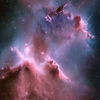




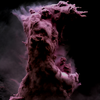

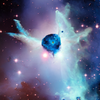

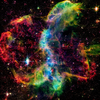
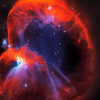
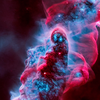


.png)


