Guide:Emmette: Difference between revisions
| (8 intermediate revisions by the same user not shown) | |||
| Line 8: | Line 8: | ||
|beam= 166.4 m | |beam= 166.4 m | ||
|height= 36.0 m | |height= 36.0 m | ||
|mass= 96,800 | |mass= 96,800 mt | ||
|cruisespeed= w 1.4 | |cruisespeed= w 1.4 | ||
|maxspeed= w 1.9 | |maxspeed= w 1.9 | ||
| Line 27: | Line 27: | ||
|otherweapons= | |otherweapons= | ||
|shields= <br> | |shields= <br> | ||
* | * electromagnetic shield (22 T) | ||
* | * polarizable armor on hull | ||
* | * navigational deflector on bow | ||
* | * glass bead emitters (on select vessels between [[2142]] and [[2152]]) | ||
|labs= | |labs= | ||
|transporters= | |transporters= | ||
| Line 37: | Line 37: | ||
|design= ENT | |design= ENT | ||
|name= Rob Bonchune/Foundation Imagining | |name= Rob Bonchune/Foundation Imagining | ||
|history= | |history= Timo | ||
}} | }} | ||
The main military obligations of the [[UESF]]'s early forerunner, the [[United Earth Stellar Navy]], were in maintaining [[Sol]] system security and in | ==Background: ''The Hobbyist's Guide''== | ||
protecting the ongoing exploration and exploitation efforts there. For this work, there were plenty of | The main military obligations of the [[UESF]]'s early forerunner, the [[United Earth Stellar Navy]], were in maintaining [[Sol]] system security and in protecting the ongoing exploration and exploitation efforts there. For this work, there were plenty of government spacecraft there that could traverse the intrasystem distances in a matter of days or weeks, ranging from lifting body interceptors based on [[Mars]] to vacuum-only patrol ships of ''DY'' descent. Yet timely defenses and disaster response called for insystem warpships as well. Due to technological challenges as well as the diverse operational requirements, it took a significant amount of time until the UESF could standardize on a single ship type as its patrol mainstay. | ||
government spacecraft there that could traverse the intrasystem distances in a matter of days or | |||
weeks, ranging from lifting body interceptors based on [[Mars]] to vacuum-only patrol ships of ''DY'' | |||
descent. Yet timely defenses and disaster response called for insystem warpships as well. Due to | |||
technological challenges as well as the diverse operational requirements, it took a significant | |||
amount of time until UESF could standardize on a single ship type as its patrol mainstay. | |||
The '''''Emmette''''' military warpships were early on classified as destroyers, despite not being intended to | The '''''Emmette''''' military warpships were early on classified as destroyers, despite not being intended to destroy too many things during normal operations. Their designation was derived from naval tradition: their role was foreseen as the medium spacegoing warship, between the point defense interceptors and corvettes and a hoped-for new generation of space cruisers. Their hulls were built to be sturdy and capacious, able to accommodate many new internal systems if technological | ||
destroy too many things during normal operations. Their designation was derived from naval | development so warranted. Their propulsion system was also generously engineered, with a single massive fusion reaction engine feeding from the direct power loop and two boosters with their own fusion reactors, augmented by four more environmentally friendly nozzles for landings and takeoffs. | ||
tradition: their role was foreseen as the medium spacegoing warship, between the point defense | |||
interceptors and corvettes and a hoped-for new generation of space cruisers. Their hulls were built | |||
to be sturdy and capacious, able to accommodate many new internal systems if technological | |||
development so warranted. Their propulsion system was also generously engineered, with a single | |||
massive fusion reaction engine feeding from the direct power loop and two boosters with their own | |||
fusion reactors, augmented by four more environmentally friendly nozzles for landings and takeoffs. | |||
Atmospheric operations were further facilitated by the lifting body shape, which featured two | Atmospheric operations were further facilitated by the lifting body shape, which featured two massive main landing legs behind smoothly faired hatches beneath the aft hull and a single centerline leg farther forward. The bow of the vessel was extensively armored with polarizable plating, forming a protective citadel for the crew. Lesser armoring was applied on the aft sections, the fuel tanks, reactors, and engines; direct hits against that part of the ship would be unsurvivable in | ||
massive main landing legs behind smoothly faired hatches beneath the aft hull | |||
centerline leg farther forward. The bow of the vessel was extensively armored with polarizable | |||
plating, forming a protective citadel for the crew. Lesser armoring was applied on the aft sections, | |||
the fuel tanks, reactors and engines; direct hits against that part of the ship would be unsurvivable in | |||
any case. | any case. | ||
Weapons were largely carried in long fairings that ran from the forward hull to the four auxiliary | Weapons were largely carried in long fairings that ran from the forward hull to the four auxiliary engines. Near the forward ends were twin mounts for plasma cannon, each featuring a two-gigawatt [[Almaz]] rapid-fire gun forward, and a four-gigawatt [[Armscor]] gun with a longer recharge time aft, plus a fire-tracking sensor in between. Forward and aft of the gunports were the cooling units of the cannon. A single missile launcher was also carried, but buried inside the citadel for the necessary hands-on operation and maintenance. The armored port for the launcher muzzle was directly beneath the bow; the bow itself held a navigational deflection field projector, one of the first to be installed on a transatmospheric [[Earth]] vessel. | ||
engines. Near the forward ends were twin mounts for plasma cannon, each featuring a two-gigawatt | |||
Almaz rapid-fire gun forward, and a four-gigawatt Armscor gun with a longer recharge time aft, | |||
plus a fire-tracking sensor in between. Forward and aft of the gunports were the cooling units of the | |||
cannon. A single missile launcher was also carried, but buried inside the citadel for the necessary hands-on operation and maintenance. The armored port for the launcher muzzle was directly | |||
beneath the bow; the bow itself held a navigational deflection field projector, one of the first to be | |||
installed on a transatmospheric [[Earth]] vessel. | |||
Yet transatmospheric operations were but a minor part of the mission profile of the vessels. The | Yet transatmospheric operations were but a minor part of the mission profile of the vessels. The 4W1200 FTL engines could drive the vessel close to warp two and theoretically enabled an interstellar scale of operations. In practice, top speed could not be sustained for more than a few hours, but there was enough endurance for a slow transfer flight to a nearby colony if need be. Primary combat and rescue operations alike called for a short warp jump to a location within a few | ||
4W1200 FTL engines could drive the vessel close to warp two | lighthours at most, followed by precision sublight maneuvering. For the latter, RCS packages on all corners of the spaceframe were tied to control systems, but these would be covered by armored hatches for atmospheric ops and sometimes for combat, as well. Gravitically-augmented gyroscopes would take care of fine attitude control. Several cameras and radars were installed around the hull, but there were no structure-compromising portholes or other openings in the modern-looking armor; the only means of entry were airlocks in the landing pad bays, accessible from the surface via ladderways and their adjoining small lifts. | ||
interstellar scale of operations. In practice, top speed could not be sustained for more than a few | |||
hours, but there was enough endurance for a slow transfer flight to a nearby colony if need be. | |||
Primary combat and rescue operations alike called for a short warp jump to a location within a few | |||
lighthours at most, followed by precision sublight maneuvering. For the latter, RCS packages on all | |||
corners of the spaceframe were tied to control systems, but these would be covered by armored | |||
hatches for atmospheric ops and sometimes for combat as well. Gravitically augmented gyroscopes | |||
would take care of fine attitude control. Several cameras and radars were installed around the hull, | |||
but there were no structure-compromising portholes or other openings in the modern-looking armor; | |||
the only means of entry were airlocks in the landing pad bays, accessible from the surface via | |||
ladderways and their adjoining small lifts. | |||
[[ | [[File:Emmette class (dorsal bow).png|left|300px|thumb|As an ''Emmette'' touches down at a [[Luna]] starport, size comparison can be made with typical light warp-augmented interceptors of the [[2100s]].]] | ||
interceptors of the [[2100s]].]] | |||
The 26 ships completed for the UESN were perhaps not as numerous as certain previous [[UEDP]] | The 26 ships completed for the UESN were perhaps not as numerous as certain previous [[UEDP]] acquisitions, but were expensive and demanding construction projects nevertheless. They thus had to become a mainstay of [[Sol]] defenses for the following five decades. Technology moved forward in leaps and bounds in most areas, warp drive being a frustrating exception. Yet new warships were not being built: the ''Emmettes'' could be equipped with newer models of plasma cannon or targeting | ||
acquisitions, but were expensive and demanding construction projects nevertheless. They thus had | sensor, or given better life support or navigational software, but no funds would be forthcoming for the construction of all-new spaceframes. There was little need, after all. The ''Emmettes'' were holding up well, largely thanks to seeing very little action in the first place. | ||
to become a mainstay of Sol defenses for the following five decades. Technology moved forward in | |||
leaps and bounds in most areas, warp drive being a frustrating exception. Yet new warships were | |||
not being built: the ''Emmettes'' could be equipped with newer models of plasma cannon or targeting | |||
sensor, or given better life support or navigational software, but no funds would be forthcoming for | |||
the construction of all-new spaceframes. There was little need, after all. The ''Emmettes'' were holding | |||
up well, largely thanks to seeing very little action in the first place. | |||
It was only in the [[2130s]] and the onset of serious investment in Earth’s fledging interstellar colonies | It was only in the [[2130s]] and the onset of serious investment in Earth’s fledging interstellar colonies and alliances that the need arose for further defensive starships. The ''[[Guide: Djartanna|Djartanna]]'' class was a modest design optimized for mass production, yet essentially replaced the ''Emmette'' as the defender of Sol. A final few examples of the older type survived to fight in the [[Romulan War]], and the last two units were not retired until [[2169]]. At that time, they were simply relics of historical curiosity value only. | ||
and alliances that the need arose for further defensive starships. The ''[[Guide: Djartanna|Djartanna]]'' class was a modest | |||
design optimized for mass production, yet essentially replaced the ''Emmette'' as the defender of Sol. | |||
A final few examples of the older type survived to fight in the Romulan War, and the last two units | |||
were not retired until [[2169]]. At that time, they were simply relics of historical curiosity value only | |||
==Gallery== | ==Gallery== | ||
<gallery> | <gallery> | ||
File:Emmette destroyer (bow).png|Bow | File:Emmette destroyer (bow).png|Bow | ||
File:Emmette destroyer (dorsal).png|Dorsal | File:Emmette destroyer (dorsal).png|Dorsal | ||
File:Emmette class (dorsal stern).png|Dorsal stern angle | File:Emmette class (dorsal stern).png|Dorsal stern angle | ||
File:Emmette destroyer (forward dorsal).png|Forward dorsal angle | File:Emmette destroyer (forward dorsal).png|Forward dorsal angle | ||
| Line 117: | Line 72: | ||
File:Emmette class (ventral stern).png|Ventral stern angle | File:Emmette class (ventral stern).png|Ventral stern angle | ||
File:Emmette cutting into warp.png|An ''Emmette'' class jumping to warp | File:Emmette cutting into warp.png|An ''Emmette'' class jumping to warp | ||
</gallery> | </gallery> | ||
==Notes== | |||
* [http://memory-alpha.wikia.com/wiki/Emmette_type Memory Alpha] also refers to this as the ''Emmette'' class ship. The novel ''Uncertain Logic'' refers to it as the ''Ganges'' class. Also note, the ''[http://memory-alpha.wikia.com/wiki/Unnamed_Earth_starships#.22Warp_Delta.22 Warp Delta]'' (so called because of production notes) is very similar, but is denoted as the ''[[Guide: Ganges|Ganges]]'' class here. | |||
* Based on their age and limited range, I've decided the ''Emmettes'' that continued operating post-war remained with [[Earth Fleet]]. | |||
* The infobox must still be updated with Timo's named ships (only). ('''Remove this entire line when complete.''') | |||
<br><br> | |||
---- | ---- | ||
* [[Guide: Timo's Guide to | * [[Guide: Timo's Guide to Star Fleet|Back to the Table of Contents]] | ||
* [[Guide: 2130-2161 - Into The Romulan War| | * [[Guide: 2130-2161 - Into The Romulan War|Back to "Into The Romulan War"]] | ||
* [[Guide: Of Ship Statistics|Appendix A: Of Ship Statistics]] | * [[Guide: Of Ship Statistics|Appendix A: Of Ship Statistics]] | ||
* [[Guide: Glossary|Appendix B: Glossary]] | * [[Guide: Glossary|Appendix B: Glossary]] | ||
* [[Guide: | * [[Guide: Star Fleet Organization - General Outline|Appendix C: Star Fleet Organization - General Outline]] | ||
* [[Guide: Abbreviations From Outside|Appendix D: Abbreviations From Outside]] | * [[Guide: Abbreviations From Outside|Appendix D: Abbreviations From Outside]] | ||
[[Category:Guide|{{PAGENAME}}]] | [[Category:Guide|{{PAGENAME}}]] | ||
Latest revision as of 05:39, 16 July 2023
.png)
| |
| Emmette | |
|---|---|
| Class Overview | |
| Category | Destroyer |
| Operational | 2123 - 2169 |
| Constructed | 26 |
| Dimensions | |
| Length | 160.1 m |
| Beam | 166.4 m |
| Height | 36.0 m |
| Mass | 96,800 mt |
| Performance | |
| Cruise Speed | w 1.4 |
| Max Speed | w 1.9 |
| Endurance | 6 months |
| Complement | |
| Officers | 8 |
| Enlisted | 50
|
| Tactical Systems | |
| Beam Weapons |
|
| Missile Weapons | 1x fwd missile tube (w/ 35 fusion missiles) (ventral bow) |
| Shields | |
| Auxiliary Craft | none |
| Historical | |
| Ships of Note | USS Jacari (NDD-16) |
| Canonicity | |
| Design | ENT |
| Name | Rob Bonchune/Foundation Imagining |
| History | Timo
|
Background: The Hobbyist's Guide
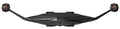
The main military obligations of the UESF's early forerunner, the United Earth Stellar Navy, were in maintaining Sol system security and in protecting the ongoing exploration and exploitation efforts there. For this work, there were plenty of government spacecraft there that could traverse the intrasystem distances in a matter of days or weeks, ranging from lifting body interceptors based on Mars to vacuum-only patrol ships of DY descent. Yet timely defenses and disaster response called for insystem warpships as well. Due to technological challenges as well as the diverse operational requirements, it took a significant amount of time until the UESF could standardize on a single ship type as its patrol mainstay.
The Emmette military warpships were early on classified as destroyers, despite not being intended to destroy too many things during normal operations. Their designation was derived from naval tradition: their role was foreseen as the medium spacegoing warship, between the point defense interceptors and corvettes and a hoped-for new generation of space cruisers. Their hulls were built to be sturdy and capacious, able to accommodate many new internal systems if technological development so warranted. Their propulsion system was also generously engineered, with a single massive fusion reaction engine feeding from the direct power loop and two boosters with their own fusion reactors, augmented by four more environmentally friendly nozzles for landings and takeoffs.
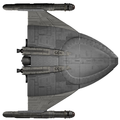
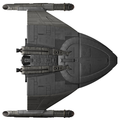
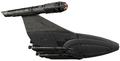
Atmospheric operations were further facilitated by the lifting body shape, which featured two massive main landing legs behind smoothly faired hatches beneath the aft hull and a single centerline leg farther forward. The bow of the vessel was extensively armored with polarizable plating, forming a protective citadel for the crew. Lesser armoring was applied on the aft sections, the fuel tanks, reactors, and engines; direct hits against that part of the ship would be unsurvivable in any case.
Weapons were largely carried in long fairings that ran from the forward hull to the four auxiliary engines. Near the forward ends were twin mounts for plasma cannon, each featuring a two-gigawatt Almaz rapid-fire gun forward, and a four-gigawatt Armscor gun with a longer recharge time aft, plus a fire-tracking sensor in between. Forward and aft of the gunports were the cooling units of the cannon. A single missile launcher was also carried, but buried inside the citadel for the necessary hands-on operation and maintenance. The armored port for the launcher muzzle was directly beneath the bow; the bow itself held a navigational deflection field projector, one of the first to be installed on a transatmospheric Earth vessel.
Yet transatmospheric operations were but a minor part of the mission profile of the vessels. The 4W1200 FTL engines could drive the vessel close to warp two and theoretically enabled an interstellar scale of operations. In practice, top speed could not be sustained for more than a few hours, but there was enough endurance for a slow transfer flight to a nearby colony if need be. Primary combat and rescue operations alike called for a short warp jump to a location within a few lighthours at most, followed by precision sublight maneuvering. For the latter, RCS packages on all corners of the spaceframe were tied to control systems, but these would be covered by armored hatches for atmospheric ops and sometimes for combat, as well. Gravitically-augmented gyroscopes would take care of fine attitude control. Several cameras and radars were installed around the hull, but there were no structure-compromising portholes or other openings in the modern-looking armor; the only means of entry were airlocks in the landing pad bays, accessible from the surface via ladderways and their adjoining small lifts.
.png)
The 26 ships completed for the UESN were perhaps not as numerous as certain previous UEDP acquisitions, but were expensive and demanding construction projects nevertheless. They thus had to become a mainstay of Sol defenses for the following five decades. Technology moved forward in leaps and bounds in most areas, warp drive being a frustrating exception. Yet new warships were not being built: the Emmettes could be equipped with newer models of plasma cannon or targeting sensor, or given better life support or navigational software, but no funds would be forthcoming for the construction of all-new spaceframes. There was little need, after all. The Emmettes were holding up well, largely thanks to seeing very little action in the first place.
It was only in the 2130s and the onset of serious investment in Earth’s fledging interstellar colonies and alliances that the need arose for further defensive starships. The Djartanna class was a modest design optimized for mass production, yet essentially replaced the Emmette as the defender of Sol. A final few examples of the older type survived to fight in the Romulan War, and the last two units were not retired until 2169. At that time, they were simply relics of historical curiosity value only.
Gallery
-
 Bow
Bow -
 Dorsal
 -
 Dorsal stern angle
 -
 Forward dorsal angle
 -
 Stern
Stern -
 Ventral
 -
 Ventral beam angle
 -
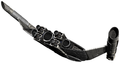 Ventral stern angle
 -
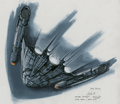 An Emmette class jumping to warp
.png)
.png)
.png)
.png)
.png)
.png)
.png)
.png)

Notes
- Memory Alpha also refers to this as the Emmette class ship. The novel Uncertain Logic refers to it as the Ganges class. Also note, the Warp Delta (so called because of production notes) is very similar, but is denoted as the Ganges class here.
- Based on their age and limited range, I've decided the Emmettes that continued operating post-war remained with Earth Fleet.
- The infobox must still be updated with Timo's named ships (only). (Remove this entire line when complete.)