Guide:Nebula
- Note: preliminary study of this article was conducted for other purposes. No appreciable data-mining has been done, as of this time.
_(stbd).png)
| |
| Nebula | |
|---|---|
| Class Overview | |
| Category | explorer |
| Operational | 2352 - xxxx |
| Constructed | 39+3 total: |
| Dimensions | |
| Length |
|
| Beam | 442.1 m |
| Height |
|
| Mass |
|
| Performance | |
| Cruise Speed | W 6.0 |
| Max Speed |
|
| Endurance | 24 years |
| Complement | |
| Officers | 202 |
| Enlisted | 301 |
| Crew | 150-300 research & civilian |
| Passengers | 3,000
|
| Tactical Systems | |
| Beam Weapons | batch 1
batch 2; batch 1 (upgraded)
batch 3
batch 4
|
| Missile Weapons | Flight I
batches 1, 2, & 3 (with below exceptions)
batch 4
weapons module (w/ 180 photorps)
|
| Shields |
|
| Laboratories | 32x varying configurations |
| Transporters |
|
| Auxiliary Craft |
|
| Historical | |
| Ships of Note |
|
| Canonicity | |
| Design | TNG |
| Name | TNG |
| History | Timo
|
Background: Hobbyist's Guide
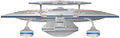
In the late 2330s, Starfleet had started preliminary development of a new class of explorers to meet the requirements of ever-increasing distances and needs of operational independence. These ships were also to retire the hopelessly outdated Constellation generation of cruisers from exploration duty, and to augment the Ambassador and Niagara vessels in expanding the limits of UFP knowledge. The first steps in developing the advanced explorer vessel led to the upgraded variant of the Niagara class that met most Starfleet expectations and design requirements. The work performed in the 2350s and 60s resulted in two ship classes of superb exploratory and defensive capabilities, namely the Nebula and Galaxy classes. Both would rely on only two of the gigantic warp nacelles used on the Niagara class – but this time coupled with a high performance powerplant and state-of-the-art warp field design, to comprise the GN-41 engine.
For the Nebula, a design utilizing the general field configuration familiar from the Miranda class was chosen. The Mirandas had in many ways been the predecessors and affordable alternatives to the Constitution class. Similarly, the Nebula was to be a simpler, more robust version of the upcoming Galaxy design. These two modern ships would share many of the main components, but the Nebula would feature a less challenging overall configuration and slightly more modest performance specifications. In contrast, the design would enjoy some advantages in combat capability.
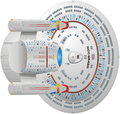
A gigantic Class 1E saucer hull, the largest man-made object theoretically capable of making planetfall intact, was introduced for the Nebula class. It provided excellent room for equipment and facilities necessary for fully independent deep space exploration. The warp propulsion system of two GN-41 engines with 16 coils and 1,370,000 ton mass apiece gave a cruising speed of warp six and a maximum sustainable speed of warp 9.5, equaling the performance of the modern Niagaras with one nacelle less. Multiply redundant fusion reactors powered two rather compact and well shielded impulse engines on the saucer aft rim to give the ship a maximum acceleration of 790 g. Inertial dampening fields were of extraordinary strength, and the significantly improved mass-masking subspace field surrounding the hull increased both maneuverability and linear acceleration over that of the Niagaras.
Otherwise, the construction was quite conventional if the preceding frigate and cruiser types are used as the yardstick – except, or course, for the vast size of the vessel. A large shuttlebay atop the saucer was spacious enough to operate half a dozen runabouts or interceptors in addition to the normal shuttle contingent. Even more could be temporarily stored aboard. In most of the ships, the secondary hull housed additional shuttle facilities. A gigantic rolling door was featured in early vessels, yet was later superseded by a set of smaller doors: operational experiences proved that the ability to carry outsize cargo was outweighed by the disadvantages of decreased structural integrity, wider-area atmospheric containment fields and cumbersome door operating procedures, especially for everyday operations of small liaison craft. Many early vessels were refitted with the smaller doors, a refit that usually also introduced additional stern phasers at the cost of some shuttlecraft maintenance facilities and storage space.
USS Nebula herself never received an aft shuttlebay of any kind, due to her special stern configuration. This structure was also used on six other Nebula vessels built at 40 Eridani A and 61 Cygni yards, and was mainly intended to provide the ships with the ability to carry the new aft-firing, high-capacity Mk 85 torpedo launcher designed for the Galaxy class. Soon enough, Starfleet decided on a different balance of firepower and shuttlecraft capacity, and production of the long-stern model was discontinued by 2356.

Forward of the hangar or torpedo assembly was the main engineering facility, then the exceptionally large and capable Mordecai Farsight navigational deflector and sensor array. Accommodation and some workspaces unrelated to engineering tasks were present in the engineering section, yet not to the degree later seen in the secondary hulls of Galaxy class ships; the Nebulas did not need duplicated functions for primary and secondary hulls, since they would not operate in separated flight mode. Apart from the long-stern ships, which utilized the Galaxy Varan T-Max deflector system rather than the dedicated Mordecai model, use of commonalized secondary hull components and elements was limited to those directly relating to the warp drive.
Impulse power systems were basically identical to those of the Galaxy class, save for the smaller number of fusion reactors – secondary power system redundancy requirements were not as high as in that two-section starship design – and, save for the initial seven, the advanced low emission profile nozzles. Warp powerplants and coil assemblies were also identical with the early Galaxy vessels, but the Galaxies from USS Enterprise onward adopted an improved system of 18 instead of 16 coils per nacelle, as well as a slightly improved main powerplant. Nebulas were slow to follow, with only the third production batch incorporating these upgrades and subsequently attaining higher top speeds. The compact field design led to slightly lower top speeds than those of the corresponding Galaxy class configuration, but this was not seen as a problem.
Weapon fits varied somewhat within the class, sometimes being specific to production batches, sometimes following more complex divisions. The arsenal included two 270-degree phaser X strips of immense power on saucer surfaces, a wide ventral phaser X band under main engineering, two lateral strips on engine pylons, and two to four auxiliary phasers mounted in pairs on either the aft rim of the saucer (the first batch of six short-stern plus seven long-stern vessels), the fantail of the secondary hull (third batch onward), or both (refitted first-batch ships save for the long-sterners, plus second-batch units). On some vessels, two Mk 82 medium torpedo tubes were included in the flat interhull that joined the primary saucer to the secondary hull. In addition, the ships were to carry extra torpedo launchers or other mission-specific equipment in switchable modules atop a support structure behind the saucer shuttlebay.

Introduction of mission modules greatly increased the flexibility of the class. USS Nebula was initially finished without module attachment points. It was USS Farragut that first received a mission module: heavy torpedo armament (forward and aft tubes with 140 Type V torpedoes and a number of probes), additional tractor beams (four independently steerable emitters) and special sensors (including tactical scanners with 8 ly range) were packaged into a triangular ‘fighting pack’ dubbed the Offensive/Defensive Support Assembly. Other modules less frequently used include winglike subspace scanning arrays, semicylindrar terraforming systems containers, and various mountings for the carrying of outsize cargo like entire warp nacelles or hull sections of smaller starships. However, the O/DSA is the most usual variant mainly because the heavy launchers aboard it are deemed necessary for most missions. The module itself is configurable for a variety of missions as well, and the recent Dominion War saw the installation of up to six additional medium Mk 82 or 84 torpedo launchers athwartships of the centerline two plus the two heavy Mk 85 standard launchers previously carried on the module.
The mounting of the O/DSA is somewhat problematic for shuttle operations, as it limits access to the main shuttlebay. The capacious aft bay on the majority of the ships more than covers up for this, however, and thus Starfleet engineers have not dedicated much resources to the development of less obstructive support systems for the module.
Due to the relative simplicity of the design, several Nebula class vessels were completed before the commissioning of USS Galaxy, even though the latter, more ‘flashy’ design project was initiated at the same time with the Nebula project. As many as 13 ships were ordered initially, in the two distinct designs described above yet formally listed as a single batch. An option for ten more was included in the contract, and evolved into the second production batch, characterized mainly by armament refinements. The third batch of eight featured an increased percentage of Galaxy components, including a slimmed-down primary hull and the uprated warp propulsion system. A fourth batch, rather hastily assembled for the needs of the 2370s military crises, goes one step further, introducing a secondary hull virtually identical to the Galaxy one, along with the associated deflector, phaser and, most importantly, heavy torpedo systems. A trend of ‘Galaxifying’ characterizes the refitting of earlier Nebula units as well, and for example the venerable Farragut underwent a comprehensive rebuilding of her primary hull to the slimmed-down standard in 2366-67.
In Starfleet service, Nebula class starships share the dual exploration/defense mission of the Galaxy class, but somewhat less often participate in diplomatic missions due to their more utilitarian accommodation standards. USS Merrimac and USS Kashin are exceptions, permanently equipped with diplomatic-quarters internal modules and serving as dignitary liaison vessels. The vessels can be easily distinguished from the rest of the second batch by their larger number of portholes and omission of primary hull secondary phasers. Despite these modifications, the ships remain full-fledged combat and exploration vessels, and participated in many actions during the Dominion War. USS Bonchune of the third batch was converted to similar standard following the loss of three Galaxy class vessels, but has only recently resumed operations after receiving major damage on assignment to distant Beta Quadrant border. The exact circumstances in which the damage was received have not been revealed to public, even though some fifty lives were lost in the incident. A fourth ship is to be similarly equipped by 2379; there are several heavily battle-damaged vessels under consideration for the conversion.
USS Lexington, NCC-61832, was the first unit to be deployed for exploration duty in 2353 and performed an exemplary eight-year mission in the direction of the galactic rim. This was followed by a five-year survey of the Pleiades region, supported by USS Enterprise and the brand-new USS Endeavour and their respective surveyor and scout companions. The ship entered a long layover period after that mission, receiving for example gel-pack logic processors and holodeck facilities. Following a tour of duty as the flagship of the 4th Fleet in the Dominion War, acting mainly in the heavily contested Dorvan sector, the Lexington now continues a high-profile exploration career under the command of her legendary captain Bahay’ai Kae Navar Venei.
USS Proxima was presumed lost to Dominion forces in 2372 as she failed to return from her armed reconnaissance mission in Gamma Quadrant space. The Dominion readily took credit for the loss. In fact, the wreckage of the ship was later located on a desolate class K world, neither the ship nor her deceased crew displaying any battle damage or other signs of violence. No explanation has yet been found for this mysterious loss, although theories range from devious Changeling infiltration to telepathic attack to a possible Q intervention. Similar mystery surrounds the earlier disappearance of USS Hera in 2370.
The extensively updated USS Farragut had a most illustrious exploration career until her loss in the Federation-Klingon war in 2372. Her reputation as the “cavalry regiment of space” was also well-deserved, and the people of eighteen starships, dozens of smaller vessels and six colony worlds can thank her for their lives, endangered in conflicts ranging from the Cardassian War to the Maquis rebellion. USS Sutherland, a war survivor, has gathered a different reputation: wherever the ship goes, a good party can be expected!
Production of Nebula class explorers continues at a leisurely pace. At least ten more ships are expected to be completed to a standard combining the best attributes of batches three and four, across a period of ten years, to cover war losses and to take the place of retiring Ambassador units. Some innovations in shielding technology are to be incorporated to later models, and computing systems may be upgraded to feature gel-pack components for the final six vessels. However, future production plans are hampered by the uncertainty surrounding a potential successor design based on Sovereign technology. After the completion of all the 42 ships currently funded, plus possible additional units assembled out of spares, no new keels are to be laid until a decision is made concerning this successor vessel.
Gallery
-
 USS Nebula (with extended stern)
 -
 Batch 1 (with subspace scanning array)
 -

-

-

-

-
 Batch 1 (with weapons module)
 -
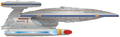 Diplomatic variant
 -
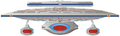
-
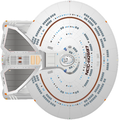
-
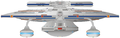
-
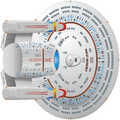
-
 Batch 2
 -
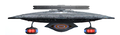
-

-
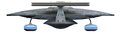
-
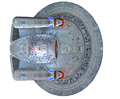
-
 Batch 2 (with sensor array)
 -
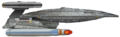 Batch 3 (with weapons module)
 -
 Batch 3 (with sensor array)
 -
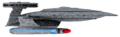 Batch 4 (with weapons module)
 -
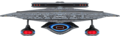
-

-
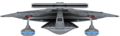
-
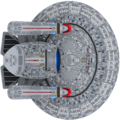
-
 Batch 4 (with sensor array)
 -
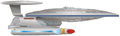 Phoenix variant
 -
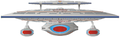
-
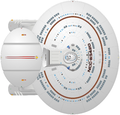
-
-
-
 Nebula development patch
 -
 "Familiar places, New faces"
 -
dreadnought-type Nebula
_(stbd).png)
_(stbd).png)
_(bow).png)
_(dorsal).png)
_(stern).png)
_(ventral).png)
_(stbd).png)
_(bow).png)
_(dorsal).png)
_(stern).png)
_(ventral).png)
_(stbd).png)
_(bow).png)
_(dorsal).png)
_(stern).png)
_(ventral).png)
_(stbd).png)
_(stbd).png)
_(stbd).png)
_(stbd).png)
_(bow).png)
_(dorsal).png)
_(stern).png)
_(ventral).png)
_(stbd).png)
_(stbd).png)
_(bow).png)
_(dorsal).png)
_(stern).png)
_(ventral).png)


_(orthos).png)
Notes
- "...production of the long-stern model was discontinued by 2356." The use of "by" indicates production ceased in 2355.
Alt Sources
- Ex Astris Scientia: "Starship Gallery - Nebula" - several differing (untapped) 5-view perspectives
- Sixth Fleet (WayBack Machine)
- Starship Handbook (Combined)
- STSTCSOLDA