Guide:Toj Lol: Difference between revisions
No edit summary |
No edit summary |
||
| Line 31: | Line 31: | ||
|history= own | |history= own | ||
}} | }} | ||
Although the aerodynamics of the traditional Vulcan ring drive are more than acceptable for | Although the aerodynamics of the traditional Vulcan ring drive are more than acceptable for orbit-to- | ||
surface applications, the weight penalty of a ring element oftentimes is not. In Vulcan scoutcraft | surface applications, the weight penalty of a ring element oftentimes is not. In Vulcan scoutcraft | ||
construction, warp propulsion was often sacrificed in order to secure superior agility and payload. | construction, warp propulsion was often sacrificed in order to secure superior agility and payload. | ||
Detached operations wherein a mothership of characteristically high warp performance deployed a | Detached operations -wherein a mothership of characteristically high warp performance deployed a | ||
sublight scouting force were the basis of Vulcan survey and surveillance doctrine for the 19th and | sublight scouting force- were the basis of Vulcan survey and surveillance doctrine for the 19th and | ||
20th centuries; Vulcan psychological stamina enabled scoutcraft missions of several months or even | [[20th century|20th centuries]]; Vulcan psychological stamina enabled scoutcraft missions of several months or even | ||
years between mothership visits. Nevertheless, survey parties craved for operational independence. | years between mothership visits. Nevertheless, survey parties craved for operational independence. | ||
There existed a definite need for a survey command craft with at least rudimentary warp capability. | There existed a definite need for a survey command craft with at least rudimentary warp capability. | ||
For the 19th century, the answer to the need was the Mansu class. | For the 19th century, the answer to the need was the '''''Mansu''''' class. | ||
In essence a 24 m atmospheric barge equipped with two impulse modules and a partial, folding ring | In essence a 24 m atmospheric barge equipped with two impulse modules and a partial, folding ring | ||
drive for warp 2 travel, the Mansu seemingly exhibited little of the classic Vulcan spacecraft design | drive for warp 2 travel, the ''Mansu'' seemingly exhibited little of the classic Vulcan spacecraft design | ||
elegance. An upper deck featured numerous physical portholes, both on the forward flight deck and | elegance. An upper deck featured numerous physical portholes, both on the forward flight deck and | ||
on the cabins circling the central sensor and laboratory area. Middeck spaces housed survey gear, | on the cabins circling the central sensor and laboratory area. Middeck spaces housed survey gear, | ||
| Line 51: | Line 51: | ||
Four control petals stabilized the craft in passive atmospheric entry, enabling shockwave | Four control petals stabilized the craft in passive atmospheric entry, enabling shockwave | ||
manipulation for maximum aural stealth. Generally, the Mansu was not supposed to challenge | manipulation for maximum aural stealth. Generally, the ''Mansu'' was not supposed to challenge | ||
surface surveillance systems. Most observations would be conducted from orbit, behind the safety | surface surveillance systems. Most observations would be conducted from orbit, behind the safety | ||
of a radar-scattering field. Extreme caution was called for during surface operations. All but the | of a radar-scattering field. Extreme caution was called for during surface operations. All but the | ||
technologically most primitive targets of survey or surveillance could be expected to pose a danger | technologically most primitive targets of survey or surveillance could be expected to pose a danger | ||
to the Mansu, and her ability to escape to warp would be of no use inside atmospheres or down on | to the ''Mansu'', and her ability to escape to warp would be of no use inside atmospheres or down on | ||
planetary surfaces. Yet under proper operating protocol, the vessel would be cost-effective, reliable | planetary surfaces. Yet under proper operating protocol, the vessel would be cost-effective, reliable | ||
and still capable of completing her mission 150 years after the end of production. | and still capable of completing her mission 150 years after the end of production. | ||
| Line 70: | Line 70: | ||
of the voidcruisers for planetary forays of maximum cargo capacity. | of the voidcruisers for planetary forays of maximum cargo capacity. | ||
An almost timeless design in its robust, no-nonsense excellence, the Mansu would succumb in the | An almost timeless design in its robust, no-nonsense excellence, the ''Mansu'' would succumb in the | ||
late 21st century to the needs and weaknesses of non-Vulcan operators. The unique psychological | late [[21st century]] to the needs and weaknesses of non-Vulcan operators. The unique psychological | ||
stamina of the Vulcan crews was crucial to the balance of qualities that made the Mansu so capable | stamina of the Vulcan crews was crucial to the balance of qualities that made the ''Mansu'' so capable | ||
and affordable at the same time; a crew from a lesser species would have to be provided with a | and affordable at the same time; a crew from a lesser species would have to be provided with a | ||
vessel optimized for a shorter mission time, resulting in a completely different balance. While | vessel optimized for a shorter mission time, resulting in a completely different balance. While | ||
Vulcan continued to operate scouting units of compact dimensions on its own, its contribution to | Vulcan continued to operate scouting units of compact dimensions on its own, its contribution to | ||
Federation shipbuilding would be biased towards craft of increased speed or reduced independence. | [[Federation]] shipbuilding would be biased towards craft of increased speed or reduced independence. | ||
The last Mansu of the 109 built between 1834 and 1858 was pulled from active Starfleet service in | The last ''Mansu'' of the 109 built between 1834 and 1858 was pulled from active [[Starfleet]] service in | ||
2098. | [[2098]]. | ||
==Gallery== | ==Gallery== | ||
Revision as of 19:54, 13 July 2014
.jpg)
| |
| Mansu | |
|---|---|
| Class Overview | |
| Category | Scoutcraft |
| Operational | 1834 - 2098 |
| Constructed | 109 |
| Dimensions | |
| Length | 24.0 m |
| Beam | 17.0 m |
| Height | 8.2 m |
| Mass | 2,150 tons |
| Performance | |
| Max Speed | w 2 |
| Endurance | 8 months |
| Complement | |
| Crew | 3 - 5
|
| Tactical Systems | |
| Beam Weapons | 1 phased particle cannon (50 GJ / 200 GW) on dorsal bow
|
| Shields | Hull armor |
| Canonicity | |
| Design | ENT |
| Name | own |
| History | own
|
Although the aerodynamics of the traditional Vulcan ring drive are more than acceptable for orbit-to-
surface applications, the weight penalty of a ring element oftentimes is not. In Vulcan scoutcraft
construction, warp propulsion was often sacrificed in order to secure superior agility and payload.
Detached operations -wherein a mothership of characteristically high warp performance deployed a
sublight scouting force- were the basis of Vulcan survey and surveillance doctrine for the 19th and
20th centuries; Vulcan psychological stamina enabled scoutcraft missions of several months or even
years between mothership visits. Nevertheless, survey parties craved for operational independence.
There existed a definite need for a survey command craft with at least rudimentary warp capability.
For the 19th century, the answer to the need was the Mansu class.
In essence a 24 m atmospheric barge equipped with two impulse modules and a partial, folding ring drive for warp 2 travel, the Mansu seemingly exhibited little of the classic Vulcan spacecraft design elegance. An upper deck featured numerous physical portholes, both on the forward flight deck and on the cabins circling the central sensor and laboratory area. Middeck spaces housed survey gear, supplies and consumables, with docking ports to both sides and a defensive particle cannon in a forward mount. The lowermost deck had ventral, fan-shuttered doors for surface access, plus a tripod landing gear consisting of a nose leg with adjoining ladder plus the downfolded outer elements of the warp ring.
Four control petals stabilized the craft in passive atmospheric entry, enabling shockwave manipulation for maximum aural stealth. Generally, the Mansu was not supposed to challenge surface surveillance systems. Most observations would be conducted from orbit, behind the safety of a radar-scattering field. Extreme caution was called for during surface operations. All but the technologically most primitive targets of survey or surveillance could be expected to pose a danger to the Mansu, and her ability to escape to warp would be of no use inside atmospheres or down on planetary surfaces. Yet under proper operating protocol, the vessel would be cost-effective, reliable and still capable of completing her mission 150 years after the end of production.
.jpg)
Minimum operating crew for such a craft was three, but survey and surveillance missions typically involved five multi-disciplined operators for whom accommodation was secured for up to 12 months. In operative insertion and extraction duty, some twenty troops could be carried for a more limited length of time. Variants with extended endurance existed for both courier and covert long term surveillance applications, while stripped-down versions were carried in the daughtership berths of the voidcruisers for planetary forays of maximum cargo capacity.
An almost timeless design in its robust, no-nonsense excellence, the Mansu would succumb in the late 21st century to the needs and weaknesses of non-Vulcan operators. The unique psychological stamina of the Vulcan crews was crucial to the balance of qualities that made the Mansu so capable and affordable at the same time; a crew from a lesser species would have to be provided with a vessel optimized for a shorter mission time, resulting in a completely different balance. While Vulcan continued to operate scouting units of compact dimensions on its own, its contribution to Federation shipbuilding would be biased towards craft of increased speed or reduced independence.
The last Mansu of the 109 built between 1834 and 1858 was pulled from active Starfleet service in 2098.
Gallery
-
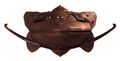 Bow view
 -
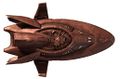 Dorsal view
 -
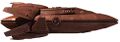 Side view
 -
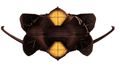 Stern view
 -
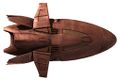 Ventral view
.jpg)
.jpg)
.jpg)